


Postoperative outcomes in surgical COVID-19 patients: a multicenter cohort study
- PMID: 33435887
- PMCID: PMC7801565
- DOI: 10.1186/s12871-021-01233-9
Postoperative outcomes in surgical COVID-19 patients: a multicenter cohort study
Abstract
Background: Data on postoperative outcomes of the COVID-19 patient population is limited. We described COVID-19 patients who underwent a surgery and the pandemic impact on surgical activities.
Methods: We conducted a multicenter cohort study between March 13 and June 192,020. We included all COVID-19 patients who underwent surgery in nine centres of the Province of Québec, the Canadian province most afflicted by the pandemic. We also included concomitant suspected COVID-19 (subsequently confirmed not to have COVID-19) patients and patients who had recovered from it. We collected data on baseline characteristics, postoperative complications and postoperative mortality. Our primary outcome was 30-day mortality. We also collected data on overall surgical activities during this first wave and during the same period in 2019.
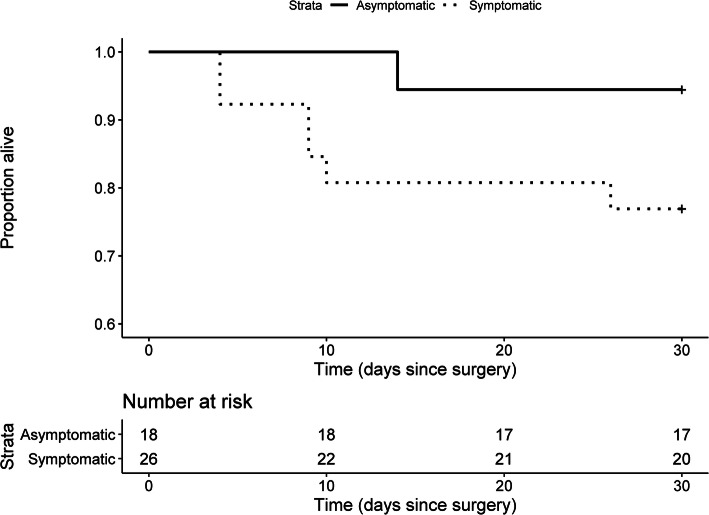
Results: We included 44 COVID-19 patients, 18 suspected patients, and 18 patients who had recovered from COVID-19 at time of surgery. Among the 44 COVID-19 patients, 31 surgeries (71%) were urgent and 16 (36%) were major. In these patients, pulmonary complications were frequent (25%) and 30-day mortality was high (15.9%). This mortality was higher in patients with symptoms (23.1%) compared to those without symptoms (5.6%), although not statistically significant (p = 0.118). Of the total 22,616 cases performed among participating centres during the study period, only 0.19% had COVID-19 at the time of surgery. Fewer procedures were performed during the study period compared to the same period in 2019 (44,486 cases).
Conclusion: In this Canadian cohort study, postoperative 30-day mortality in COVID-19 patients undergoing surgery was high (15.9%). Although few surgeries were performed on COVID-19 patients, the pandemic impact on surgical activity volume was important.
Trial registration: ClinicalTrials.gov Identifier: NCT04458337 .
Keywords: COVID-19; Health system impact; Pandemic; Postoperative mortality; Postoperative outcomes; Surgery.
Conflict of interest statement
The authors have no conflict of interest to declare.
Figures
References
-
- Wu Z, McGoogan JM. Characteristics of and important lessons from the coronavirus Disease 2019 (COVID-19) outbreak in China: summary of a report of 72 314 cases from the Chinese Center for Disease Control and Prevention. JAMA. 2020;323(13):1239–1242. - PubMed
-
- Grasselli G, Pesenti A, Cecconi M. Critical care utilization for the COVID-19 outbreak in Lombardy, Italy: Early Experience and Forecast During an Emergency Response. JAMA. 2020;323(16):1545–1546. - PubMed
Publication types
MeSH terms
Associated data
LinkOut - more resources
Full Text Sources
Other Literature Sources
Medical
