


Nature and extent of outpatient podiatry service utilisation in people with diabetes undergoing minor foot amputations: a retrospective clinical audit
- PMID: 33435997
- PMCID: PMC7805117
- DOI: 10.1186/s13047-020-00445-5
Nature and extent of outpatient podiatry service utilisation in people with diabetes undergoing minor foot amputations: a retrospective clinical audit
Abstract
Background: People with diabetes are at high risk of foot complications that can lead to lower extremity amputations. National standards suggest that early assessment and management by a podiatry led multidisciplinary high-risk foot clinic (HRFC) helps to reduce complications. This review is a retrospective audit of the Central Coast Local Health District (CCLHD) podiatry department service utilisation in people with diabetes who had undergone a minor foot amputation.
Methods: All people with diabetes who had minor foot amputations in the calendar year 2017 in the CCLHD in New South Wales were identified. Podiatry occasions of service from all podiatry service clinics (e.g. general, orthoses, wound, HRFC) and hospital stays for 12 months prior to, and 12 months, post the minor foot amputation were extracted.
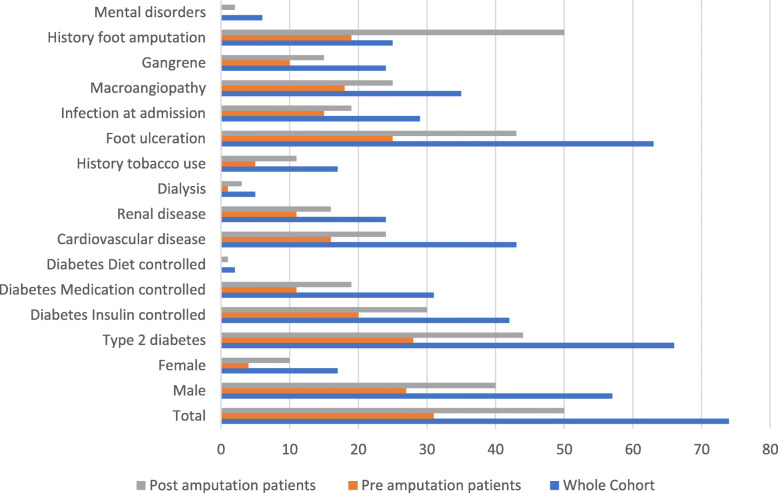
Results: Data on 74 people with diabetes who underwent 85 minor foot amputations were collected. In the 12-month period leading up to their minor foot amputation less than half, 42% (n=31), of the patients had attended any of the available podiatry service clinics within the CCLHD system. Post-amputation and discharge from hospital there was an overall rise of 26% in numbers attending all CCLHD podiatry- led clinics bringing the total to 68% (51). However, attendance at the HRFC rose by only 2% from 16% (n=12) to 18% n= (13).
Conclusion: This study shows that there was underutilisation of Podiatry Services in the CCLHD in 2017 with some participants not meeting national treatment guidelines for foot health services. Revision of current referral pathways both prior to, during and following hospitalisation and expanding the multidisciplinary HRFC to accommodate the population by providing more accessible locations has since been undertaken to increase service access. Further provision of education to those highlighted to be at high risk has also been implemented.
Keywords: Diabetes; High risk foot clinic; Minor foot amputation; Podiatry.
Conflict of interest statement
No competing interests.
Figures
References
-
- National Institute for Health and Care Excellence NICE. Diabetic foot problems: prevention and management. UK: NICE guideline; 2015. - PubMed
-
- Schaper NC, van Netten JJ, Apelqvist J, Bus SA, Hinchliffe RJ, Lipsky BA. In: IWGDF Guidelines on the prevention and management of diabetic foot disease, in Practical Guidelines, v.N. Schaper NC, Jaap J, Apelqvist J, Bus SA, Robert J, Benjamin H, Lipsky A, editors. 2019. - PubMed
-
- Diabetic Foot Australia, Australian and International Guidelines on Diabetic foot disease . IWGDF recomendations on peripheral artery disease and infection. West End Queensland: Diabetic Foot Australia; 2016. p. 31.
-
- National Health & Medical Research Council (NHMRC) In: National Evidence-based Guideline on prevention ,Identification and Management of Foot Complications in Diabetes in Guideline on Management of Type 2 Diabetes. Heart MBIDI, editor. Melbourne: Diabetes Institute; 2011.
Publication types
MeSH terms
LinkOut - more resources
Full Text Sources
Other Literature Sources
Medical
