


AMPK: implications in osteoarthritis and therapeutic targets
- PMID: 33437352
- PMCID: PMC7791500
AMPK: implications in osteoarthritis and therapeutic targets
Abstract
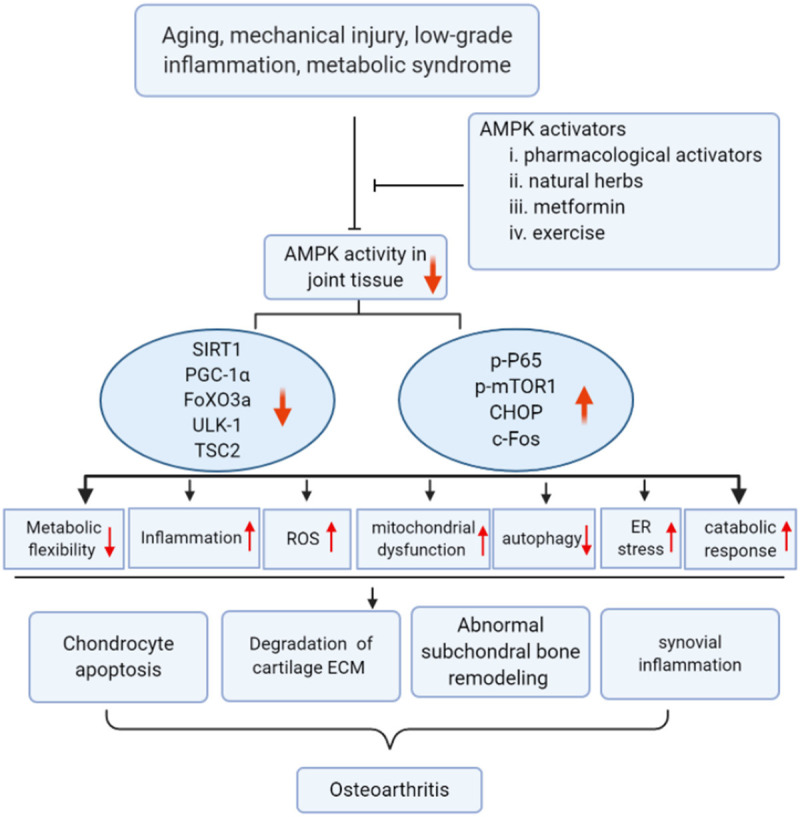
Osteoarthritis (OA) is the most common skeletal disease and the leading cause of pain and disability in the aged population (>65 years). However, the underlying factors involved in OA pathogenesis remain elusive which has resulted in failure to identify disease-modifying OA drugs. Altered metabolism has been shown to be a prominent pathological change in OA. As a critical bioenergy sensor, AMP-activated protein kinase (AMPK) mediates not only energy homeostasis but also redox balance in chondrocytes to counter various cell stress. Dysfunction of AMPK activity has been associated with reduced autophagy, impaired mitochondrial function, excessive reactive oxygen species generation, and inflammation in joint tissue. These abnormalities ultimately trigger articular cartilage degeneration, synovial inflammation, and abnormal subchondral bone remodeling. This review focuses on recent findings describing the central role of AMPK in joint homeostasis and OA development. We also highlight current advances that target AMPK as a novel therapeutic strategy for OA prevention.
Keywords: AMPK; Osteoarthritis; autophagy; inflammation; metabolism.
AJTR Copyright © 2020.
Conflict of interest statement
None.
Figures
References
-
- GBD 2015 Disease and Injury Incidence and Prevalence Collaborators. Global, regional, and national incidence, prevalence, and years lived with disability for 310 diseases and injuries, 1990-2015: a systematic analysis for the Global Burden of Disease Study 2015. Lancet. 2016;388:1545–1602. - PMC - PubMed
-
- Sherwood J. Osteoarthritis year in review 2018: biology. Osteoarthritis Cartilage. 2019;27:365–370. - PubMed
-
- Francisco V, Perez T, Pino J, Lopez V, Franco E, Alonso A, Gonzalez-Gay MA, Mera A, Lago F, Gomez R, Gualillo O. Biomechanics, obesity, and osteoarthritis. The role of adipokines: when the levee breaks. J Orthop Res. 2018;36:594–604. - PubMed
-
- Salminen A, Kaarniranta K. AMP-activated protein kinase (AMPK) controls the aging process via an integrated signaling network. Ageing Res Rev. 2012;11:230–241. - PubMed
Publication types
LinkOut - more resources
Full Text Sources
Research Materials