


Digestive tract nematode infections in non-native invasive American mink with the first molecular identification of Molineus patens
- PMID: 33437614
- PMCID: PMC7787951
- DOI: 10.1016/j.ijppaw.2020.12.006
Digestive tract nematode infections in non-native invasive American mink with the first molecular identification of Molineus patens
Abstract
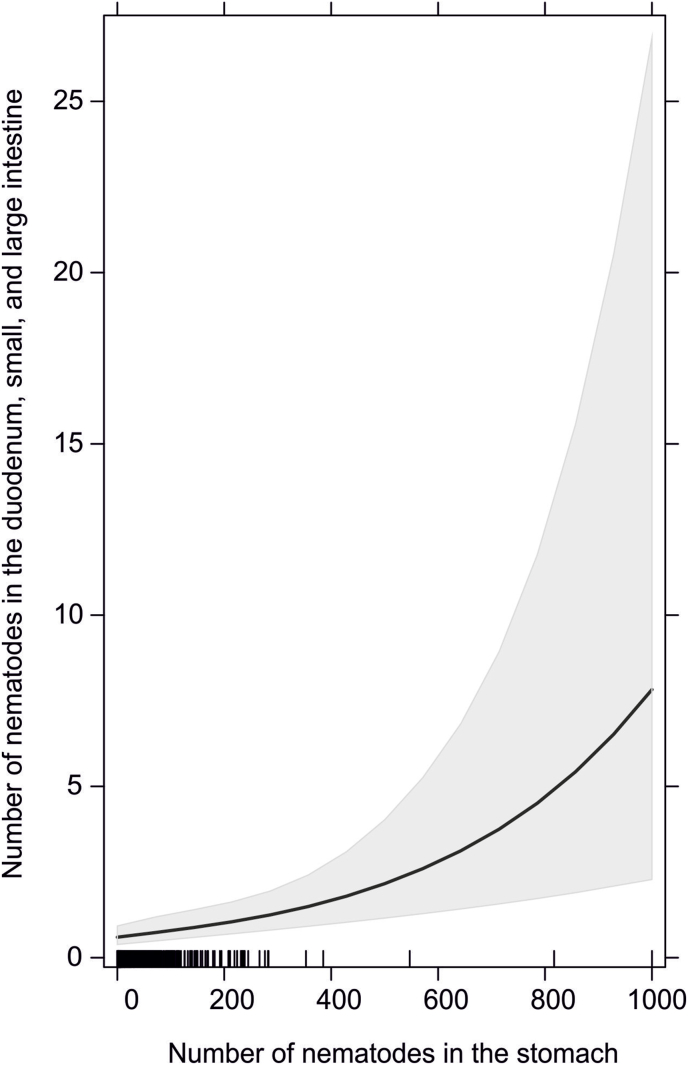
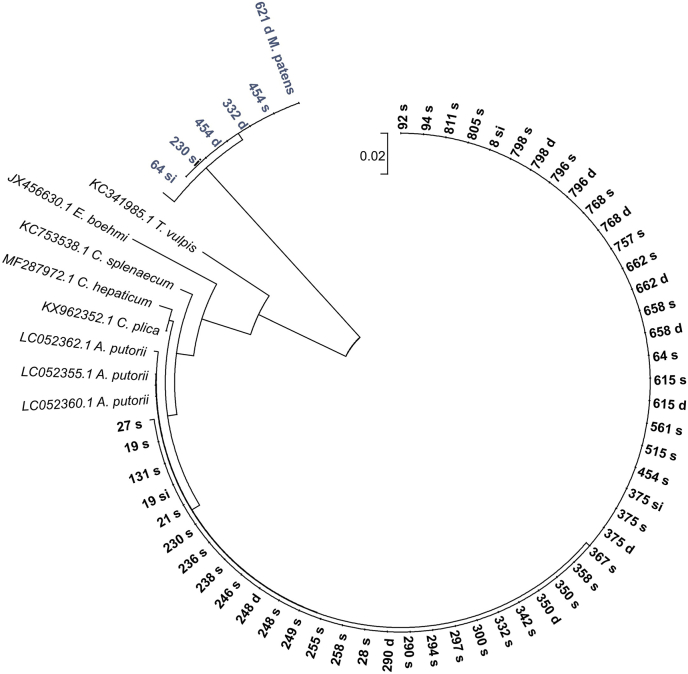
Parasites may negatively affect hosts condition, especially when infection intensity is high. Species introduced to a new habitat are often less exposed to a parasite pressure but may accumulate parasites in time. American mink (Neovison vison) introduced to Europe, Asia, and South America is an example of such invasive species. We analysed nematode prevalence and digestive tract infection intensity in 796 feral American mink from Poland. The analyses were performed separately for stomach, duodenum, small intestine and large intestine. Parasite species identification was performed using molecular methods based on highly conserved nuclear 18S rRNA gene and supplemented with morphological analysis. In total, we collected 26,852 nematodes and 98.6% of them were isolated from mink stomachs. We found positive association between infection intensity in stomach and other parts of digestive tract. Nematode prevalence was estimated at 63.8% and average infection intensity per one American mink at 52.9 (range from 1 to 1118). If the stomach results were theoretically and intentionally omitted the prevalence was 5 times lower (12.7%) and infection intensity 14 times lower (3.7; range 1-50). We identified two nematode species in digestive tracts of American mink: Aonchotheca putorii and Molineus patens. The 18S rRNA gene sequence of Molineus patens has been reported for the first time. The results showed that Aonchotheca putorii is a dominating nematode in the invasive American mink and that it inhabits stomach intensively and preferably.
Keywords: Aonchotheca putorii; Digestive tract; Genetical methods; Molineus patens; Neovison vison.
© 2020 The Author(s).
Conflict of interest statement
The authors declare that they have no known competing financial interests or personal relationships that could have appeared to influence the work reported in this paper.
Figures
References
-
- Anderson R.M., May R.M. Population biology of infectious diseases .1. Nature. 1979;280:361–367. - PubMed
-
- Anisimova E.I. Comparative analysis of the helminthocenoses of the otter (Lutra lutra) and polecat (Mustela putorius) in Belarus. Helminthologia. 2002;39:87–90.
-
- Anisimova E.I. Study on the European mink Mustela lutreola helminthocenoses in connection with the American mink M. vison expansion in Belarus: story of the study and review of the results. Helminthologia. 2004;41:193–196.
LinkOut - more resources
Full Text Sources
Other Literature Sources
