


Lingzhi and San-Miao-San with hyaluronic acid gel mitigate cartilage degeneration in anterior cruciate ligament transection induced osteoarthritis
- PMID: 33437632
- PMCID: PMC7773973
- DOI: 10.1016/j.jot.2020.07.008
Lingzhi and San-Miao-San with hyaluronic acid gel mitigate cartilage degeneration in anterior cruciate ligament transection induced osteoarthritis
Abstract
Objective: To investigate the mitigate efficacy of Chinese medicine Lingzhi (LZ) and San-Miao-San (SMS) combined with hyaluronic acid (HA)-gel in attenuating cartilage degeneration in traumatic osteoarthritis (OA).
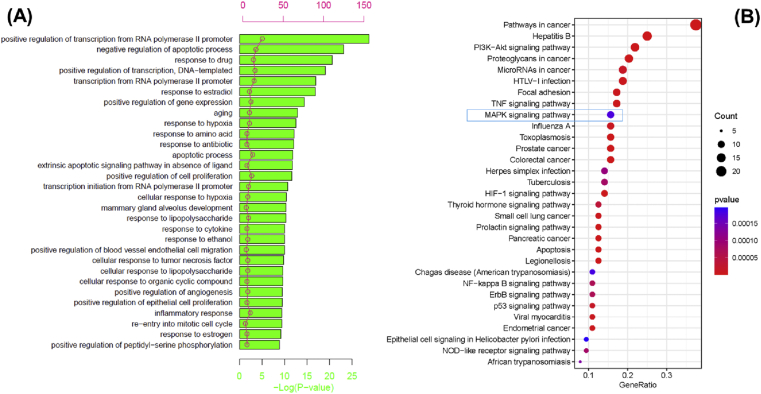
Methods: The standardized surgery of anterior cruciate ligament transection (ACLT) was made from the medial compartment of right hind limbs of 8-week-old female SD rats and resulted in a traumatic OA. Rats (n = 5/group) were treated once intra-articular injection of 50 μl HA-gel, 50 μl HA-gel+50 μg LZ-SMS, 50 μl of saline+50 μg LZ-SMS and null (ACLT group) respectively, except sham group. Limbs were harvested for μCT scan and histopathological staining 3-month post-treatment. Inflammatory cytokines from plasma and synovial fluid were detected using Immunology Multiplex Assay kit. The putative targets of active compounds in LZ-SMS and known therapeutic targets for OA were combined to construct protein-protein interaction network. Gene Ontology and Kyoto Encyclopedia of Genes and Genomes (KEGG) enrichment analysis was adopted to predict the potential targets and signaling pathway of LZ-SMS in OA through the tool of DAVID Bioinformatics.
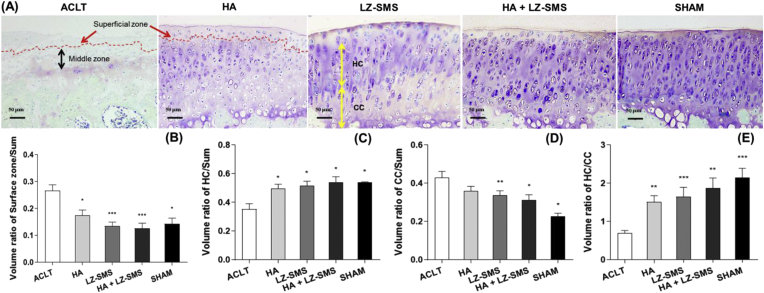
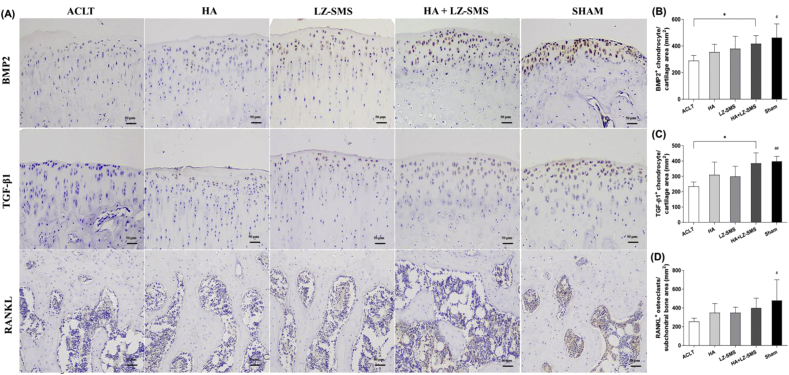
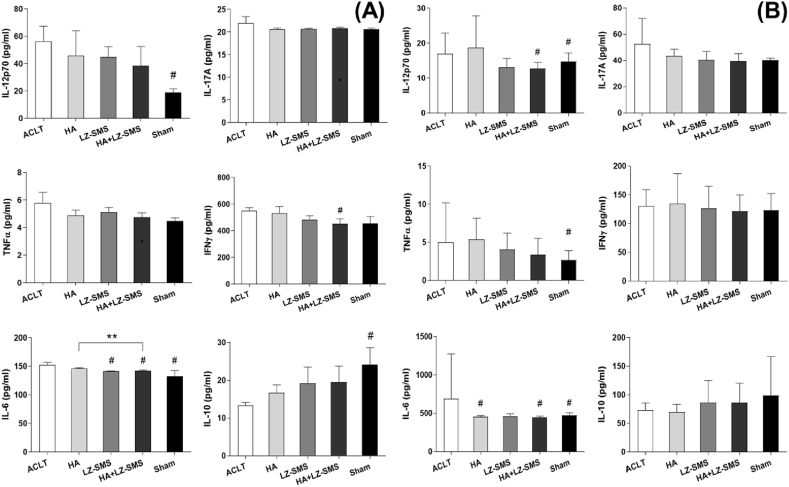
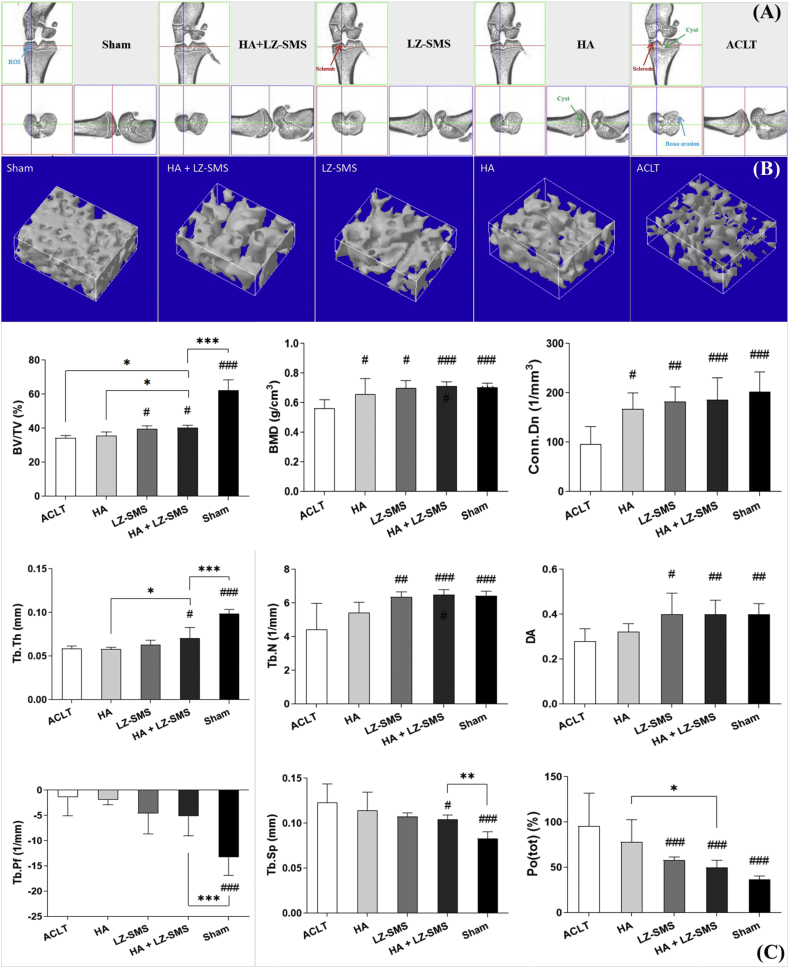
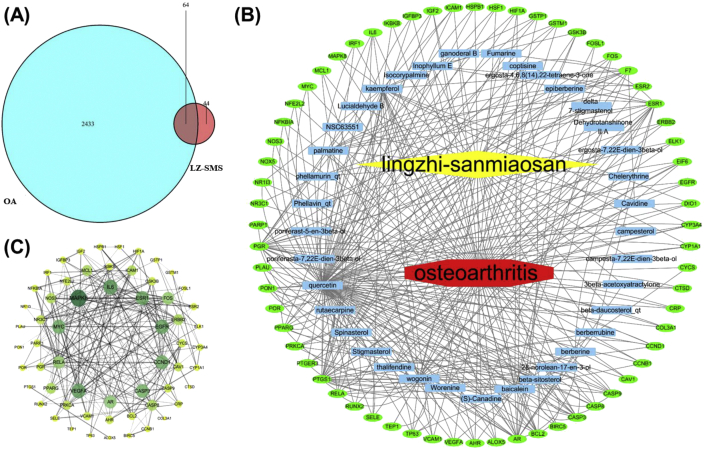
Results: In vivo, HA-gel + LZ-SMS treatment resulted in a higher volume ratio of hyaline cartilage (HC)/calcified cartilage (CC) and HC/Sum (total volume of cartilage), compared to ACLT and HA-gel groups. In addition, histological results showed the elevated cartilage matrix, chondrogenic and osteoblastic signals in HA-gel + LZ-SMS treatment. Treatment also significantly altered subchondral bone (SCB) structure including an increase in BV/TV, Tb.Th, BMD, Conn.Dn, Tb.N, and DA, as well as a significant decrease in Tb.Sp and Po(tot), which implied a protective effect on maintaining the stabilization of tibial SCB microstructure. Furthermore, there was also a down-regulated inflammatory cytokines and upregulated anti-inflammatory cytokine IL-10 in HA+LZ-SMS group. Finally, 64 shared targets from 37 active compounds in LZ-SMS related to the core genes for the development of OA. LZ-SMS has a putative role in regulating inflammatory circumstance through influencing the MAPK signaling pathway.
Conclusion: Our study elucidated a protective effect of HA-gel + LZ-SMS in mitigating cartilage degradation and putative interaction with targets and signaling pathway for the development of traumatic OA.
The translational potential of this article: Our results provide a biological rationale for the use of LZ-SMS as a potential candidate for OA treatment.
Keywords: 3D, Three-dimensional; AC, Articular cartilage; ACLT, Anterior cruciate ligament transection; Acan, Aggrecan; Articular cartilage; BMD, Bone mineral density; BV/TV, Bone volume fraction; CC, Calcified cartilage; Conn.Dn, Connectivity density; DA, Degree of anisotropy; DL, Drug-likeness; ECM, Extracellular matrix; FDR, False discovery rate; GO, Gene ontology; HA, Hyaluronic acid; HC, Hyaline cartilage; Hyaluronic acid gel; KEGG, Kyoto Encyclopedia of Genes and Genomes; LZ-SMS, Lingzhi-San-Miao-San; Lingzhi and San-Miao-San; MZ, Middle zone area of articular cartilage; NC, Negative control; OA, Osteoarthritis; OB, Oral bioavailability; OMIM, Online Mendelian Inheritance in Man; Osteoarthritis; PPI, Protein–protein interaction; Po(tot), Total porosity; ROI, Region of Interest; SC, Superficial cartilage; SCB, Subchondral bone; SZ, Superficial zone of articular cartilage; Subchondral trabecular bone; Sum, Whole cartilage; TCM, Traditional Chinese medicine; TCMSP, Traditional Chinese Medicine Systems Pharmacology Database; Tb.N, Trabecular number; Tb.Pf, Trabecular bone pattern factor; Tb.Sp, Trabecular separation; Tb.Th, Trabecular thickness.
© 2020 The Author(s).
Conflict of interest statement
The authors have no conflicts of interest to disclose in relation to this article.
Figures
References
-
- Hayami T., Pickarski M., Zhuo Y., Wesolowski G.A., RodanLe G.A., Duong L.T. Characterization of articular cartilage and subchondral bone changes in the rat anterior cruciate ligament transection and meniscectomized models of osteoarthritis. Bone. 2006;38(2):234–243. - PubMed
-
- Feng Y., Cai Z., Cheung W.K., Yang K.D., Xu L., Lu W.W. Multichromatic TTF staining characterizes cartilage matrix in osteoarthritisand bone development. Histol Histopathol. 2019;34(3):275–286. - PubMed
-
- Wang T., Wen C.Y., Yan C.H., Lu W.W., Chiu K.Y. Spatial and temporal changes of subchondral bone proceed to microscopic articular cartilage degeneration in Guinea pigs with spontaneous osteoarthritis. Osteoarthritis Cartilage. 2013;21(4):574–581. - PubMed
LinkOut - more resources
Full Text Sources
Other Literature Sources
Research Materials
Miscellaneous
