Subcellular microRNAs in diabetic cardiomyopathy
- PMID: 33437801
- PMCID: PMC7791206
- DOI: 10.21037/atm-20-2205
Subcellular microRNAs in diabetic cardiomyopathy
Abstract
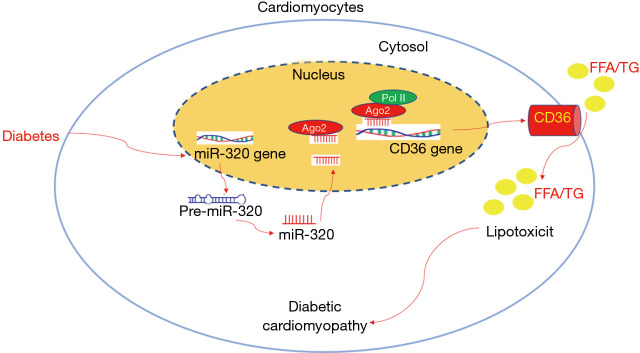
Cardiovascular complications are the leading causes of diabetes-related morbidity and mortality. The high incidence and poor prognosis of heart failure in diabetic patients have been associated, in part, to the presence of an underlying cardiomyopathy characterized by cardiac hypertrophy, cardiomyocytes apoptosis, and fibrosis. It has been unclear about the mechanism that connects diabetes mellitus to the development of cardiovascular dysfunction. Micro(mi)RNAs represent a class of small, 18- to 28-nucleotide-long, non-coding RNA molecules. MiRNAs typically suppress gene expression at the post-transcriptional levels by binding directly to the 3'-UTR of the target mRNAs in the cytoplasm. Interestingly, recent studies suggest that miRNAs may also regulate gene expression in a positive manner. Our recent studies have shown that subcellular miRNAs, such as cytosol-, mitochondria- and nucleus-localized miRNAs, were dramatically dysregulated in diabetic cardiomyopathy. Specifically, cytoplasm localized miRNAs regulate genes expression in a post-transcriptional manner. Nuclear localized miRNAs regulate gene transcription or chromosomal reconstruction through the non-canonical mechanism. Mitochondrial miRNAs stimulate, rather than repress, the translation of specific mitochondrial genome-encoded transcripts. By reviewing these latest discovered functions of subcellular miRNAs in diabetic animal models, we identified new mechanistic insights for diabetic cardiomyopathy. Understanding the nature of subcellular miRNAs will provide new therapeutic targets against diabetes-associated cardiac complications in the near future.
Keywords: Subcellular miRNAs; diabetic cardiomyopathy; transcription; translation.
2020 Annals of Translational Medicine. All rights reserved.
Conflict of interest statement
Conflicts of Interest: All authors have completed the ICMJE uniform disclosure form (available at http://dx.doi.org/10.21037/atm-20-2205). CC and DWW report grants from National Natural Science Foundation of China (NSFC) during the conduct of the study. The other authors have no conflicts of interest to declare.
Figures
References
-
- Schocken DD, Benjamin EJ, Fonarow GC, et al. Prevention of heart failure: a scientific statement from the American Heart Association Councils on Epidemiology and Prevention, Clinical Cardiology, Cardiovascular Nursing, and High Blood Pressure Research; Quality of Care and Outcomes Research Interdisciplinary Working Group; and Functional Genomics and Translational Biology Interdisciplinary Working Group. Circulation 2008;117:2544-65. 10.1161/CIRCULATIONAHA.107.188965 - DOI - PubMed
Publication types
LinkOut - more resources
Full Text Sources