


Prevalence of COVID-19-related risk factors and risk of severe influenza outcomes in cancer survivors: A matched cohort study using linked English electronic health records data
- PMID: 33437952
- PMCID: PMC7788436
- DOI: 10.1016/j.eclinm.2020.100656
Prevalence of COVID-19-related risk factors and risk of severe influenza outcomes in cancer survivors: A matched cohort study using linked English electronic health records data
Abstract
Background: People with active cancer are recognised as at risk of COVID-19 complications, but it is unclear whether the much larger population of cancer survivors is at elevated risk. We aimed to address this by comparing cancer survivors and cancer-free controls for (i) prevalence of comorbidities considered risk factors for COVID-19; and (ii) risk of severe influenza, as a marker of susceptibility to severe outcomes from epidemic respiratory viruses.
Methods: We included survivors (≥1 year) of the 20 most common cancers, and age, sex and general practice-matched cancer-free controls, derived from English primary care data linked to cancer registrations, hospital admissions and death registrations. Comorbidity prevalences were calculated 1 and 5 years from cancer diagnosis. Risk of hospitalisation or death due to influenza was compared using Cox models adjusted for baseline demographics and comorbidities.
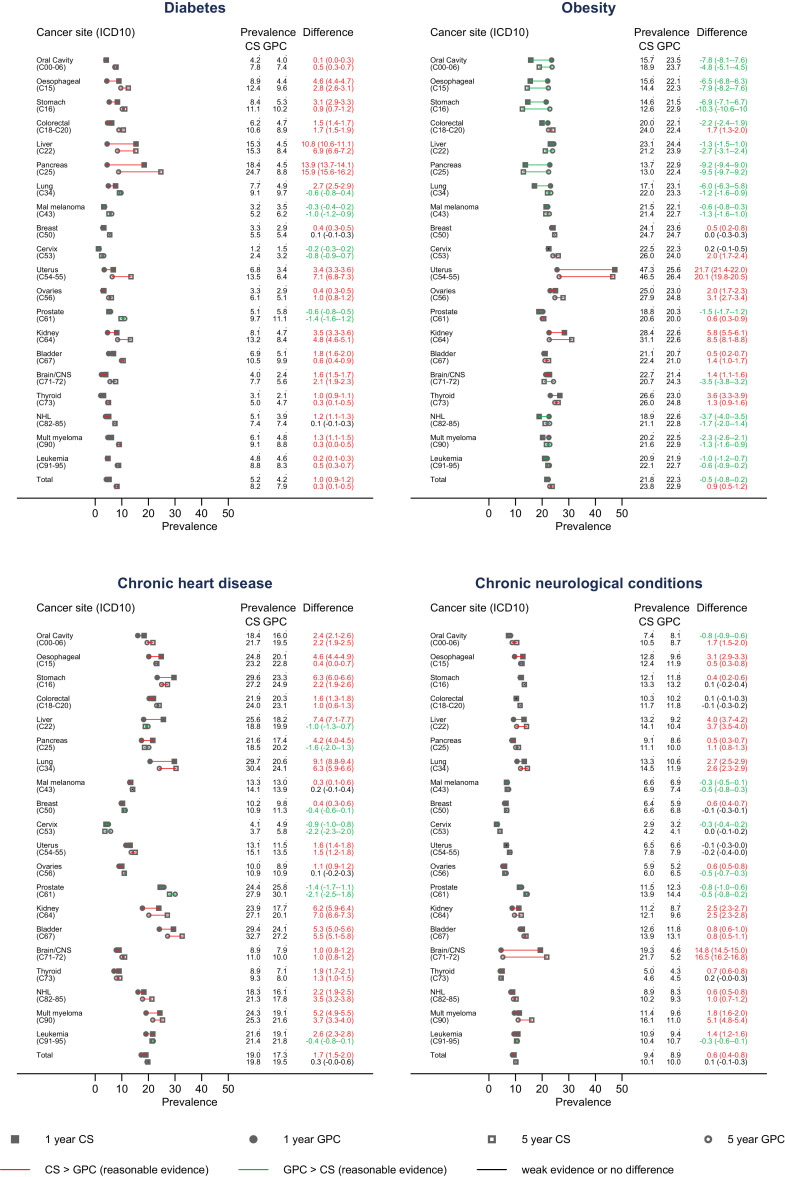
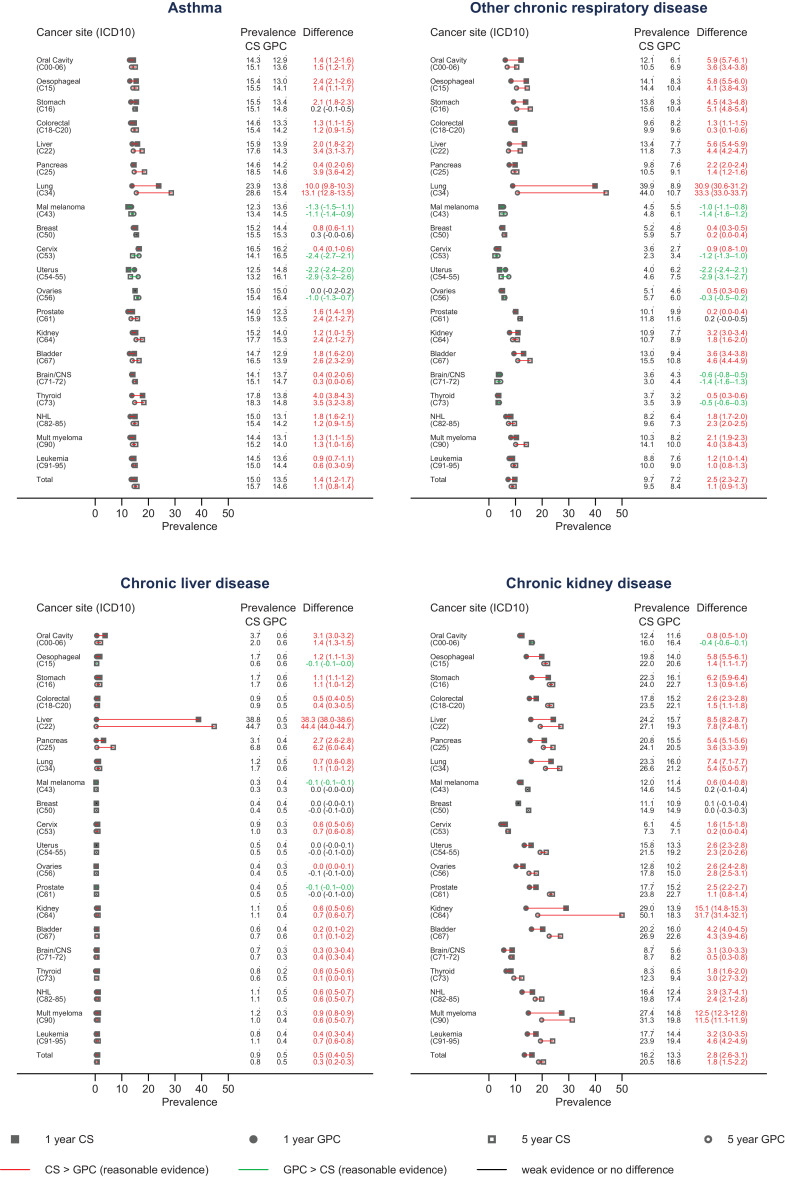
Findings: 108,215 cancer survivors and 523,541 cancer-free controls were included. Cancer survivors had more diabetes, asthma, other respiratory, cardiac, neurological, renal, and liver diseases, and less obesity, compared with controls, but there was variation by cancer site. There were 205 influenza hospitalisations/deaths, with cancer survivors at higher risk than controls (adjusted HR 2.78, 95% CI 2.04-3.80). Haematological cancer survivors had large elevated risks persisting for >10 years (HR overall 15.17, 7.84-29.35; HR >10 years from cancer diagnosis 10.06, 2.47-40.93). Survivors of other cancers had evidence of raised risk up to 5 years from cancer diagnosis only (HR >5 years 2.22, 1.31-3.74).
Interpretation: Risks of severe COVID-19 outcomes are likely to be elevated in cancer survivors. This should be taken into account in policies targeted at clinical risk groups, and vaccination for both influenza, and, when available, COVID-19, should be encouraged in cancer survivors.
© 2020 The Author(s).
Conflict of interest statement
Dr. McDonald reports grants from NIHR Health Protection Research Unit in Immunisation, during the conduct of the study; Dr. Stanway reports personal fees from Roche, personal fees from Eli Lilly, personal fees from Novartis, personal fees from Clinigen, outside submitted work; Dr. Bhaskaran reports grants from Wellcome Trust, grants from Royal Society, during the conduct of the study; all other authors have no conflicts of interest to disclose.
Figures
References
-
- Johns Hopkins Coronavirus Resource Centre. COVID-19 Map. 2020. https://coronavirus.jhu.edu/map.html (accessed May 2020).
-
- Public Health England. Guidance on shielding and protecting people defined on medical grounds as extremely vulnerable from COVID-19. 2020. https://www.gov.uk/government/publications/guidance-on-shielding-and-pro... (accessed May 2020).
-
- Macmillan Cancer Support and Public Health England's National Cancer Registration and Analysis Service. UK complete cancer prevalence for 2013. Version 2.0a April 2017. http://www.ncin.org.uk/about_ncin/segmentation2020).
-
- Public Health England. Influenza - the green book (chapter 19). In: ramsay M, ed. Immunisation against infectious disease; 2019.
Grants and funding
LinkOut - more resources
Full Text Sources
