. 2021 Jan 4;4(1):e2033448.
doi: 10.1001/jamanetworkopen.2020.33448.

Longitudinal Associations of Mental Disorders With Physical Diseases and Mortality Among 2.3 Million New Zealand Citizens

Affiliations

Longitudinal Associations of Mental Disorders With Physical Diseases and Mortality Among 2.3 Million New Zealand Citizens

Leah S Richmond-Rakerd et al. JAMA Netw Open. .

Abstract

Importance: Excess risk of physical disease and mortality has been observed among individuals with psychiatric conditions, suggesting that ameliorating mental disorders might also be associated with ameliorating the later onset of physical disability and early mortality. However, the temporal association between mental disorders and physical diseases remains unclear, as many studies have relied on retrospective recall, used cross-sectional designs or prospective designs with limited follow-up periods, or given inadequate consideration to preexisting physical illnesses.

Objective: To examine whether mental disorders are associated with subsequent physical diseases and mortality across 3 decades of observation.

Design, setting, and participants: This population-based cohort study used data from the New Zealand Integrated Data Infrastructure, a collection of nationwide administrative data sources linked at the individual level, to identify mental disorders, physical diseases, and deaths recorded between July 1, 1988, and June 30, 2018, in the population of New Zealand. All individuals born in New Zealand between January 1, 1928, and December 31, 1978, who resided in the country at any time during the 30-year observation period were included in the analysis. Data were analyzed from July 2019 to November 2020.

Exposures: Nationwide administrative records of mental disorder diagnoses made in public hospitals.

Main outcomes and measures: Chronic physical disease diagnoses made in public hospitals, deaths, and health care use.

Results: The study population comprised 2 349 897 individuals (1 191 981 men [50.7%]; age range at baseline, 10-60 years). Individuals with a mental disorder developed subsequent physical diseases at younger ages (hazard ratio [HR], 2.33; 95% CI, 2.30-2.36) and died at younger ages (HR, 3.80; 95% CI, 3.72-3.89) than those without a mental disorder. These associations remained across sex and age and after accounting for preexisting physical diseases. Associations were observed across different types of mental disorders and self-harm behavior (relative risks, 1.78-2.43; P < .001 for all comparisons). Mental disorders were associated with the onset of physical diseases and the accumulation of physical disease diagnoses (incidence rate ratio [IRR], 2.00; 95% CI, 1.98-2.03), a higher number of hospitalizations (IRR, 2.43; 95% CI, 2.39-2.48), longer hospital stays for treatment (IRR, 2.70; 95% CI, 2.62-2.79), and higher associated health care costs (b = 0.115; 95% CI, 0.112-0.118).

Conclusions and relevance: In this study, mental disorders were likely to begin and peak in young adulthood, and they antedated physical diseases and early mortality in the population. These findings suggest that ameliorating mental disorders may have implications for improving the length and quality of life and for reducing the health care costs associated with physical diseases.


Conflict of interest statement

Conflict of Interest Disclosures: None reported.

Figures

Figure 1.
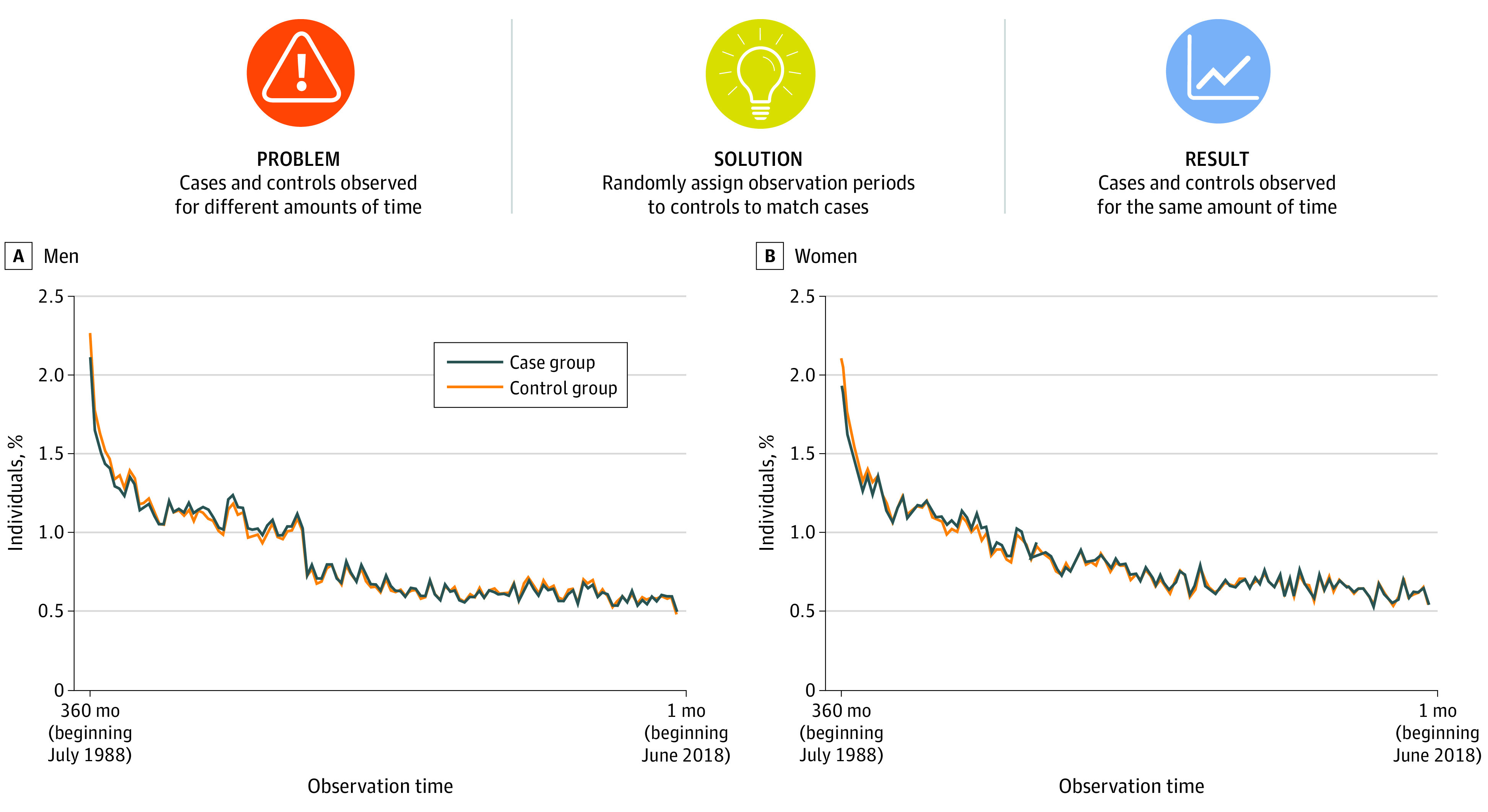
Figure 1.. Random Matching Procedure
To account for the different durations of observation time between individuals with a mental disorder (cases, observed from their first mental health hospitalization) and individuals without a mental disorder (controls, all observed from the start of the study period), we randomly assigned observation periods to controls to match observation durations among cases using hospital admission dates (month and year). Hospital admission dates were ascertained at the daily level, but cases and controls were matched based on the distributions of admission dates within each month. Matching was conducted within each birth cohort separately to account for cohort differences in the prevalence of mental health hospitalizations. Panels A and B show that the distributions of observation time among cases and their randomly-matched controls were similar. The percentages sum to 100% within cases and controls (within sex). In addition to random matching, we weighted the data based on time spent alive and in the country to account for any remaining differences between individuals in observation time owing to death or outmigration.
Figure 2.
Figure 2.. Distribution of Mental Disorders and Physical Diseases in the Study Population
The figure shows the prevalence (based on inpatient hospitalization diagnoses) of individuals diagnosed with any mental disorder or any physical disease during the 30-year observation period. Counts were randomly rounded to a base of 3 per the confidentiality rules of Statistics New Zealand. Age ranges indicate ages during the 30-year observation period.
Figure 3.
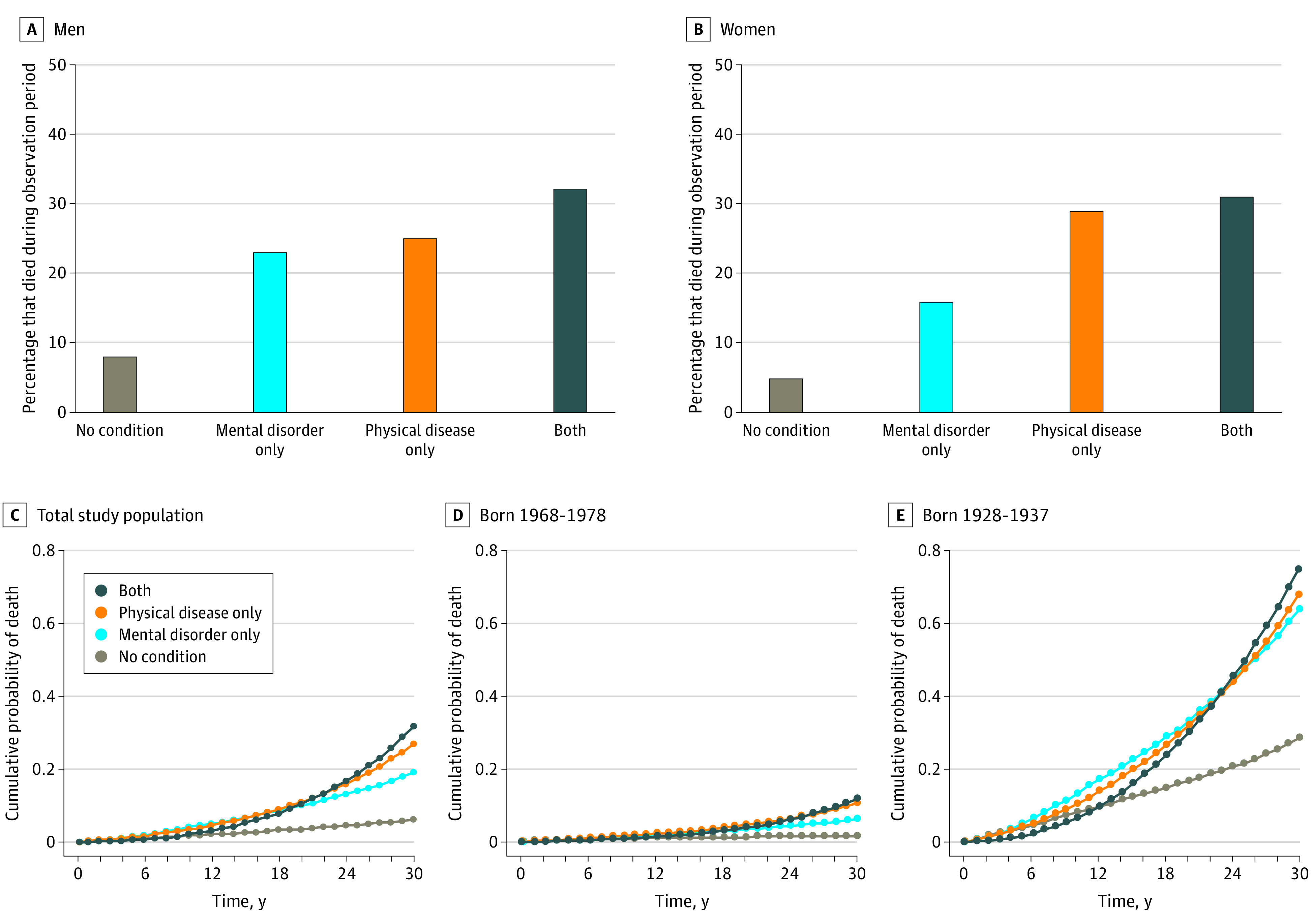
Figure 3.. Associations Between Mental Disorders, Physical Diseases, and Mortality
A, Estimates were age-standardized. A total of 885 558 men had no mental or physical condition, 35 454 men had mental disorders only, 253 155 men had physical diseases only, and 17 829 men had both mental disorders and physical diseases. B, Estimates were age-standardized. A total of 926 553 women had no mental or physical condition, 36 249 women had mental disorders only, 180 699 women had physical diseases only, and 14 409 women had both mental disorders and physical diseases. C, Estimates were age- and sex-standardized. D, Youngest cohort. Estimates were sex-standardized. E, Oldest cohort. Estimates were sex-standardized. Counts were randomly rounded to a base of 3 per the confidentiality rules of Statistics New Zealand. Hazard ratios for the associations between mental disorders, physical diseases, and mortality for varying intervals across the 30-year observation period are available in eTable 3 in the Supplement.
Figure 4.
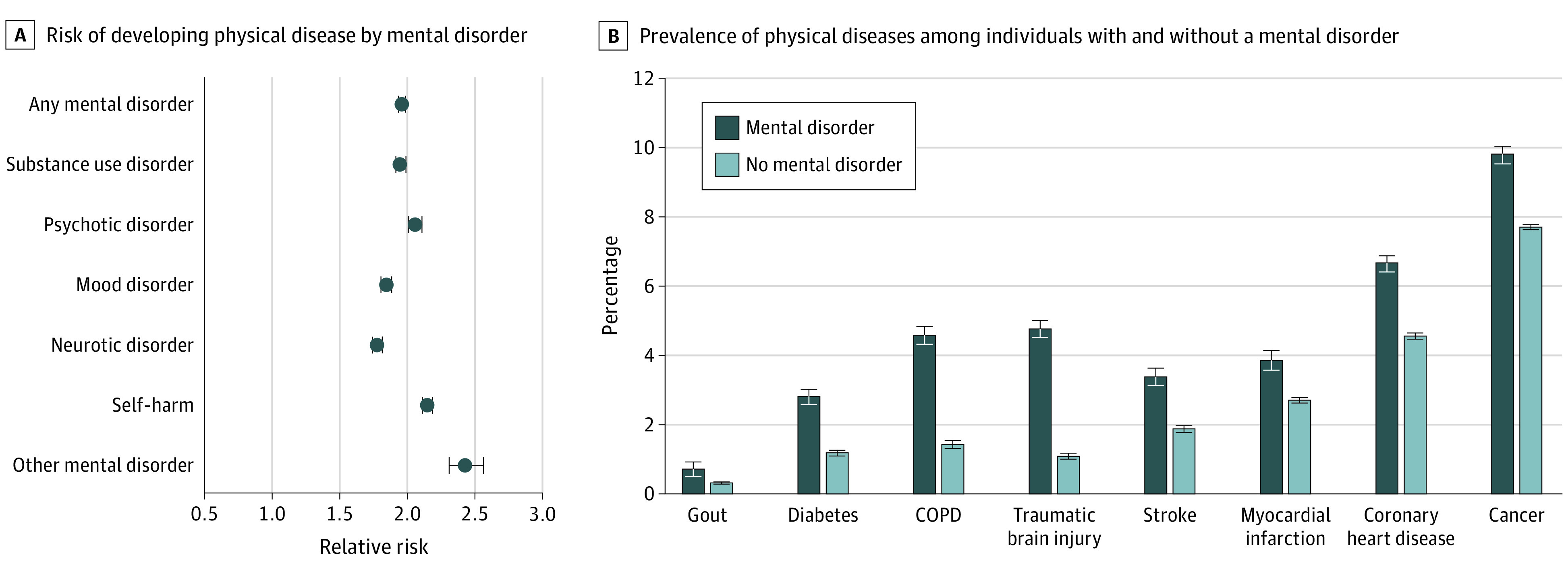
Figure 4.. Specificity of Mental Disorder and Physical Disease Associations
A, Mental disorders of many types were associated with subsequent physical diseases. Other mental disorder category includes physiological-disturbance, personality, developmental, behavioral, and unspecified disorders. Error bars indicate 95% CIs. B, Individuals diagnosed with a mental disorder were subsequently diagnosed with many different types of physical diseases across the observation period. Prevalence estimates for individuals with mental disorders across the 30-year period include all physical disease diagnoses received after the first mental disorder diagnosis; physical disease diagnoses that predated the first mental disorder diagnosis were excluded. Prevalence estimates for individuals without mental disorders across the 30-year period include all physical disease diagnoses received during the observation period. Risk ratios for estimates are available in eTable 4 in the Supplement. Error bars indicate SEs. COPD indicates chronic obstructive pulmonary disease.

References

    1. LeVine S, Stevens H Deep dive: the aging, childless future. Axios. July 21, 2018. Accessed April 21, 2020. https://www.axios.com/the-aging-childless-future-21f9ae39-bf77-4777-8df2...
    1. World Economic Forum The Future of Jobs: Employment, Skills and Workforce Strategy for the Fourth Industrial Revolution World Economic Forum; 2016. Accessed June 25, 2020. http://www3.weforum.org/docs/WEF_Future_of_Jobs.pdf
    1. Cunningham R, Sarfati D, Peterson D, Stanley J, Collings S. Premature mortality in adults using New Zealand psychiatric services. N Z Med J. 2014;127(1394):31-41. - PubMed
    1. Scott KM, Lim C, Al-Hamzawi A, et al. Association of mental disorders with subsequent chronic physical conditions: world mental health surveys from 17 countries. JAMA Psychiatry. 2016;73(2):150-158. doi: 10.1001/jamapsychiatry.2015.2688 - DOI - PMC - PubMed
    1. Archer G, Kuh D, Hotopf M, Stafford M, Richards M. Association between lifetime affective symptoms and premature mortality. JAMA Psychiatry. 2020;77(8):806-813. doi: 10.1001/jamapsychiatry.2020.0316 - DOI - PMC - PubMed

Publication types