


Cell death pathways: intricate connections and disease implications
- PMID: 33439509
- PMCID: PMC7917554
- DOI: 10.15252/embj.2020106700
Cell death pathways: intricate connections and disease implications
Abstract
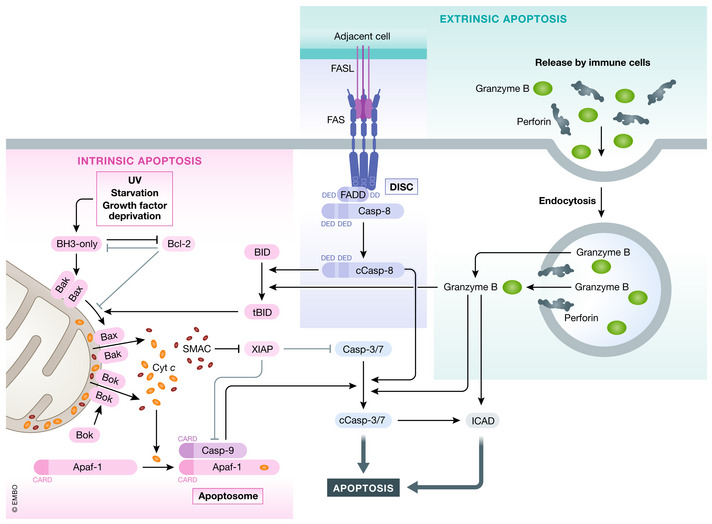
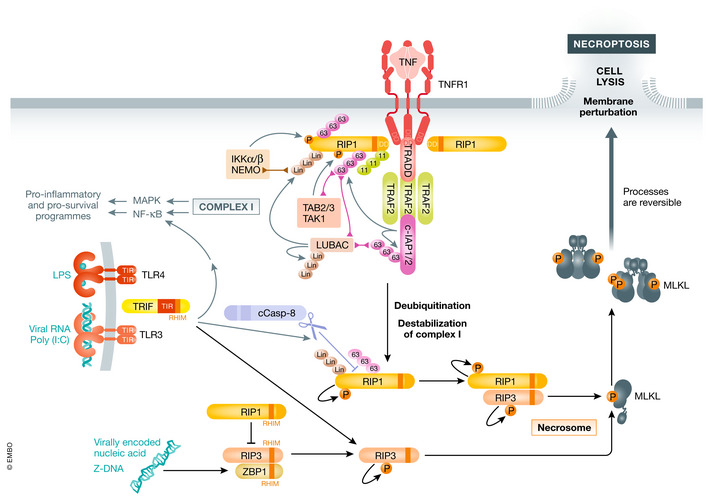
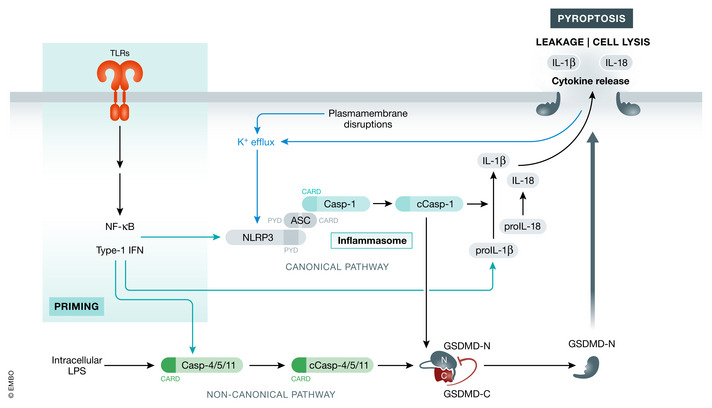
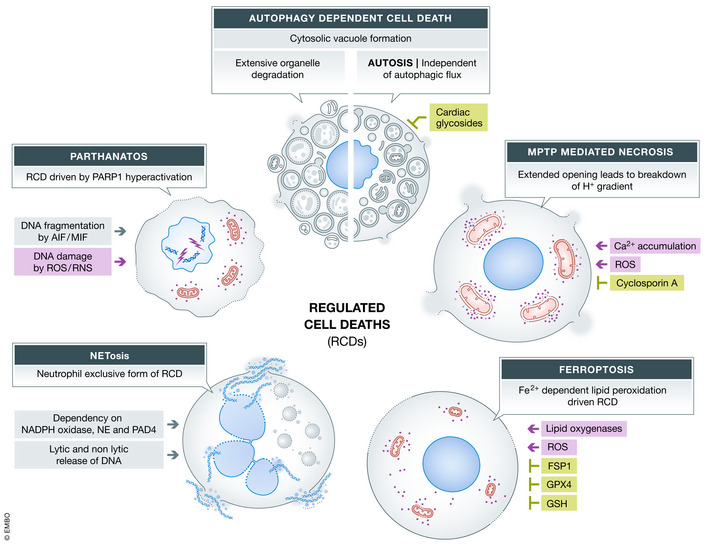
Various forms of cell death have been identified over the last decades with each relying on a different subset of proteins for the activation and execution of their respective pathway(s). In addition to the three best characterized pathways-apoptosis, necroptosis, and pyroptosis-other forms of regulated cell death including autophagy-dependent cell death (ADCD), mitochondrial permeability transition pore (MPTP)-mediated necrosis, parthanatos, NETosis and ferroptosis, and their relevance for organismal homeostasis are becoming better understood. Importantly, it is increasingly clear that none of these pathways operate alone. Instead, a more complex picture is emerging with many pathways sharing components and signaling principles. Finally, a number of cell death regulators are implicated in human diseases and represent attractive therapeutic targets. Therefore, better understanding of physiological and mechanistic aspects of cell death signaling should yield improved reagents for addressing unmet medical needs.
Keywords: RIPK1; apoptosis; caspase; necroptosis; pyroptosis.
© 2021 The Authors.
Conflict of interest statement
The authors declare that they have no conflict of interest.
Figures
References
-
- Bailey HH, Ripple G, Tutsch KD, Arzoomanian RZ, Alberti D, Feierabend C, Mahvi D, Schink J, Pomplun M, Mulcahy RT et al (1997) Phase I study of continuous‐infusion L‐S, R‐buthionine sulfoximine with intravenous melphalan. J Natl Cancer Inst 89: 1789–1796 - PubMed
Publication types
MeSH terms
LinkOut - more resources
Full Text Sources
Other Literature Sources
Miscellaneous
