PTSD in the COVID-19 Era
- PMID: 33441072
- PMCID: PMC9185760
- DOI: 10.2174/1570159X19666210113152954
PTSD in the COVID-19 Era
Abstract
Background: In December 2019, Wuhan City in Hubei Province, China witnessed an outbreak of a novel type of coronavirus (COVID-19), named severe acute respiratory syndrome coronavirus 2 (SARS-CoV-2). The sharp rise in the number of infected cases and the surge spike in fatalities worldwide prompted the World Health Organization (WHO) to declare this rapid outbreak a global pandemic in March 2020. The economic, health, and social ramifications of COVID-19 induced fear and anxiety all over the world.
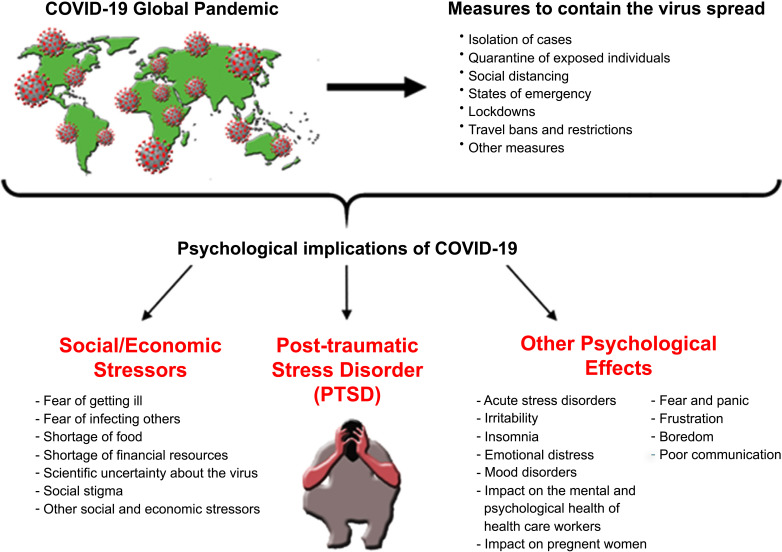
Objective: The purpose of this review is to discuss how precautionary measures and restrictions imposed by governments, such as quarantines, lockdowns, and social distancing, have not only caused economic losses, but also a rise in mental health problems specifically post-traumatic stress disorder (PTSD).
Methods: A deep comprehensive review of the relevant literature regarding the pandemic and its debilitating consequences on the psychological status of the public was performed.
Results: This review illustrates that the pandemic had a traumatic impact on the psychological functioning of the public, particularly COVID-19 survivors, older adults, and healthcare workers, due to difficulties in coping with new realities and uncertainties.
Conclusion: In this review, we have discussed the psychological implications of this pandemic and we have provided an extensive background for understanding options regarding PTSD management in healthy individuals and those with preexisting conditions.
Keywords: COVID-19; PTSD; SARS-CoV-2; health care workers.; post-traumatic stress disorder; stigma.
Copyright© Bentham Science Publishers; For any queries, please email at epub@benthamscience.net.
Figures
References
-
- World Health Organization 2020.
-
- World Health Organization Archived https://www.who.int/news-room/detail/27-04-2020-who-timeline---covid-19
-
- World Health Organization Coronavirus disease (COVID-19). Situation Report. 2020;178:2020.
Publication types
MeSH terms
LinkOut - more resources
Full Text Sources
Other Literature Sources
Medical
Miscellaneous