


Genome-wide macroevolutionary signatures of key innovations in butterflies colonizing new host plants
- PMID: 33441560
- PMCID: PMC7806994
- DOI: 10.1038/s41467-020-20507-3
Genome-wide macroevolutionary signatures of key innovations in butterflies colonizing new host plants
Abstract
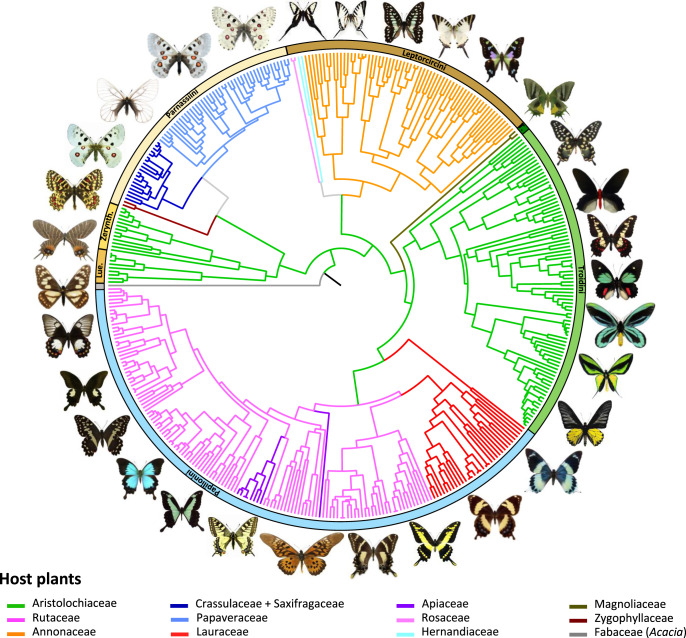
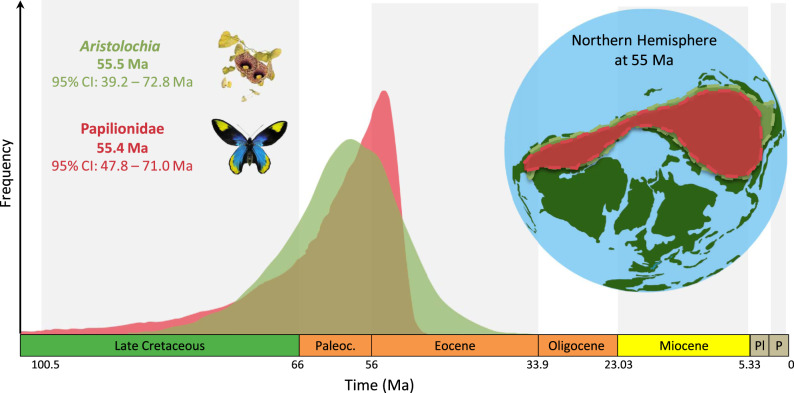
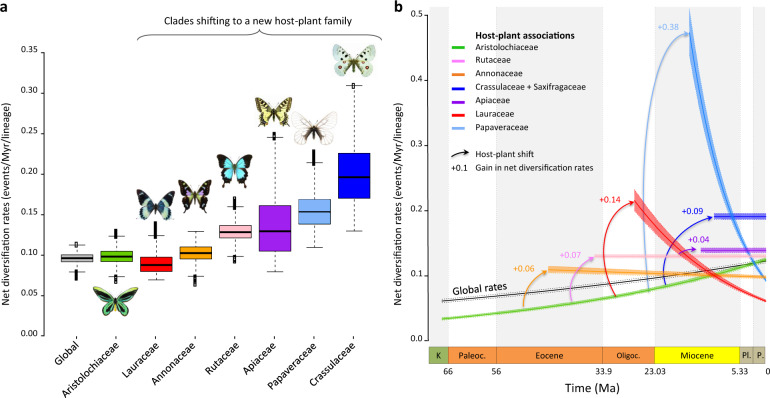
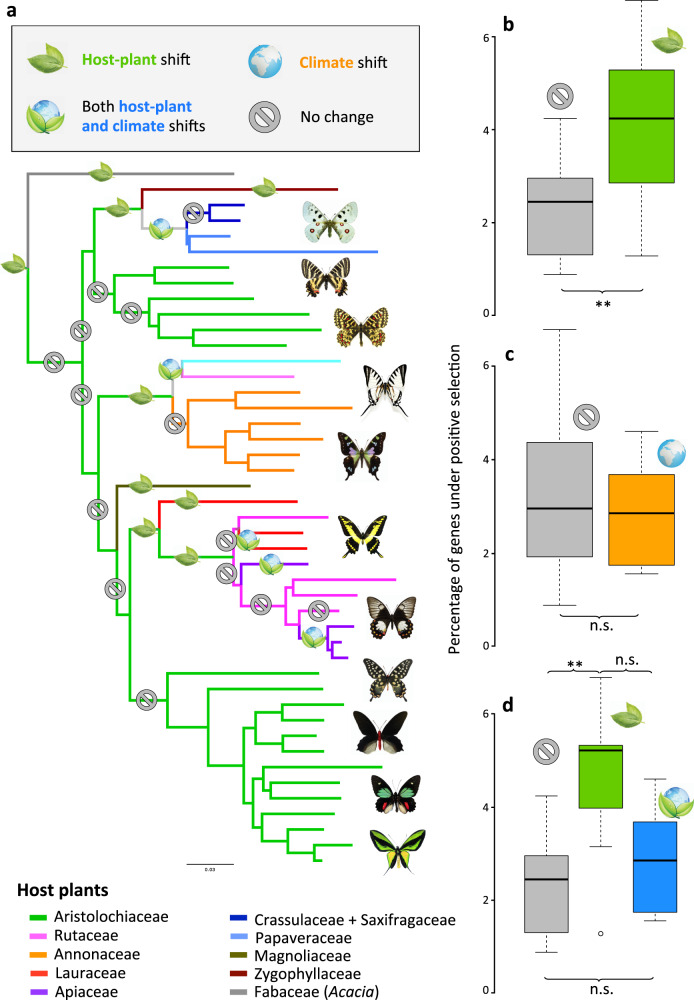
The mega-diversity of herbivorous insects is attributed to their co-evolutionary associations with plants. Despite abundant studies on insect-plant interactions, we do not know whether host-plant shifts have impacted both genomic adaptation and species diversification over geological times. We show that the antagonistic insect-plant interaction between swallowtail butterflies and the highly toxic birthworts began 55 million years ago in Beringia, followed by several major ancient host-plant shifts. This evolutionary framework provides a valuable opportunity for repeated tests of genomic signatures of macroevolutionary changes and estimation of diversification rates across their phylogeny. We find that host-plant shifts in butterflies are associated with both genome-wide adaptive molecular evolution (more genes under positive selection) and repeated bursts of speciation rates, contributing to an increase in global diversification through time. Our study links ecological changes, genome-wide adaptations and macroevolutionary consequences, lending support to the importance of ecological interactions as evolutionary drivers over long time periods.
Conflict of interest statement
The authors declare no competing interests.
Figures
References
-
- Grimaldi, D. A. & Engel, M. S. Evolution of the Insects (Cambridge University Press, 2005).
-
- Strong, D. R., Lawton, J. H. & Southwood, R. Insects on Plants: Community Patterns and Mechanisms (Harvard University Press, 1984).
-
- Ehrlich PR, Raven PH. Butterflies and plants: a study in coevolution. Evolution. 1964;18:586–608. doi: 10.1111/j.1558-5646.1964.tb01674.x. - DOI
Publication types
MeSH terms
Associated data
LinkOut - more resources
Full Text Sources
Other Literature Sources
