


Prognostic value of blood-based fibrosis biomarkers in patients with metastatic colorectal cancer receiving chemotherapy and bevacizumab
- PMID: 33441622
- PMCID: PMC7806753
- DOI: 10.1038/s41598-020-79608-0
Prognostic value of blood-based fibrosis biomarkers in patients with metastatic colorectal cancer receiving chemotherapy and bevacizumab
Abstract
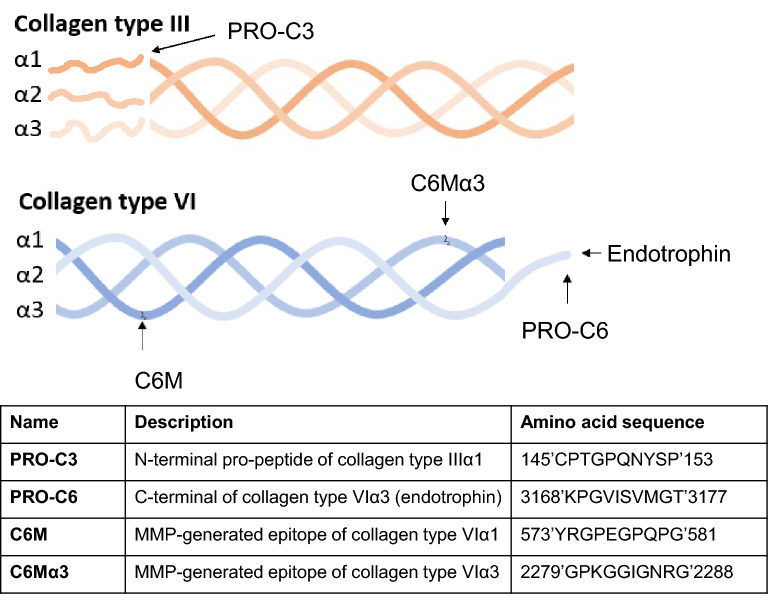
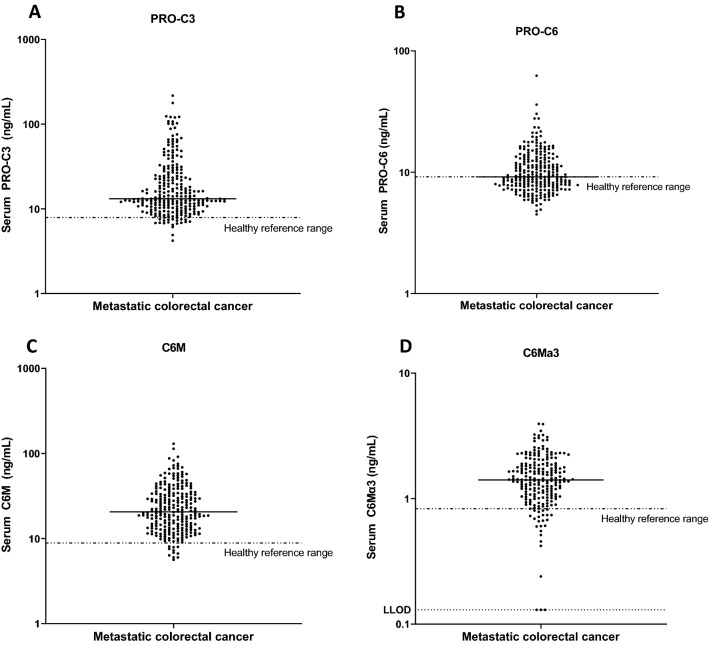
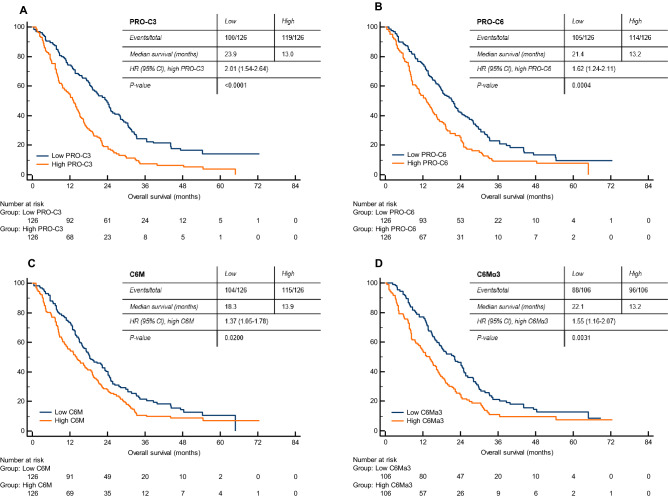
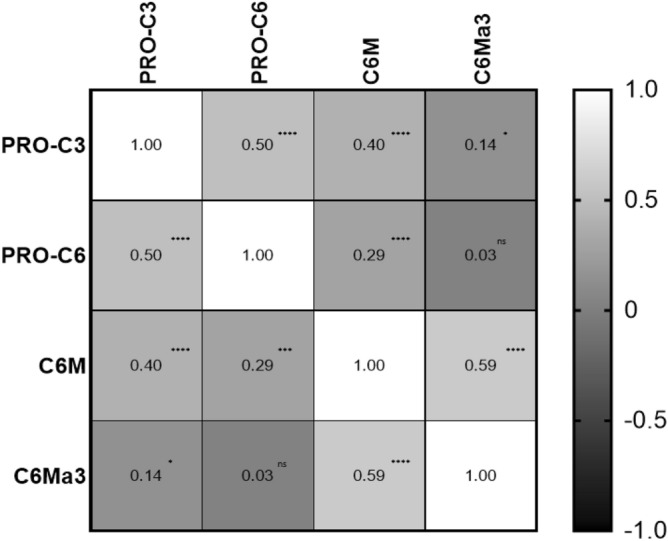
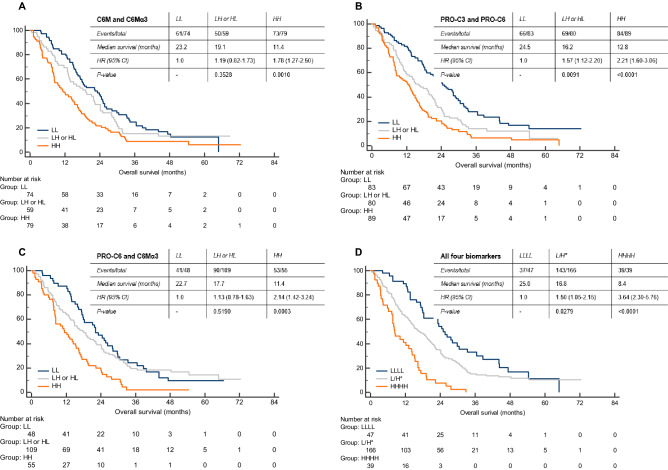
A desmoplastic colorectal cancer stroma, characterized by excess turnover of the cancer-associated fibroblast derived collagens type III and VI, can lead to reduced drug-uptake and poor treatment response. We investigated the association between biomarkers of collagen type III and VI and overall survival (OS) in patients with metastatic colorectal cancer (mCRC). Serum samples were collected from 252 patients with mCRC prior to treatment with bevacizumab and chemotherapy. Serum concentrations of biomarkers reflecting formation of collagen type III (PRO-C3) and VI (PRO-C6) and degradation of collagen type VI (C6M and C6Mα3) were determined by ELISA. The biomarkers were evaluated for associations with OS, individually, combined, and after adjusting for carcinoembryonic antigen (CEA), lactate dehydrogenase (LDH) and performance status (PS). High baseline levels (> median) of each collagen biomarker were significantly associated with shorter OS (PRO-C3: HR = 2.0, 95%CI = 1.54-2.63; PRO-C6: HR = 1.6, 95%CI = 1.24-2.11; C6M: HR = 1.4, 95%CI = 1.05-1.78; C6Mα3: HR = 1.6, 95%CI = 1.16-2.07). PRO-C3 and PRO-C6 remained significant after adjustment for CEA, LDH and PS. Weak correlations were seen between the collagen biomarkers (r = 0.03-0.59) and combining all improved prognostic capacity (HR = 3.6, 95%CI = 2.30-5.76). Collagen biomarkers were predictive of shorter OS in patients with mCRC. This supports that collagen- and CAF biology is important in CRC.
Figures
References
-
- Miller EA, Pinsky PF, Schoen RE, Prorok PC, Church TR. Effect of flexible sigmoidoscopy screening on colorectal cancer incidence and mortality: long-term follow-up of the randomised US PLCO cancer screening trial. Lancet Gastroenterol. Hepatol. 2019;4:101–110. doi: 10.1016/S2468-1253(18)30358-3. - DOI - PMC - PubMed
-
- World Health Organization. WHO Report on Cancer: setting prorities, investing wisely and providing care for all. https://www.who.int/publications-detail/who-report-on-cancer-setting-pri... (2020).
Publication types
MeSH terms
Substances
LinkOut - more resources
Full Text Sources
Other Literature Sources
Medical
Miscellaneous
