


Serum carotenoids and Pediatric Metabolic Index predict insulin sensitivity in Mexican American children
- PMID: 33441626
- PMCID: PMC7806924
- DOI: 10.1038/s41598-020-79387-8
Serum carotenoids and Pediatric Metabolic Index predict insulin sensitivity in Mexican American children
Abstract
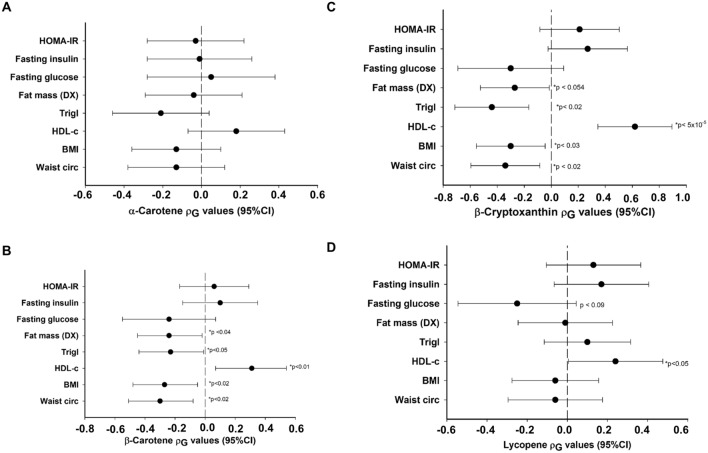
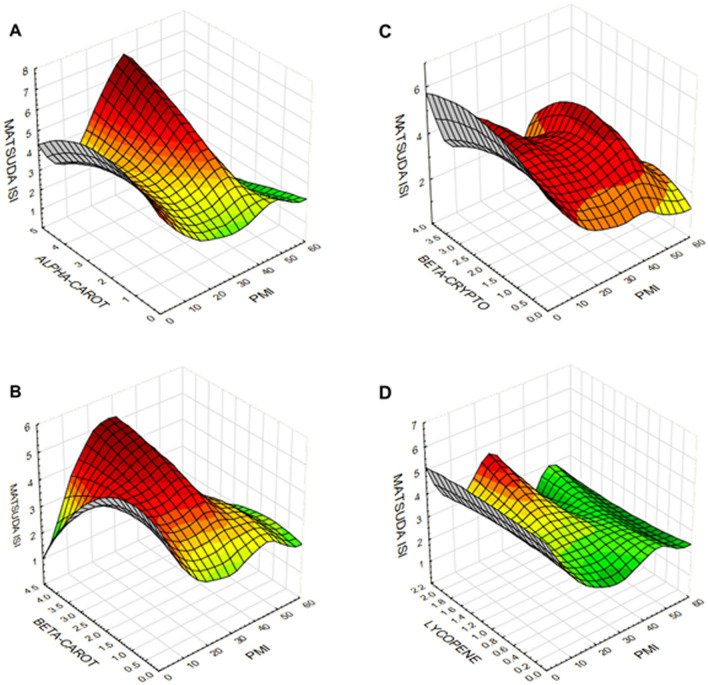
High concentrations of carotenoids are protective against cardiometabolic risk traits (CMTs) in adults and children. We recently showed in non-diabetic Mexican American (MA) children that serum α-carotene and β-carotene are inversely correlated with obesity measures and triglycerides and positively with HDL cholesterol and that they were under strong genetic influences. Additionally, we previously described a Pediatric Metabolic Index (PMI) that helps in the identification of children who are at risk for cardiometabolic diseases. Here, we quantified serum lycopene and β-cryptoxanthin concentrations in approximately 580 children from MA families using an ultraperformance liquid chromatography-photodiode array and determined their heritabilities and correlations with CMTs. Using response surface methodology (RSM), we determined two-way interactions of carotenoids and PMI on Matsuda insulin sensitivity index (ISI). The concentrations of lycopene and β-cryptoxanthin were highly heritable [h2 = 0.98, P = 7 × 10-18 and h2 = 0.58, P = 1 × 10⁻⁷]. We found significant (P ≤ 0.05) negative phenotypic correlations between β-cryptoxanthin and five CMTs: body mass index (- 0.22), waist circumference (- 0.25), triglycerides (- 0.18), fat mass (- 0.23), fasting glucose (- 0.09), and positive correlations with HDL cholesterol (0.29). In contrast, lycopene only showed a significant negative correlation with fasting glucose (- 0.08) and a positive correlation with HDL cholesterol (0.18). Importantly, we found that common genetic influences significantly contributed to the observed phenotypic correlations. RSM showed that increased serum concentrations of α- and β-carotenoids rather than that of β-cryptoxanthin or lycopene had maximal effects on ISI. In summary, our findings suggest that the serum carotenoids are under strong additive genetic influences and may have differential effects on susceptibility to CMTs in children.
Conflict of interest statement
The authors declare no competing interests.
Figures
References
-
- Ogden CL, C. M., Fryar CD, Flegal KM. in N.C.H.S. data brief, no 219 (ed National Center for Health Statistics) (Hyattsville, Maryland, 2015).
Publication types
MeSH terms
Substances
Grants and funding
LinkOut - more resources
Full Text Sources
Other Literature Sources
