


Repurposing of Biologic and Targeted Synthetic Anti-Rheumatic Drugs in COVID-19 and Hyper-Inflammation: A Comprehensive Review of Available and Emerging Evidence at the Peak of the Pandemic
- PMID: 33442386
- PMCID: PMC7798432
- DOI: 10.3389/fphar.2020.598308
Repurposing of Biologic and Targeted Synthetic Anti-Rheumatic Drugs in COVID-19 and Hyper-Inflammation: A Comprehensive Review of Available and Emerging Evidence at the Peak of the Pandemic
Abstract
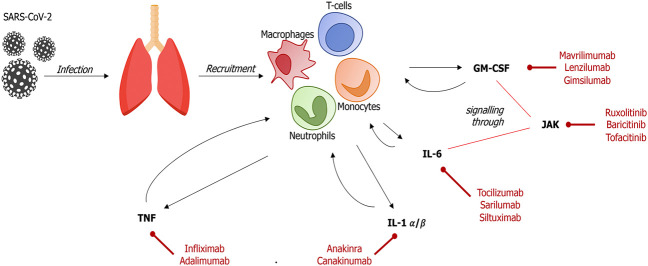
Coronavirus disease 2019 (COVID-19) is a condition caused by the severe acute respiratory syndrome coronavirus 2 (SARS-CoV-2). Severe cases of COVID-19 result in acute respiratory distress syndrome and death. A detrimental, hyper-inflammatory immune response with excess release of cytokines is the main driver of disease development and of tissue damage in these patients. Thus, repurposing of biologic agents and other pharmacological inhibitors of cytokines used for the treatment of various inflammatory conditions emerged as a logical therapeutic strategy to quench inflammation and improve the clinical outcome of COVID-19 patients. Evaluated agents include the interleukin one receptor blocker anakinra, monoclonal antibodies inhibiting IL-6 tocilizumab and sarilumab, monoclonal antibodies inhibiting granulocyte-monocyte colony stimulating factor and tumor necrosis factor, and Janus kinase inhibitors. In this review, we discuss the efficacy and safety of these therapeutic options based on direct personal experience and on published evidence from observational studies and randomized clinical trials.
Keywords: Coronavirus disease 2019; DMARDs (biologic); JAK inhibitors; cytokine; disease modifying anti-rheumatic drug; immunesuppressants; severe acute respiratory syndrome coronavirus 2.
Copyright © 2020 Cavalli, Farina, Campochiaro, De Luca, Della-Torre, Tomelleri and Dagna.
Conflict of interest statement
GC received consultation honoraria from Amgen, Cerecor, Pfizer, Roche, Novartis and SOBI outside of the current work. CC received consultation honoraria from Roche and SOBI outside of the current work. GL received consultation honoraria from SOBI, Novartis, Pfizer, Celgene, Merck, and Roche outside of the current work. LD received consultation honoraria from Abbvie, Amgen, Biogen, Bristol-Myers Squibb, Celltrion, GlaxoSmithKline, Novartis, Pfizer, Roche, Sanofi-Genzyme, and SOBI outside of the current work. The remaining authors declare that the research was conducted in the absence of any commercial or financial relationships that could be construed as a potential conflict of interest.
Figures
References
-
- Abbate A., Kontos M. C., Abouzaki N. A., Melchior R. D., Thomas C., Van Tassell B. W., et al. (2015). Comparative safety of interleukin-1 blockade with anakinra in patients with ST-segment elevation acute myocardial infarction (from the VCU-ART and VCU-ART2 pilot studies). Am. J. Cardiol., 115, 288 10.1016/j.amjcard.2014.11.003 - DOI - PubMed
Publication types
LinkOut - more resources
Full Text Sources
Miscellaneous
