Impact of Extrahepatic Metastases on Overall Survival in Patients with Advanced Liver Dominant Hepatocellular Carcinoma: A Subanalysis of the SORAMIC Trial
- PMID: 33442545
- PMCID: PMC7768116
- DOI: 10.1159/000510798
Impact of Extrahepatic Metastases on Overall Survival in Patients with Advanced Liver Dominant Hepatocellular Carcinoma: A Subanalysis of the SORAMIC Trial
Abstract
Introduction: Extrahepatic spread is reported as a prognostic factor in patients with advanced hepatocellular carcinoma (HCC) receiving systemic therapy. However, clinical studies have reported conflicting results for the clinical impact of the pattern of tumor progression during treatment and the role of new extrahepatic metastases in length of survival.
Objective: To evaluate the impact of extrahepatic metastases on survival in patients with HCC treated with sorafenib or with a combination of sorafenib and selective internal radiation treatment (SIRT).
Methods: SORAMIC is a randomized, controlled trial comprising diagnostic, local ablation, and palliative cohorts. In the palliative cohort, patients not eligible for transarterial chemoembolization (TACE) were randomized 11:10 to SIRT plus sorafenib (SIRT + sorafenib) or sorafenib alone. This exploratory subanalysis evaluated the impact of extrahepatic metastases on survival.
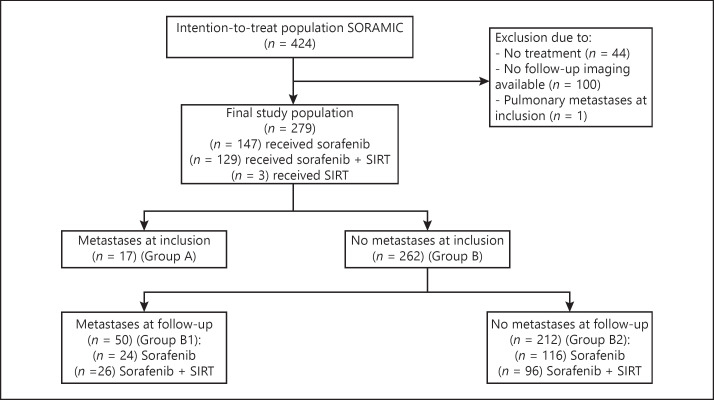
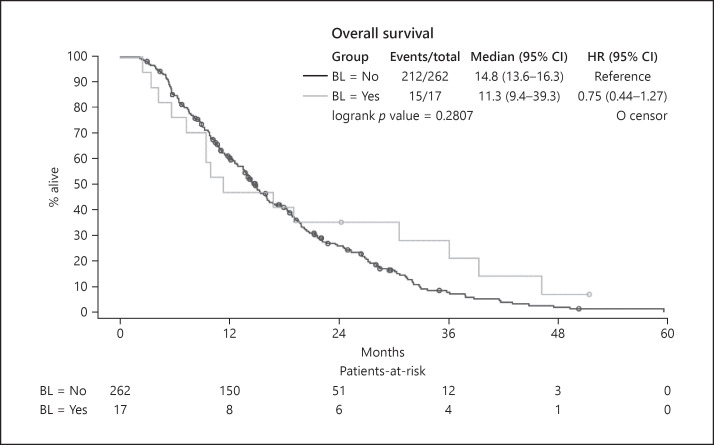
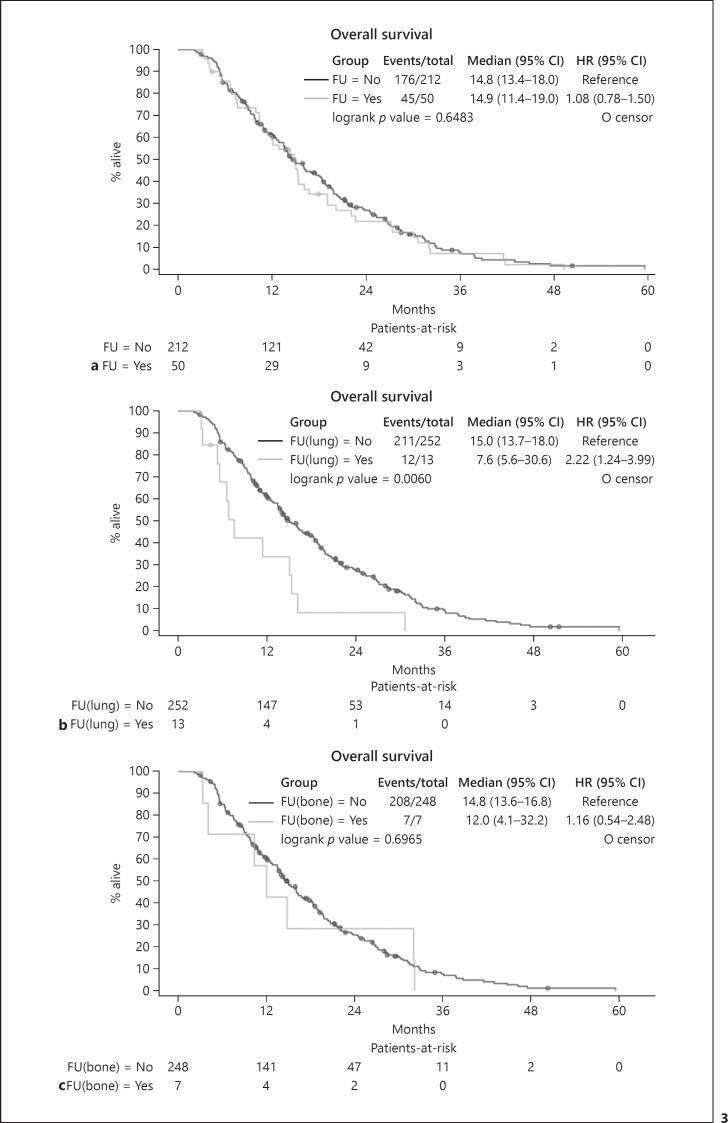
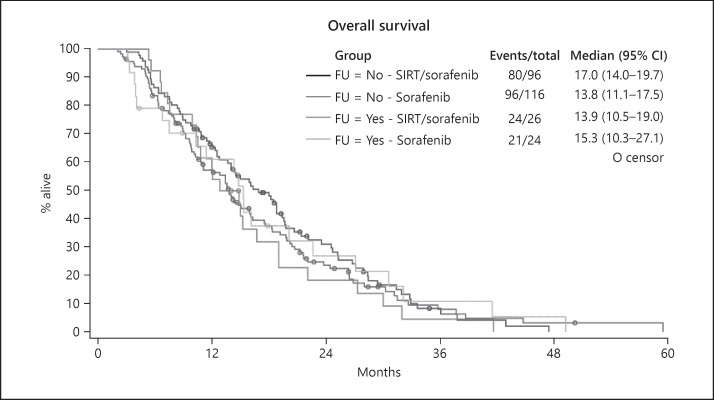
Results: In the intent-to-treat cohort, 216 patients were randomized to SIRT + sorafenib and 208 to sorafenib alone. Seventeen patients with distant organ metastases (bone, n = 11; adrenal glands, n = 5; peritoneum, n = 1) and 262 without distant metastases at study entry were analyzed in this substudy. Patients with (Group A) and without (Group B) distant organ metastases at study entry presented with a median survival of 11.3 and 14.8 months, respectively (p = 0.2807). During follow-up of patients with no organ metastases at baseline, extrahepatic disease progression occurred in 50 patients (19.1%). No statistically significant difference in survival was observed between patients without extrahepatic progression and those with new extrahepatic disease during treatment (14.8 vs. 14.9 months; p = 0.6483). Development of new pulmonary metastases during treatment significantly shortened median survival (7.6 vs. 15.0 months, p = 0.0060).
Conclusions: This subanalysis of the SORAMIC trial suggests that in patients with liver-dominant advanced HCC, metastases to distant organs with the exception of pulmonary metastases do not in general exert a negative impact on patient prognosis. The choice of palliative treatment should incorporate a personalized analysis of the pattern of tumor distribution.
Keywords: Hepatocellular carcinoma; Metastases; Prognosis; Sorafenib.
Copyright © 2020 by S. Karger AG, Basel.
Conflict of interest statement
K.S.: Personal fees − Bayer. R.S.: Nothing to disclose. M.P.F.: Nothing to disclose. M.M.: Nothing to disclose. C.K.: Nothing to disclose. R.I.: Nothing to disclose. O.Ö.: Nothing to disclose. M.P.: Grants − Sirtex and Bayer; personal fees − Sirtex. B.P.: Nothing to disclose. M.S.: Personal fees − Bayer and Sirtex. R.S.: Nothing to disclose. D.P.: Grants − Sirtex and Bayer; personal fees − Sirtex and Bayer; and nonfinancial support − Sirtex. J.-P.B.: Grants − Bayer; personal fees − Bayer. P.R.: Nothing to disclose. P.M.: Nothing to disclose. J.R.: Grants − Sirtex and Bayer; personal fees − Sirtex and Bayer.
Figures
References
-
- (IARC) GIAfRoC.
-
- Schutte K, Bornschein J, Malfertheiner P. Hepatocellular carcinoma: epidemiological trends and risk factors. Dig Dis. 2009;27((2)):80–92. - PubMed
-
- European Association for the Study of the Liver. Electronic address EEE, European Association for the Study of the L EASL clinical practice guidelines: management of hepatocellular carcinoma. J Hepatol. 2018 Jul;69((1)):182–236. - PubMed
LinkOut - more resources
Full Text Sources
Miscellaneous