


Parent Emotion Socialization in Children with Autism Spectrum Disorder and Co-Occurring Anxiety
- PMID: 33442839
- PMCID: PMC7809195
- DOI: 10.1007/s10802-020-00731-7
Parent Emotion Socialization in Children with Autism Spectrum Disorder and Co-Occurring Anxiety
Abstract
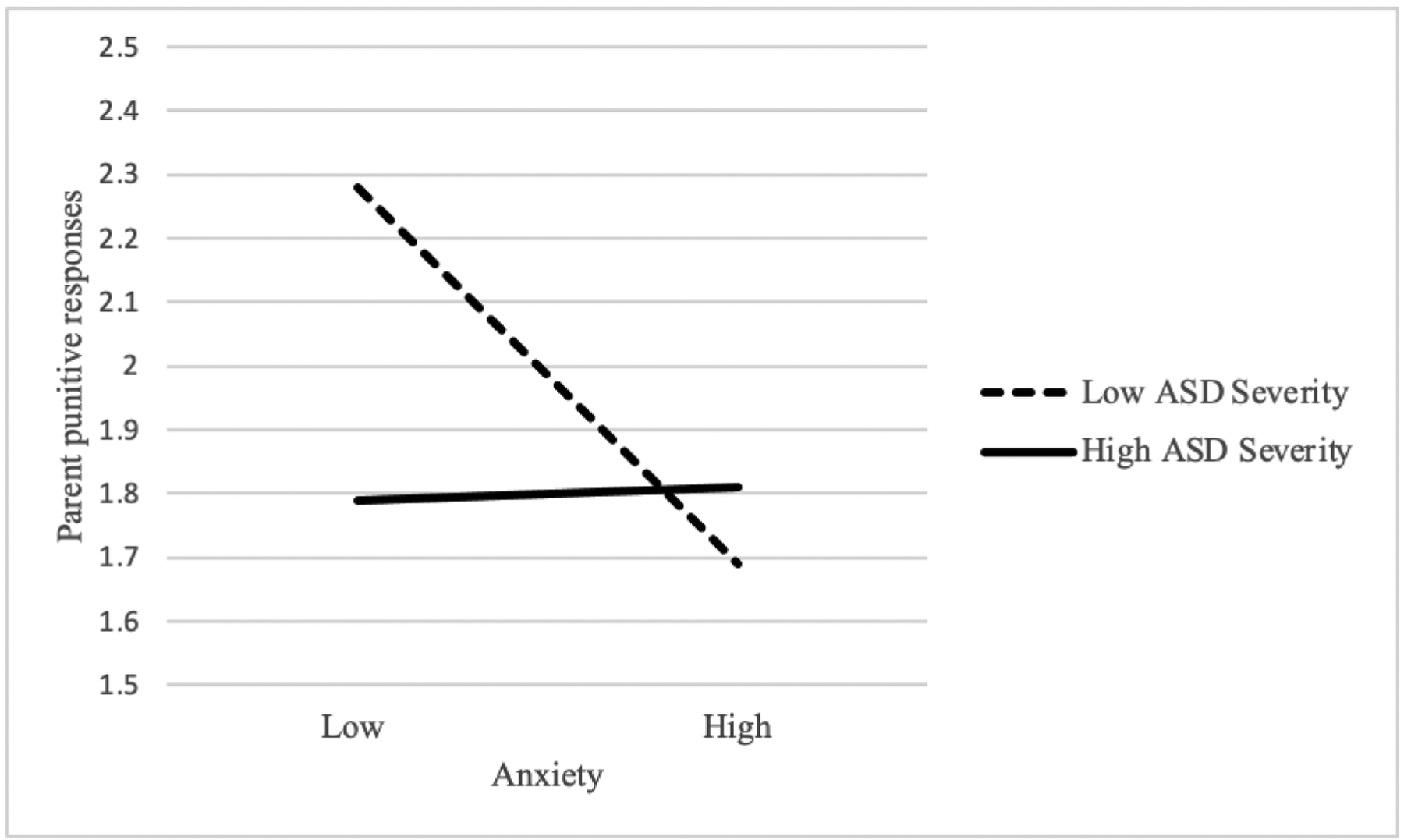
Although parents' socialization of children's emotional experiences and expression has been widely studied in typically developing (TD) populations, these processes have been largely unexplored in families of children with autism spectrum disorder (ASD). The present study examined parent emotion socialization in a well-characterized sample of verbally fluent children with ASD and comorbid anxiety disorders. Participants included 64 children, aged 8-15 years, who had ASD and co-occurring anxiety and 24 matched TD children without psychiatric disorders. Parents completed ratings of their responses to their children's emotional experiences using the Coping with Children's Negative Emotions Scale (CCNES), and both parents and children completed ratings of child anxiety using the Multidimensional Anxiety Rating Scale (MASC). Parents of children with ASD and anxiety did not differ from parents of TD children without psychiatric disorders in their endorsement of different emotion socialization practices. However, among children with ASD and anxiety, greater anxiety was associated with more emotion-focused responses from parents, and for children with less ASD symptom severity, lower levels of anxiety were associated with more punitive responses from parents. Results suggest that certain types of more directive emotion socialization approaches may be associated with lower anxiety in children with ASD, whereas emotion socialization approaches focused on altering the child's emotional experiences may be associated with greater anxiety in this population. While it is likely that parent emotion socialization practices impact children's emotional experiences of anxiety, it is also likely that children with distinct profiles of anxiety and ASD symptomology elicit specific styles of emotion socialization from parents.
Conflict of interest statement
Figures
References
-
- American Psychiatric Association. (2000). Diagnostic and statistical manual of mental disorders (4th ed., text rev.). Washington, DC: American Psychiatric Association.
-
- Barber BK, Stolz HE, & Olsen JA (2005). Parental support, psychological control, and behavioral control: Assessing relevance across time, culture, and method. Monographs of the Society for Research in Child Development, 70, 1–137. - PubMed
-
- Bell RQ (1979). Parent, child, and reciprocal influences. American Psychologist, 34(10), 821–826. 10.1037/0003-066X.34.10.821 - DOI
-
- Blakeley-Smith A, Reaven J, Ridge K, & Hepburn S (2012). Parent–child agreement of anxiety symptoms in youth with autism spectrum disorders. Research in Autism Spectrum Disorders, 6(2), 707–716. 10.1016/j.rasd.2011.07.020 - DOI
Publication types
MeSH terms
Grants and funding
LinkOut - more resources
Full Text Sources
Medical