


Impact of altitude on COVID-19 infection and death in the United States: A modeling and observational study
- PMID: 33444357
- PMCID: PMC7808593
- DOI: 10.1371/journal.pone.0245055
Impact of altitude on COVID-19 infection and death in the United States: A modeling and observational study
Abstract
Background: COVID-19, the disease caused by SARS-CoV-2, has caused a pandemic, sparing few regions. However, limited reports suggest differing infection and death rates across geographic areas including populations that reside at higher elevations (HE). We aimed to determine if COVID-19 infection, death, and case mortality rates differed in higher versus low elevation (LE) U.S. counties.
Methods: Using publicly available geographic and COVID-19 data, we calculated per capita infection and death rates and case mortality in population density matched HE and LE U.S. counties. We also performed population-scale regression analysis to investigate the association between county elevation and COVID-19 infection rates.
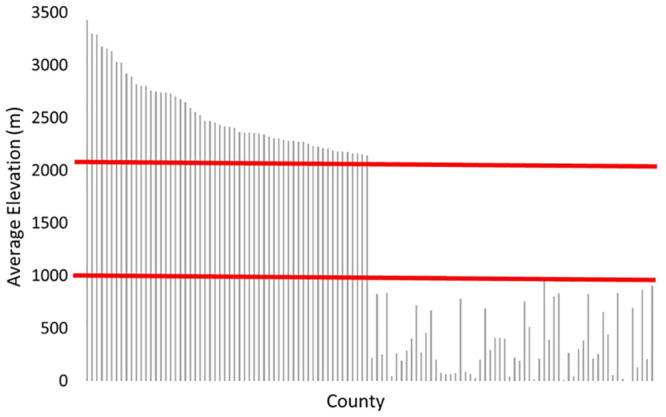
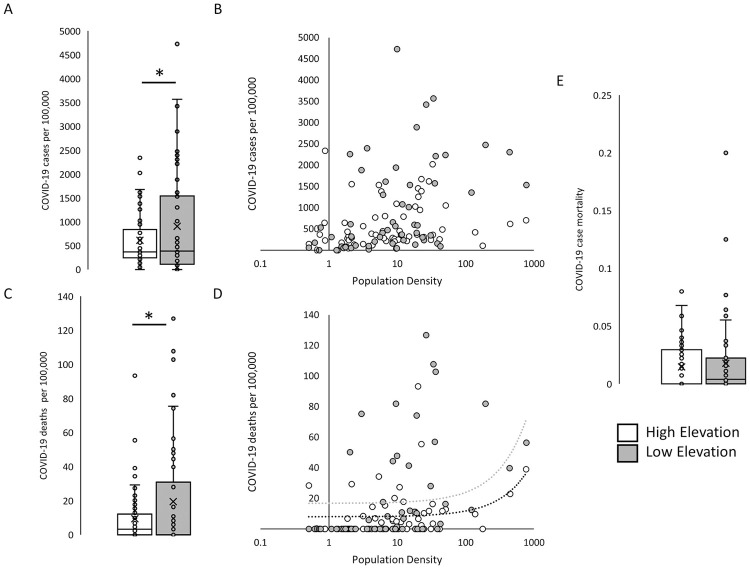
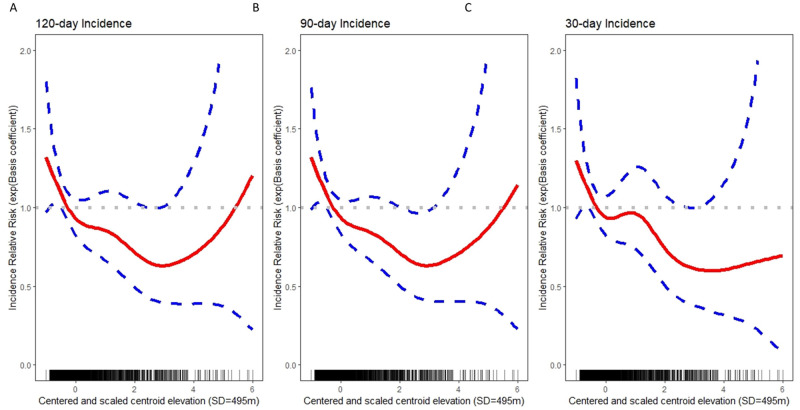
Findings: Population density matching of LA (< 914m, n = 58) and HE (>2133m, n = 58) counties yielded significantly lower COVID-19 cases at HE versus LE (615 versus 905, p = 0.034). HE per capita deaths were significantly lower than LE (9.4 versus 19.5, p = 0.017). However, case mortality did not differ between HE and LE (1.78% versus 1.46%, p = 0.27). Regression analysis, adjusted for relevant covariates, demonstrated decreased COVID-19 infection rates by 12.82%, 12.01%, and 11.72% per 495m of county centroid elevation, for cases recorded over the previous 30, 90, and 120 days, respectively.
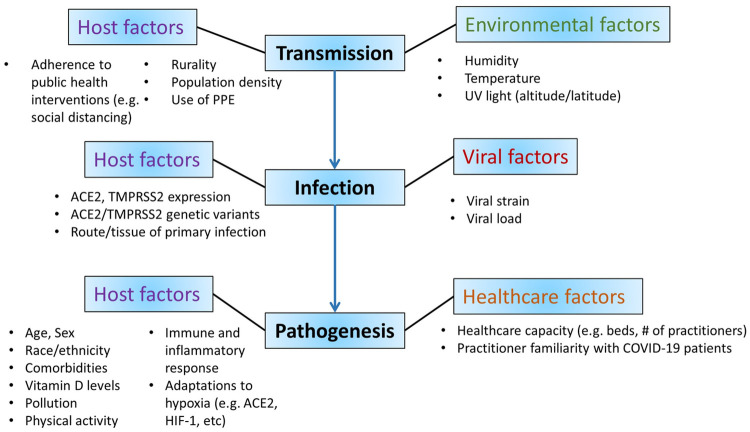
Conclusions: This population-adjusted, controlled analysis suggests that higher elevation attenuates infection and death. Ongoing work from our group aims to identify the environmental, biological, and social factors of residence at HE that impact infection, transmission, and pathogenesis of COVID-19 in an effort to harness these mechanisms for future public health and/or treatment interventions.
Conflict of interest statement
The authors declare no competing interests.
Figures
References
-
- CDC. Novel Coronavirus Reports: Morbidity and Mortality Weekly Report (MMWR). 2020.
Publication types
MeSH terms
Grants and funding
LinkOut - more resources
Full Text Sources
Other Literature Sources
Medical
Miscellaneous
