


Stunting, wasting, overweight and their coexistence among children under 7 years in the context of the social rapidly developing: Findings from a population-based survey in nine cities of China in 2016
- PMID: 33444425
- PMCID: PMC7808628
- DOI: 10.1371/journal.pone.0245455
Stunting, wasting, overweight and their coexistence among children under 7 years in the context of the social rapidly developing: Findings from a population-based survey in nine cities of China in 2016
Abstract
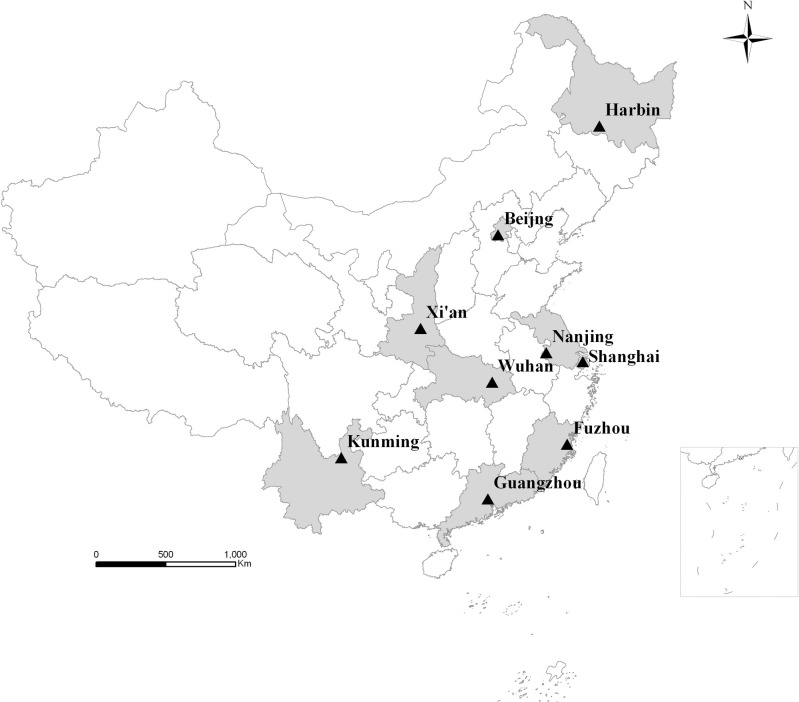
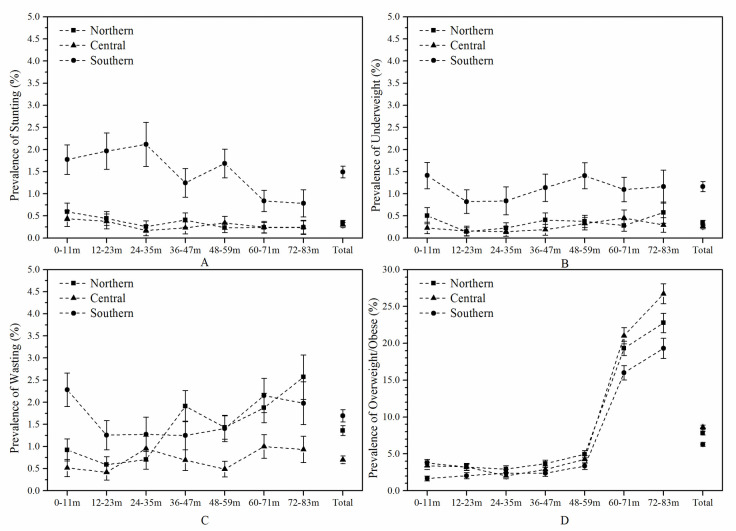
The prevalence of stunting, wasting, overweight and their coexistence are various in different populations and they also have changed with social developing and environmental improving. In this paper, we aimed to analyze the prevalence of stunting, wasting, overweight and their coexistence in some developed regions of China. Data were collected in a population-based cross-sectional survey by a multi-stage cluster sampling method in nine cities located in the northern, central, and southern region of China in 2016. Children under seven years (n = 110,491) were measured. WHO growth standards were used to assess the growth status. Stunting, underweight, wasting, overweight and obesity were considered as the primary forms of malnutrition (includes undernutrition and overnutrition) for infant or young children at population-levels. The prevalence of stunting, underweight, wasting, and overweight or obesity were respectively 0.7%, 0.6%, 1.2%, and 7.6%. Most of these children (95.4%) suffered from one form of malnutrition, and only 0.2% of them concurrently stunted and wasted, 0.4% concurrently stunted and overweight, 1.7% concurrently stunted and underweight, 2.3% concurrently underweight and wasted. Among stunted children, 91.2% were appropriate body proportion, and only 2.3% were wasted, 6.5% were overweight or obesity. Among overweight or obese children, only 0.6% were stunted, whereas, 15.8% were high stature and 83.6% were the appropriate ranges of stature. Sex, age, urban/suburban, and region were associated with these primary forms of malnutrition in the multivariate logistic analysis. In conclusion, we found that the coexistence of stunting and overweight was not common at both population-level and individual-level. The situation for undernutrition had significantly improved, and overweight may be the leading public health issue for children under seven years in the nine cities of China.
Conflict of interest statement
The authors have declared that no competing interests exist.
Figures
References
-
- United Nations Children’s Fund (UNICEF), World Health Organization, International Bank for Reconstruction and Development/The World Bank. Levels and trends in child malnutrition: key findings of the 2019 Edition of the Joint Child Malnutrition Estimates. Geneva: World Health Organization; 2019. Licence: CC BY-NC-SA 3.0 IGO. https://www.who.int/nutgrowthdb/jme-2019-key-findings.pdf?ua=1.
Publication types
MeSH terms
LinkOut - more resources
Full Text Sources
Other Literature Sources
Medical
