


Prediction of putative small molecules for manipulation of enriched signalling pathways in hESC-derived early cardiovascular progenitors by bioinformatics analysis
- PMID: 33444476
- PMCID: PMC8687323
- DOI: 10.1049/iet-syb.2018.5037
Prediction of putative small molecules for manipulation of enriched signalling pathways in hESC-derived early cardiovascular progenitors by bioinformatics analysis
Abstract
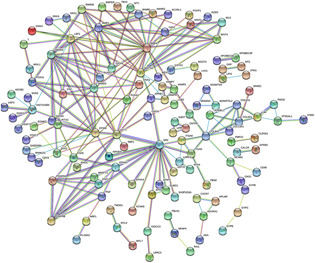
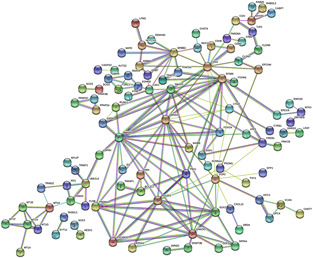
Human pluripotent stem cell-derived cardiovascular progenitor cells (CPCs) are considered as powerful tools for cardiac regenerative medicine and developmental study. Mesoderm posterior1+ (MESP1+ ) cells are identified as the earliest CPCs from which almost all cardiac cell types are generated. Molecular insights to the transcriptional regulatory factors of early CPCs are required to control cell fate decisions. Herein, the microarray data set of human embryonic stem cells (hESCs)-derived MESP1+ cells was analysed and differentially expressed genes (DEGs) were identified in comparison to undifferentiated hESCs and MESP1-negative cells. Then, gene ontology and pathway enrichment analysis of DEGs were carried out with the subsequent prediction of putative regulatory small molecules for modulation of CPC fate. Some key signalling cascades of cardiogenesis including Hippo, Wnt, transforming growth factor-β, and PI3K/Akt were highlighted in MESP1+ cells. The transcriptional regulatory network of MESP1+ cells were visualised through interaction networks of DEGs. Additionally, 35 promising chemicals were predicted based on correlations with gene expression signature of MESP1+ cells for effective in vitro CPC manipulation. Studying the transcriptional profile of MESP1+ cells resulted into the identification of important signalling pathways and chemicals which could be introduced as powerful tools to manage proliferation and differentiation of hESC-derived CPCs more efficiently.
Keywords: DEGs; Hippo; MESP1-negative cells; PI3K/Akt; Wnt; bioinformatics; bioinformatics analysis; cardiac cell types; cardiac regenerative medicine; cardiogenesis; cardiovascular system; cell fate decisions; cell proliferation; cellular biophysics; differentially expressed genes; enriched signalling pathways; enzymes; gene expression signature; gene ontology; genetics; hESC-derived CPCs; hESC-derived early cardiovascular progenitors; human embryonic stem cells-derived MESP1+ cells; human pluripotent stem cell-derived cardiovascular progenitor cells; lab-on-a-chip; mesoderm posterior1+ cells; microarray data; molecular biophysics; ontologies (artificial intelligence); pathway enrichment analysis; putative regulatory small molecules; transcriptional regulatory factors; transforming growth factor-β.
© 2019 The Institution of Engineering and Technology.
Figures
References
-
- Bondue A. Blanpain C.: ‘Mesp1: a key regulator of cardiovascular lineage commitment ’, Circ. Res., 2010, 107, (12 ), pp. 1414 –1427 - PubMed
-
- Bondue A. Lapouge G. Paulissen C. et al.: ‘Mesp1 acts as a master regulator of multipotent cardiovascular progenitor specification ’, Cell Stem Cell, 2008, 3, (1 ), pp. 69 –84 - PubMed
LinkOut - more resources
Full Text Sources
Miscellaneous
