Review
. 2021 May 12;29(5):704-714.
doi: 10.1016/j.chom.2020.12.007. Epub 2021 Jan 13.

Anti-CRISPRs go viral: The infection biology of CRISPR-Cas inhibitors

Affiliations
Review

Anti-CRISPRs go viral: The infection biology of CRISPR-Cas inhibitors

Yuping Li et al. Cell Host Microbe. .

Abstract

Bacteriophages encode diverse anti-CRISPR (Acr) proteins that inhibit CRISPR-Cas immunity during infection of their bacterial hosts. Although detailed mechanisms have been characterized for multiple Acr proteins, an understanding of their role in phage infection biology is just emerging. Here, we review recent work in this area and propose a framework of "phage autonomy" to evaluate CRISPR-immune evasion strategies. During phage infection, Acr proteins are deployed by a tightly regulated "fast on-fast off" transcriptional burst, which is necessary, but insufficient, for CRISPR-Cas inactivation. Instead of a single phage shutting down CRISPR-Cas immunity, a community of acr-carrying phages cooperate to suppress bacterial immunity, displaying low phage autonomy. Enzymatic Acr proteins with novel mechanisms have been recently revealed and are predicted to enhance phage autonomy, while phage DNA protective measures offer the highest phage autonomy observed. These varied Acr mechanisms and strengths also have unexpected impacts on the bacterial populations and competing phages.

Keywords: CRISPR-Cas; anti-CRISPR; autonomy; bacteria; bacteriophage; cooperation; infection biology; phage.


Conflict of interest statement

Declaration of interests J.B.-D. is a scientific advisory board member of SNIPR Biome and Excision Biotherapeutics and a scientific advisory board member and co-founder of Acrigen Biosciences. UCSF has filed patent applications relating to anti-CRISPR and CRISPR technology on which J.B.-D. is an inventor.

Figures

Figure 1:
Figure 1:. CRISPR-Cas immunity.
A) During phage infection, adaptation occurs when Cas proteins (Cas1&Cas2) acquire spacers from phage genome (i.e. the boxed region) and insert them into CRISPR array. During expression, pre-crRNA is transcribed from the CRISPR array and further processed into crRNA. B) Upon subsequent phage infection, base-pairing between the crRNA-guided surveillance complex (Cascade is shown) and phage protospacer guides cleavage of phage DNA, a process called “interference”. C) By contrast, partial base-pairing between crRNA and phage protospacer leads to priming adaptation where crRNA-guided Cas proteins (Cascade complex, Cas1, Cas2, and Cas3 are shown) rapidly acquire spacers surrounding the partially matched phage genomic region, for instance, the boxed region. The white space between B) and C) indicates two broad types of Acr proteins that 1. inhibit crRNA-guided DNA-binding and priming adaptation and that 2. block the cleavage of phage DNA. Created with BioRender.com
Figure 2:
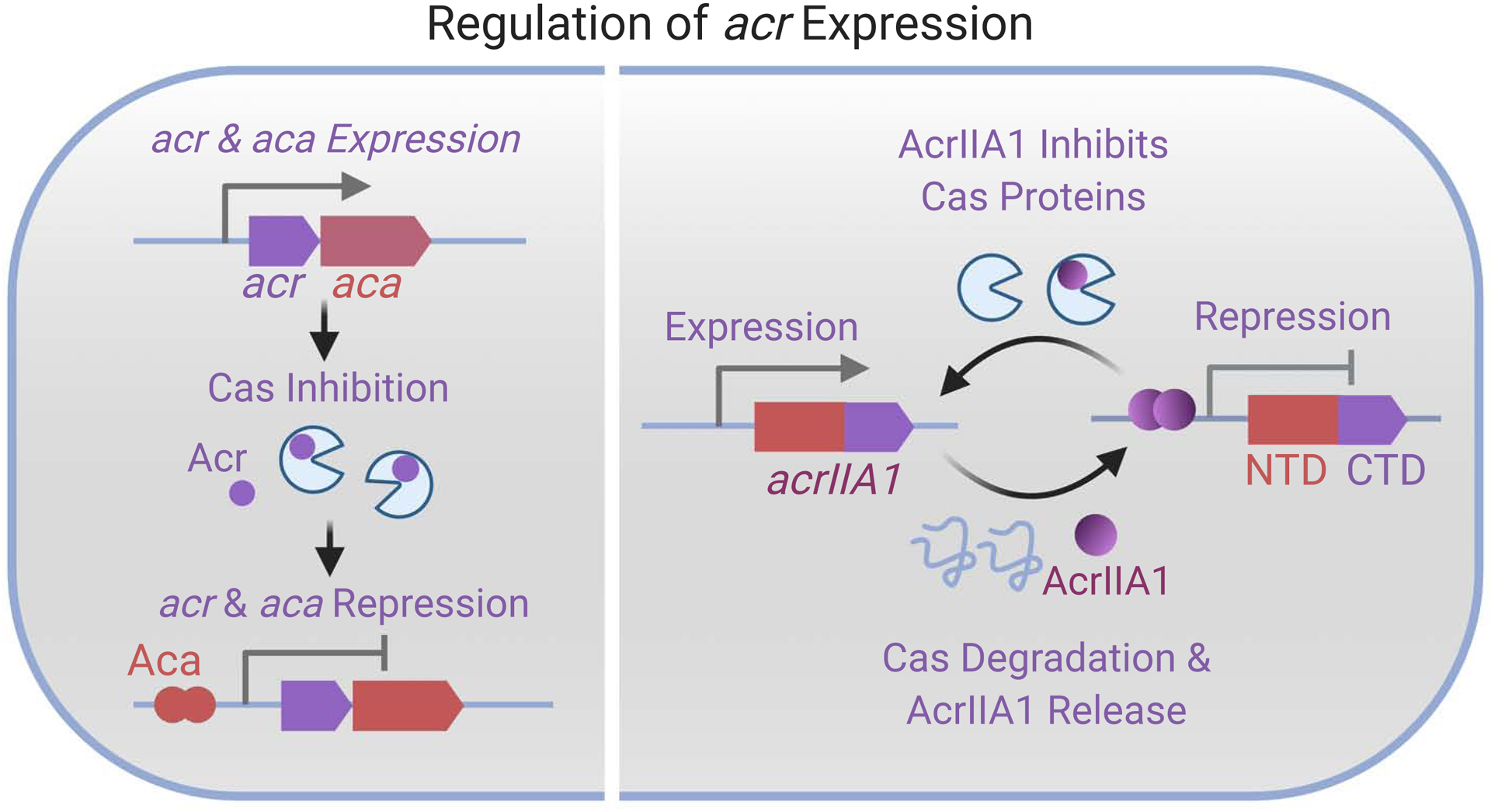
Figure 2:. Regulation of acr expression.
At the onset of phage infection, the acr-aca operon is quickly transcribed and translated to inhibit Cas proteins. Eventually, the dimeric Aca proteins bind to the promoter of the acr-aca locus and repress the expression of acr and aca. Right panel shows the self-regulation of AcrIIA1 proteins (purple-red). AcrIIA1 has dual functions with the N-terminal domain (NTD, red color) as self-repressor and the C-terminal domain (CTD, purple) as anti-CRISPR. Created with BioRender.com
Figure 3:
Figure 3:. Acr-mediated phage interactions.
A) When phage first infect bacteria with a targeting crRNA (pre-immunized bacteria), CRISPR-Cas can target the phage rapidly despite of its acr locus. B&C) Transcription of the acr gene from the failed infection leaves behind Acr proteins, which accumulate in the bacterial cell. B) Strong Acr proteins turn off bacterial CRISPR-Cas activity and result in fully immunosuppressed (FI) bacteria. C) weak Acr proteins, accumulated by the same number of failed infections, lead to partially immunosuppressed (PI) bacterial cells. D) Phages lacking acr gene can exploit and replicate in the fully immunosuppressed bacterial cells generated by the failed infection of strong Acr+ phages. E) Above the critical MOI threshold, Acr+ phages replicate in immunosuppressed cells as there is no CRISPR-Cas system. F) Below the MOI threshold, consecutive phage infection is unlikely. Bacteria propagate as there is no phage infection. G) Above the MOI threshold, weak Acr+ phage re-infect the partially immunosuppressed cell, further turn down the CRISPR-Cas activity and eventually replicate. H) Acr phages are unable to replicate in partially immunosuppressed cells generated by previous infection of weak Acr+ phages. Created with BioRender.com
Figure 4:
Figure 4:. Novel types of Acr proteins
(purple). A) Three enzymatic Acr proteins that acetylate Cas12 PAM recognition site (acetyltransferase), cleave Cas12 crRNA (nuclease), and degrade cyclic tetra-adenylate (cA4) (ring nuclease), respectively. B) Transcriptional repressor of cas genes act as Acr proteins by repressing the expression of cas genes. C) Some jumbo phages assemble a nucleus-like shell structure to prevent DNA-targeting Cas proteins from accessing phage DNA. The shell structure hosts phage genome, DNA transcription and replication. Phage mRNA molecules are transported and translated outside of the shell. Created with BioRender.com

References

    1. Abudayyeh OO, Gootenberg JS, Konermann S, Joung J, Slaymaker IM, Cox DBT, Shmakov S, Makarova KS, Semenova E, Minakhin L, et al. (2016). C2c2 is a single-component programmable RNA-guided RNA-targeting CRISPR effector. Science 353. - PMC - PubMed
    1. Agari Y, Sakamoto K, Tamakoshi M, Oshima T, Kuramitsu S, and Shinkai A (2010). Transcription Profile of Thermus thermophilus CRISPR Systems after Phage Infection. J. Mol. Biol 395, 270–281. - PubMed
    1. Athukoralage JS, McMahon SA, Zhang C, Grüschow S, Graham S, Krupovic M, Whitaker RJ, Gloster TM, and White MF (2020). An anti-CRISPR viral ring nuclease subverts type III CRISPR immunity. Nature 577, 572–575. - PMC - PubMed
    1. Barrangou R, Fremaux C, Deveau H, Richards M, Boyaval P, Moineau S, Romero DA, and Horvath P (2007). CRISPR Provides Acquired Resistance Against Viruses in Prokaryotes. Science 315, 1709–1712. - PubMed
    1. Bernheim A, and Sorek R (2020). The pan-immune system of bacteria: antiviral defence as a community resource. Nat. Rev. Microbiol 18, 113–119. - PubMed

Publication types