


Recent Advances in Photodynamic Therapy for Deep-Seated Tumors with the Aid of Nanomedicine
- PMID: 33445690
- PMCID: PMC7828119
- DOI: 10.3390/biomedicines9010069
Recent Advances in Photodynamic Therapy for Deep-Seated Tumors with the Aid of Nanomedicine
Abstract
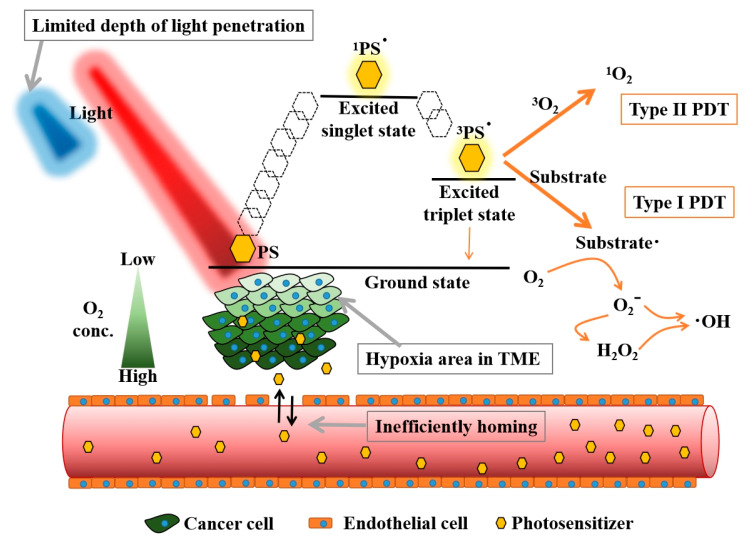
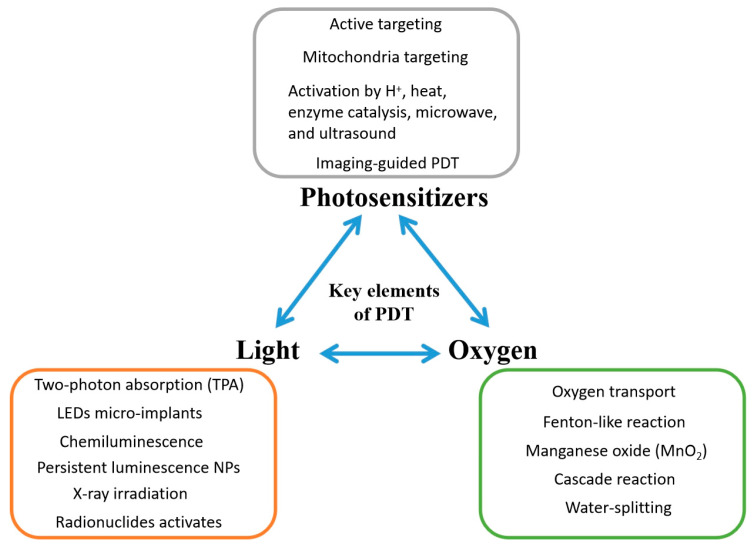
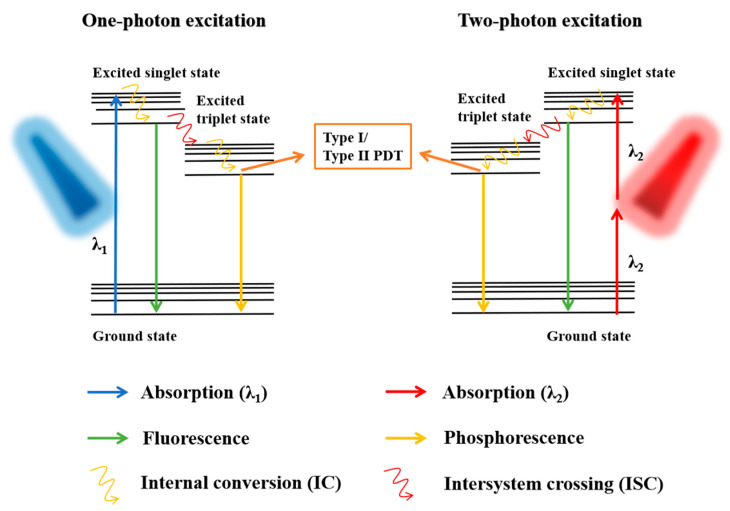
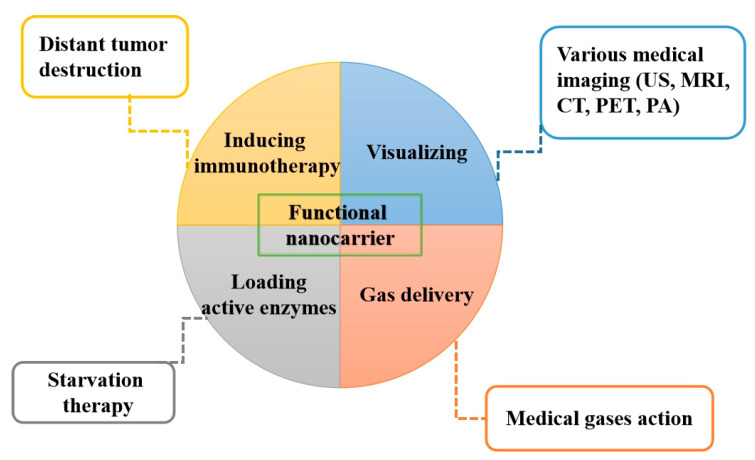
Photodynamic therapy (PDT) works through photoactivation of a specific photosensitizer (PS) in a tumor in the presence of oxygen. PDT is widely applied in oncology to treat various cancers as it has a minimally invasive procedure and high selectivity, does not interfere with other treatments, and can be repeated as needed. A large amount of reactive oxygen species (ROS) and singlet oxygen is generated in a cancer cell during PDT, which destroys the tumor effectively. However, the efficacy of PDT in treating a deep-seated tumor is limited due to three main reasons: Limited light penetration depth, low oxygen concentration in the hypoxic core, and poor PS accumulation inside a tumor. Thus, PDT treatments are only approved for superficial and thin tumors. With the advancement of nanotechnology, PDT to treat deep-seated or thick tumors is becoming a reachable goal. In this review, we provide an update on the strategies for improving PDT with nanomedicine using different sophisticated-design nanoparticles, including two-photon excitation, X-ray activation, targeting tumor cells with surface modification, alteration of tumor cell metabolism pathways, release of therapeutic gases, improvement of tumor hypoxia, and stimulation of host immunity. We focus on the difficult-to-treat pancreatic cancer as a model to demonstrate the influence of advanced nanomedicine in PDT. A bright future of PDT application in the treatment of deep-seated tumors is expected.
Keywords: hypoxia; metal–organic framework (MOF); pancreatic cancer; photodynamic therapy (PDT); photosensitizer.
Conflict of interest statement
The authors declare no conflict of interest.
Figures
References
-
- Szeimies R.-M., Dräger J., Abels C., Landthaler M. History of photodynamic therapy in dermatology. In: Calzavara-Pinton E.-G., Szeimies R.-M., Ortel B., editors. Photodynamic Therapy and Fluorescence Diagnosis in Dermatology. Volume 2. Elsevier; Amsterdam, The Netherlands: 2001. pp. 3–15.
Publication types
Grants and funding
LinkOut - more resources
Full Text Sources
Other Literature Sources
