


Matching action to need: an analysis of Global Burden of Disease 2017 and population health data to focus adolescent health policy and actions in Myanmar
- PMID: 33446080
- PMCID: PMC7833024
- DOI: 10.1080/16549716.2020.1844976
Matching action to need: an analysis of Global Burden of Disease 2017 and population health data to focus adolescent health policy and actions in Myanmar
Abstract
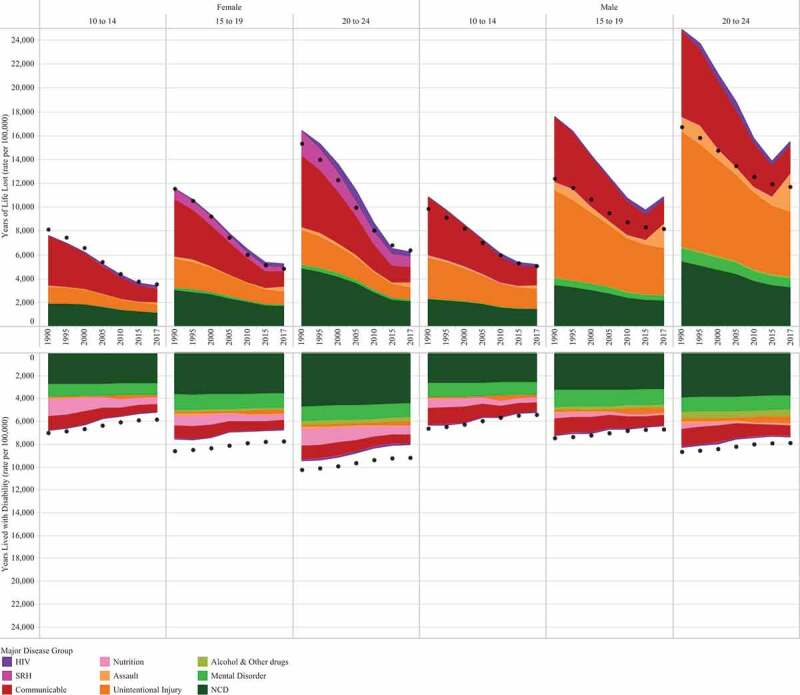
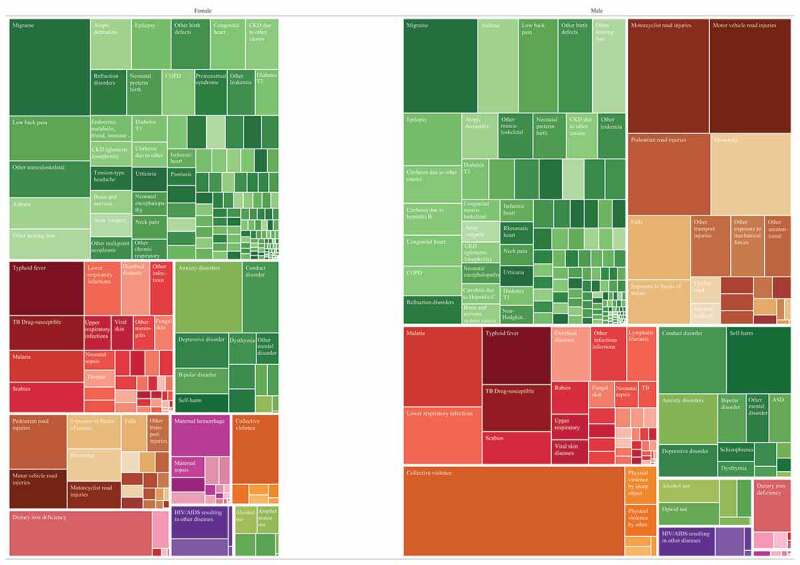
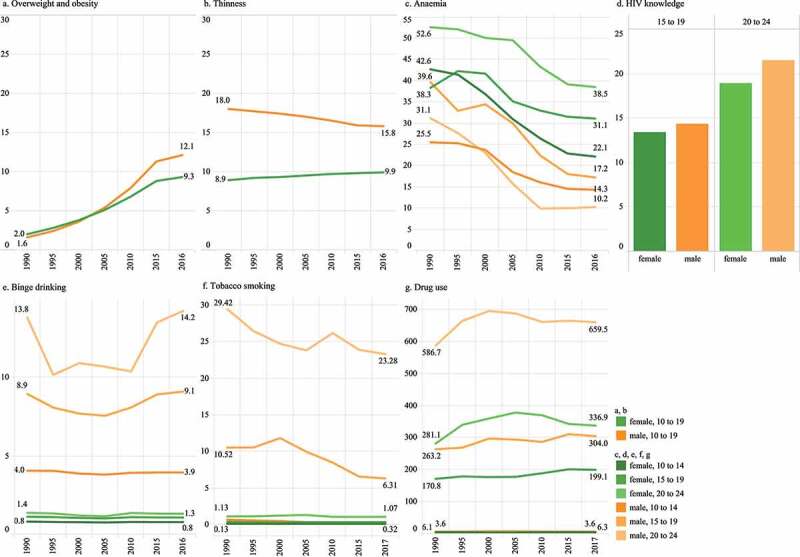
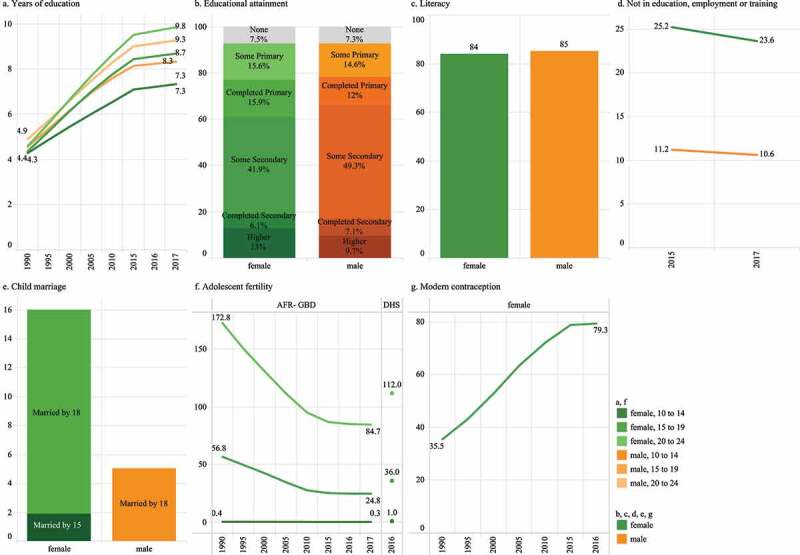
Background: Myanmar is a country undergoing rapid transitions in health. Its national strategic policy for young people's health is being revised but there is a paucity of population data to inform local priorities and needs. Objective: In this paper we describe a comprehensive profile of adolescent health in Myanmar to focus policy and health actions. Methods: We used available primary data, and modelled estimates from the GBD 2017, to describe health outcomes (mortality and morbidity), health risks and determinants for adolescents in Myanmar between 1990-2017. A governance group of key stakeholders guided the framing of the study, interpretation of findings, and recommendations. Results: Overall health has improved for adolescents in Myanmar since 1990, however adolescent mortality remains high, particularly so for older adolescent males; all-cause mortality rate for 10-24 years was 70 per 100,000 for females and 149 per 100,000 for males (16,095 adolescent deaths in 2017). Overall, the dominant health problems were injuries for males and non-communicable disease for females in a context of ongoing burden of communicable and nutritional diseases for both sexes, and reproductive health needs for females. Health risks relating to undernutrition (thinness and anaemia) remain prevalent, with other health risks (overweight, binge alcohol use, and substance use) relatively low by global and regional standards but increasing. Gains have been made in social determinants such as adolescent fertility and modern contraception use; however, advances have been more limited in secondary education completion and engagement in employment and post education training. Conclusions: These results highlight the need to focus current efforts on addressing disease and mortality experienced by adolescents in Myanmar, with a specific focus on injury, mental health and non-communicable disease.
Keywords: Adolescent health; Myanmar; morbidity; mortality; policy.
Conflict of interest statement
No potential conflict of interest was reported by the authors.
Figures
References
-
- Government of Republic of the Union of Myanmar . Myanmar national portal [Internet]. 2019. [cited 2020 Apr 03]. Available from: https://www.myanmar.gov.mm/people-society
-
- Institute for Health Metrics and Evaluation (IHME) . Myanmar profile [Internet]. University of Washington; 2018. [cited 2020 Feb 21]. Available from: http://www.healthdata.org/myanmar
-
- UNESCO Institute of Statistics . UNESCO institute of statistics: Myanmar statistics [Internet]. 2020. [cited 2020 Mar 1]. Available from: http://uis.unesco.org/en/country/mm
-
- World Bank . Development and the next generation. 2007. [cited 2020 Feb 03]. Available from: http://documents.worldbank.org/curated/en/329391468156583191/Development...
Publication types
MeSH terms
Grants and funding
LinkOut - more resources
Full Text Sources
Other Literature Sources
