


The NYCKidSeq project: study protocol for a randomized controlled trial incorporating genomics into the clinical care of diverse New York City children
- PMID: 33446240
- PMCID: PMC7807444
- DOI: 10.1186/s13063-020-04953-4
The NYCKidSeq project: study protocol for a randomized controlled trial incorporating genomics into the clinical care of diverse New York City children
Erratum in
-
Correction to: The NYCKidSeq project: study protocol for a randomized controlled trial incorporating genomics into the clinical care of diverse New York City children.Trials. 2021 Feb 16;22(1):146. doi: 10.1186/s13063-021-05057-3. Trials. 2021. PMID: 33593377 Free PMC article. No abstract available.
Abstract
Background: Increasingly, genomics is informing clinical practice, but challenges remain for medical professionals lacking genetics expertise, and in access to and clinical utility of genomic testing for minority and underrepresented populations. The latter is a particularly pernicious problem due to the historical lack of inclusion of racially and ethnically diverse populations in genomic research and genomic medicine. A further challenge is the rapidly changing landscape of genetic tests and considerations of cost, interpretation, and diagnostic yield for emerging modalities like whole-genome sequencing.
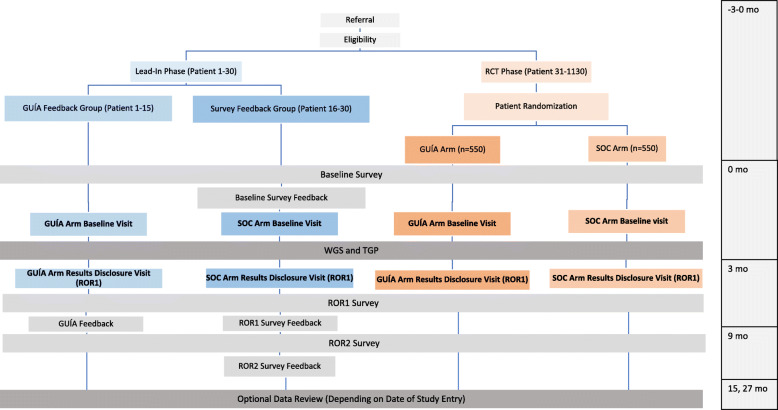
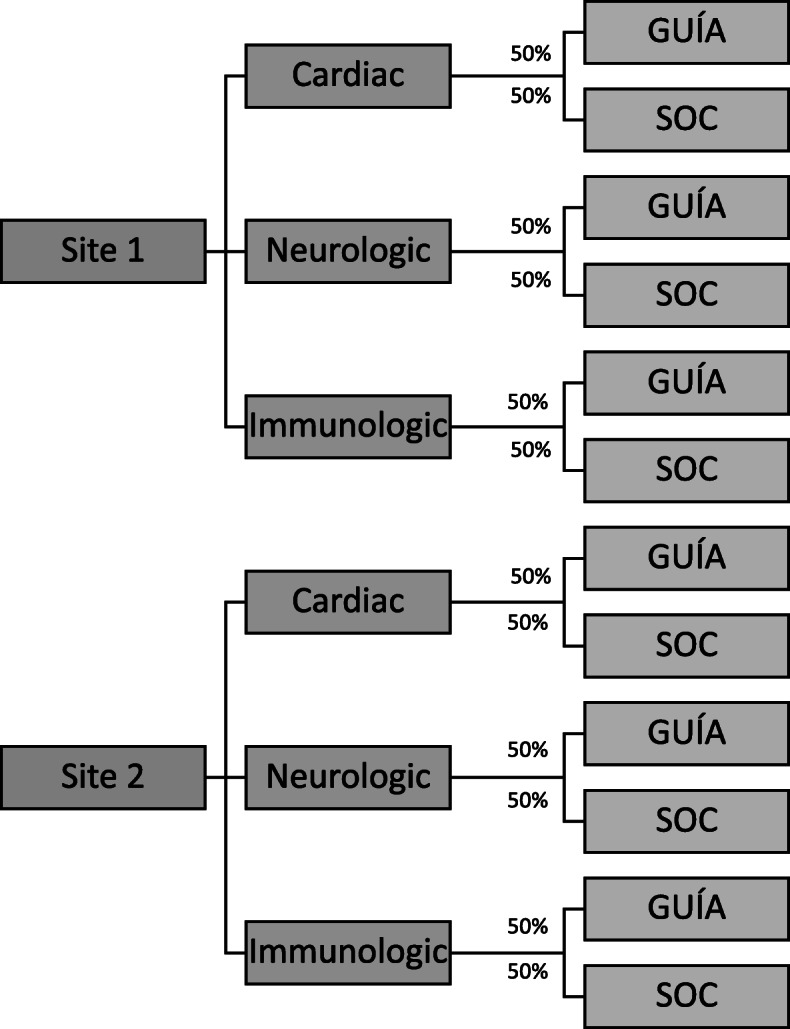
Methods: The NYCKidSeq project is a randomized controlled trial recruiting 1130 children and young adults predominantly from Harlem and the Bronx with suspected genetic disorders in three disease categories: neurologic, cardiovascular, and immunologic. Two clinical genetic tests will be performed for each participant, either proband, duo, or trio whole-genome sequencing (depending on sample availability) and proband targeted gene panels. Clinical utility, cost, and diagnostic yield of both testing modalities will be assessed. This study will evaluate the use of a novel, digital platform (GUÍA) to digitize the return of genomic results experience and improve participant understanding for English- and Spanish-speaking families. Surveys will collect data at three study visits: baseline (0 months), result disclosure visit (ROR1, + 3 months), and follow-up visit (ROR2, + 9 months). Outcomes will assess parental understanding of and attitudes toward receiving genomic results for their child and behavioral, psychological, and social impact of results. We will also conduct a pilot study to assess a digital tool called GenomeDiver designed to enhance communication between clinicians and genetic testing labs. We will evaluate GenomeDiver's ability to increase the diagnostic yield compared to standard practices, improve clinician's ability to perform targeted reverse phenotyping, and increase the efficiency of genetic testing lab personnel.
Discussion: The NYCKidSeq project will contribute to the innovations and best practices in communicating genomic test results to diverse populations. This work will inform strategies for implementing genomic medicine in health systems serving diverse populations using methods that are clinically useful, technologically savvy, culturally sensitive, and ethically sound.
Trial registration: ClinicalTrials.gov NCT03738098 . Registered on November 13, 2018 Trial Sponsor: Icahn School of Medicine at Mount Sinai Contact Name: Eimear Kenny, PhD (Principal Investigator) Address: Icahn School of Medicine at Mount Sinai, One Gustave L. Levy Pl., Box 1003, New York, NY 10029 Email: eimear.kenny@mssm.edu.
Keywords: Clinical utility; Genomic sequencing; Healthcare utilization; Pediatric genetics; Return of results; Underrepresented populations; Whole-genome sequencing.
Conflict of interest statement
EEK has received speaker honorariums from Regeneron and Illumina. NSAH was previously employed by Regeneron Pharmaceuticals and has received a speaker honorarium from Genentech. AB has received consulting fees from the American Board of Family Medicine outside the submitted work. JCB has received an honorarium from LivaNova. AR has received funding by TAKEDA for two clinical trials: HYQVIA in Pediatric CVID Patients (2018-2021) and SCIG Treatment for Chronic Inflammatory Demyelinating Polyneuropathy. RZ has received consulting fees from Sema4 outside the submitted work. All other authors declare they have no competing interest.
Figures
References
Publication types
MeSH terms
Substances
Associated data
Grants and funding
LinkOut - more resources
Full Text Sources
Other Literature Sources
Medical
Molecular Biology Databases
Miscellaneous
