


De novo assembled salivary gland transcriptome and expression pattern analyses for Rhipicephalus evertsi evertsi Neuman, 1897 male and female ticks
- PMID: 33452281
- PMCID: PMC7810686
- DOI: 10.1038/s41598-020-80454-3
De novo assembled salivary gland transcriptome and expression pattern analyses for Rhipicephalus evertsi evertsi Neuman, 1897 male and female ticks
Abstract
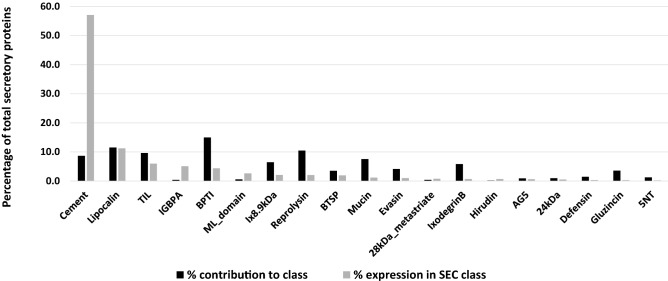
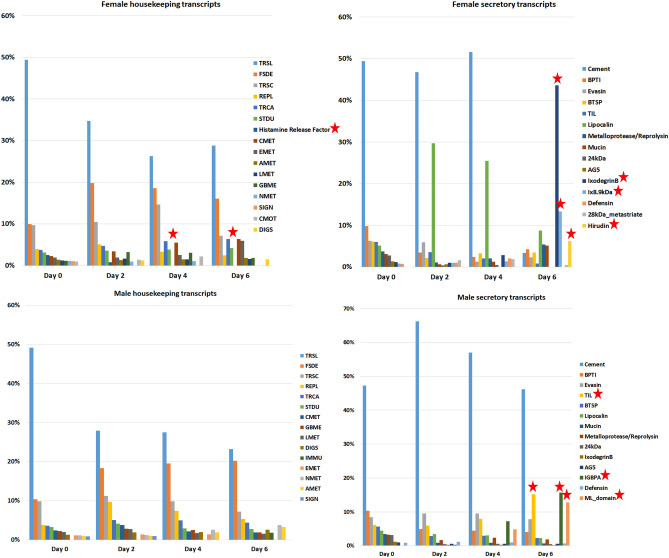
Ticks secrete proteins in their saliva that change over the course of feeding to modulate the host inflammation, immune responses, haemostasis or may cause paralysis. RNA next generation sequencing technologies can reveal the complex dynamics of tick salivary glands as generated from various tick life stages and/or males and females. The current study represents 15,115 Illumina sequenced contigs of the salivary gland transcriptome from male and female Rhipicephalus evertsi evertsi ticks of early, mid and late feeding stages from 1320 separate assemblies using three short read assemblers. The housekeeping functional class contributed to the majority of the composition of the transcriptome (80%) but with lower expression (51%), while the secretory protein functional class represented only 14% of the transcriptome but 46% of the total coverage. Six percent had an unknown status contributing 3% of the overall expression in the salivary glands. Platelet aggregation inhibitors, blood clotting inhibitors and immune-modulators orthologous to the ancestral tick lineages were confirmed in the transcriptome and their differential expression during feeding in both genders observed. This transcriptome contributes data of importance to salivary gland biology and blood feeding physiology of non-model organisms.
Conflict of interest statement
The authors declare no competing interests.
Figures




References
Publication types
MeSH terms
Substances
LinkOut - more resources
Full Text Sources
Other Literature Sources
