. 2021 Sep;90(3):576-583.
doi: 10.1038/s41390-020-01324-2. Epub 2021 Jan 15.

Surfactant lung delivery with LISA and InSurE in adult rabbits with respiratory distress

Affiliations

Surfactant lung delivery with LISA and InSurE in adult rabbits with respiratory distress

Francesca Ricci et al. Pediatr Res. 2021 Sep.

Abstract

Background: In preterm infants, InSurE (Intubation-Surfactant-Extubation) and LISA (less invasive surfactant administration) techniques allow for exogenous surfactant administration while reducing lung injury associated with mechanical ventilation. We compared the acute pulmonary response and lung deposition of surfactant by LISA and InSurE in surfactant-depleted adult rabbits.

Methods: Twenty-six spontaneously breathing surfactant-depleted adult rabbits (6-7 weeks old) with moderate RDS and managed with nasal continuous positive airway pressure were randomized to 3 groups: (1) 200 mg/kg of surfactant by InSurE; (2) 200 mg/kg of surfactant by LISA; (3) no surfactant treatment (Control). Gas exchange and lung mechanics were monitored for 180 min. After that, surfactant lung deposition and distribution were evaluated monitoring disaturated-phosphatidylcholine (DSPC) and surfactant protein C (SP-C), respectively.

Results: No signs of recovery were found in the untreated animals. After InSurE, oxygenation improved more rapidly compared to LISA. However, at 180' LISA and InSurE showed comparable outcomes in terms of gas exchange, ventilation parameters, and lung mechanics. Neither DSPC in the alveolar pool nor SP-C signal distributions in a frontal lung section were significantly different between InSurE and LISA groups.

Conclusions: In an acute setting, LISA demonstrated efficacy and surfactant lung delivery similar to that of InSurE in surfactant-depleted adult rabbits.

Impact: Although LISA technique is gaining popularity, there are still several questions to address. This is the first study comparing LISA and InSurE in terms of gas exchange, ventilation parameters, and lung mechanics as well as surfactant deposition and distribution. In our animal study, three hours post-treatment, LISA method seems to be as effective as InSurE and showed similar surfactant lung delivery. Our findings provide some clarifications on a fair comparison between LISA and InSurE techniques, particularly in terms of surfactant delivery. They should reassure some of the concerns raised by the clinical community on LISA adoption in neonatal units.


Conflict of interest statement

F.R., F.S., C. Casiraghi, C. Catozzi, and L.T. are Chiesi Farmaceutici SpA employees. X.M. acts as Chiesi Farmaceutici SpA scientific consultant.

Figures
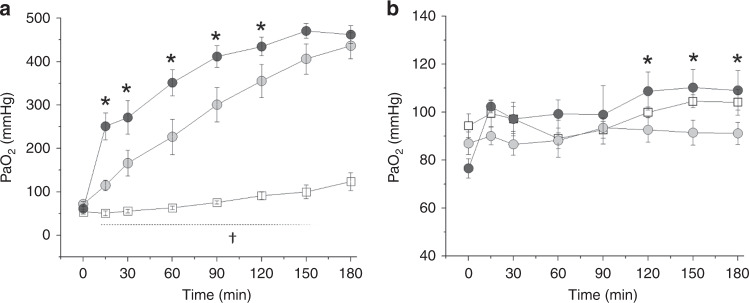
Fig. 1
Fig. 1. Gas exchange Indices.
PaO2 (a) and PaCO2 (b) values in surfactant-depleted adult rabbits treated with nasal continuous positive pressure ventilation (nCPAP, white squares), Intubation–Surfactant–Extubation plus nCPAP (InSurE, black circles), or plus less invasive surfactant administration (LISA gray circles). Values are shown as mean ± SEM. p InSurE and LISA vs. nCPAP <0.01; *p InSurE vs. LISA <0.05.
Fig. 2
Fig. 2. Oxygenation Indices.
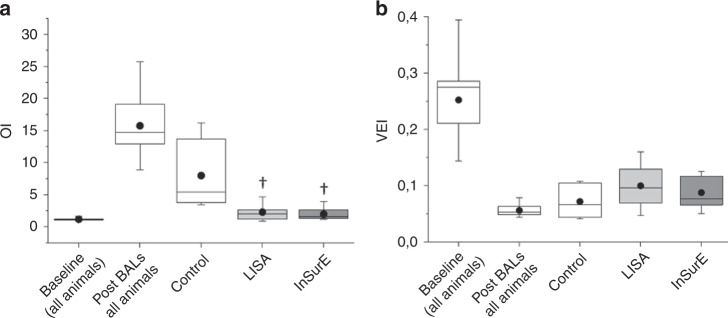
Box plots showing a the oxygenation index (OI) and b the ventilation efficacy index (VEI) at baseline (from all animals), after inducing respiratory distress (Post BALs, from all animals) and 180 min after treatment with nasal continuous positive pressure ventilation (nCPAP, Control), with Intubation–Surfactant–Extubation plus nCPAP (InSurE), or nCPAP plus with less invasive surfactant administration (LISA). The boxes encompass the 25–75 percentiles. The horizontal line within the boxes represents the median and the black dot the mean of each group. The whiskers indicate the maximum and minimum values observed for each group. p vs. Control <0.01.
Fig. 3
Fig. 3. Lung Mechanics.
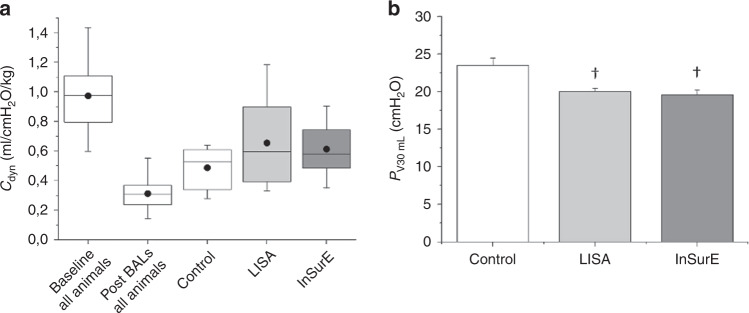
a Box plots showing the dynamic compliance (Cdyn) at baseline (from all animals), after inducing respiratory distress (Post BALs, from all animals) and 180 min after treatment with nasal continuous positive pressure ventilation (nCPAP, Control), with Intubation–Surfactant–Extubation (InSurE), or with less invasive surfactant administration (LISA). The boxes encompass the 25–75 percentiles. The horizontal line within the boxes represents the median and the black dot the mean of each group. The whiskers indicate the maximum and minimum values observed for each group. b Bar chart showing the mean pressure values recorded after insufflating 30 mL of air post mortem in the lungs of animals managed with nCPAP only, control, treated with Intubation–Surfactant–Extubation plus nCPAP (InSurE), or with nCPAP plus less invasive surfactant administration (LISA). Values are shown as mean ± SEM. †p vs. Control <0.05.
Fig. 4
Fig. 4. Intrapulmonary DSPC quantity.
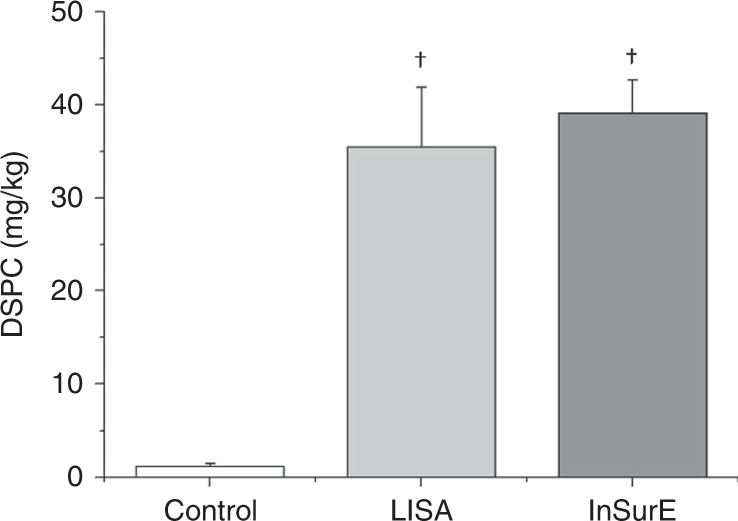
Bar chart showing the intrapulmonary amount of disaturated-phosphatidylcholine (DSPC) in the lungs of animals managed with nasal continuous positive pressure ventilation (nCPAP, Control), treated with Intubation–Surfactant–Extubation plus nCPAP (InSurE), or with nCPAP plus less invasive surfactant administration (LISA). Values are displayed as mean ± SEM. p vs. Control <0.01.
Fig. 5
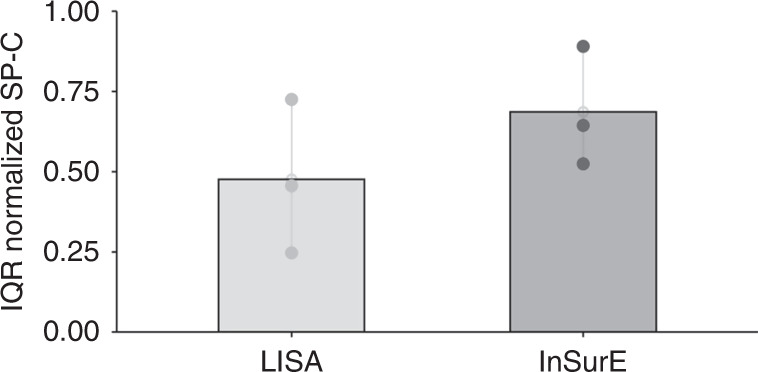
Fig. 5. Comparison of the interquartile range (IQR) of the normalized MALDI-MSI signal for LISA and InSurE (n = 3 animals in each group).
The bars highlight the position of the mean value and the dark dots represent data from individual animals. The two treatments are not significantly different (p = 0.30).
Fig. 6
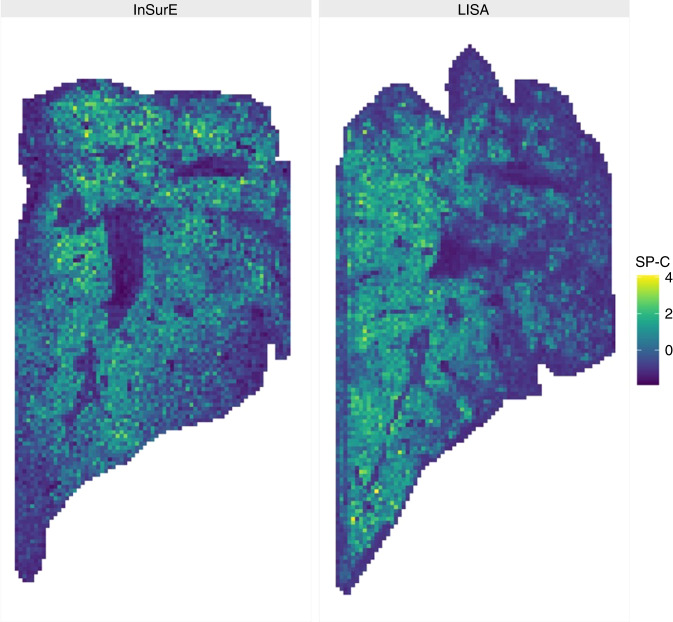
Fig. 6. Representative distribution of the porcine SP-C signal in a frontal lung section for InSurE and LISA.
The image displays the normalized and scaled raw MALDI-MSI signal.

References

    1. Cogo PE, et al. Pharmacokinetics and clinical predictors of surfactant redosing in respiratory distress syndrome. Intensive Care Med. 2011;37:510–517. doi: 10.1007/s00134-010-2091-2. - DOI - PubMed
    1. Speer, C. P. Neonatal respiratory distress syndrome: an inflammatory disease? Neonatology99, 316–319 (2011). - PubMed
    1. Pfister RH, Soll RF. Initial respiratory support of preterm infants: the role of CPAP, the INSURE method, and noninvasive ventilation. Clin. Perinatol. 2012;39:459–481. doi: 10.1016/j.clp.2012.06.015. - DOI - PubMed
    1. Jensen EA, et al. Effects of multiple ventilation courses and duration of mechanical ventilation on respiratory outcomes in extremely low-birth-weight infants. JAMA Pediatr. 2015;169:1011–1017. doi: 10.1001/jamapediatrics.2015.2401. - DOI - PMC - PubMed
    1. Dargaville, P. A. et al. Incidence and outcome of CPAP failure in preterm infants. Pediatrics138, e20153985 (2016). - PubMed

MeSH terms

Substances

LinkOut - more resources