


Reliability of isokinetic tests of velocity- and contraction intensity-dependent plantar flexor mechanical properties
- PMID: 33453060
- PMCID: PMC8251531
- DOI: 10.1111/sms.13920
Reliability of isokinetic tests of velocity- and contraction intensity-dependent plantar flexor mechanical properties
Abstract
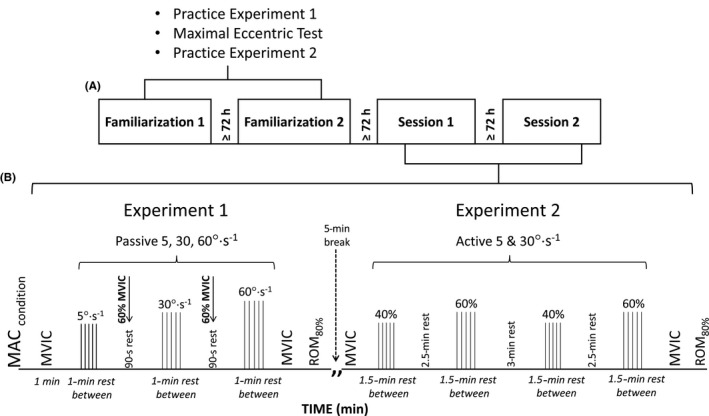
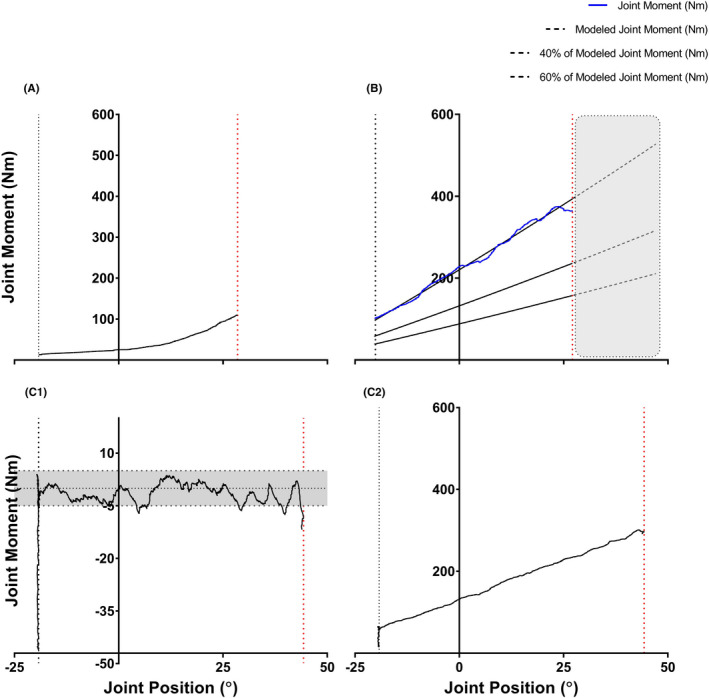
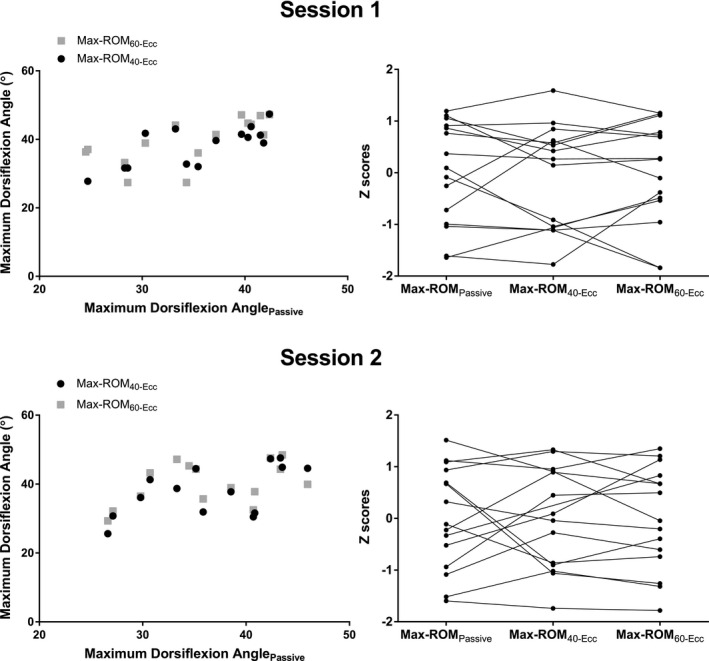
"Flexibility" tests are traditionally performed voluntarily relaxed by rotating a joint slowly; however, functional activities are performed rapidly with voluntary/reflexive muscle activity. Here, we describe the reliabilities and differences in maximum ankle range of motion (ROMmax ) and plantar flexor mechanical properties at several velocities and levels of voluntary force from a new test protocol on a commercially available dynamometer. Fifteen participants had their ankle joint dorsiflexed at 5, 30, and 60° s-1 in two conditions: voluntarily relaxed and while producing 40% and 60% of maximal eccentric torque. Commonly reported variables describing ROMmax and resistance to stretch were subsequently calculated from torque and angle data. Absolute (coefficient of variation (CV%) and typical error) and relative (ICC2,1 ) reliabilities were determined across two testing days (≥72 h). ROMmax relative reliability was good in voluntarily relaxed tests at 30 and 60° s-1 and moderate at 5° s-1 , despite CVs ≤ 10% for all velocities. Tests performed with voluntary muscle activity were only reliable when performed at 5° s-1 , and ROMmax reliability was moderate and CV ≤ 8%. For most variables, the rank order of participants differed between the slow-velocity, relaxed test, and those performed at faster speeds or with voluntary activation, indicating different information. A person's flexibility status during voluntarily relaxed fast or active stretches tended to differ from their status in the traditional voluntarily relaxed, slow-velocity test. Thus, "flexibility" tests should be completed under conditions of different stretch velocity and levels of muscle force production, and clinicians and researchers should consider the slightly larger between-day variability from slow-velocity voluntarily relaxed tests.
Keywords: flexibility; muscle stretching; passive and active stretching; range of motion; stiffness.
© 2021 The Authors. Scandinavian Journal of Medicine & Science In Sports published by John Wiley & Sons Ltd.
Conflict of interest statement
No conflicts of interest, financial, or otherwise are declared by the author(s).
Figures
References
-
- Hemmerich A, Brown H, Smith S, Marthandam SS, Wyss UP. Hip, knee, and ankle kinematics of high range of motion activities of daily living. J Orthop Res. 2006;24(4):770‐781. - PubMed
-
- Witvrouw E, Danneels L, Asselman P, D'Have T, Cambier D. Muscle flexibility as a risk factor for developing muscle injuries in male professional soccer players. A prospective study. Am J Sports Med. 2003;31(1):41‐46. - PubMed
-
- Watsford ML, Murphy AJ, McLachlan KA, et al. A prospective study of the relationship between lower body stiffness and hamstring injury in professional Australian rules footballers. Am J Sports Med. 2010;38(10):2058‐2064. - PubMed
-
- Ueno H, Suga T, Takao K, et al. Potential Relationship between Passive Plantar Flexor Stiffness and Running Performance. Int J Sports Med. 2018;39(3):204‐209. - PubMed
Publication types
MeSH terms
LinkOut - more resources
Full Text Sources
Other Literature Sources
Medical
