


Using mobile phones to improve young people sexual and reproductive health in low and middle-income countries: a systematic review to identify barriers, facilitators, and range of mHealth solutions
- PMID: 33453723
- PMCID: PMC7811742
- DOI: 10.1186/s12978-020-01059-7
Using mobile phones to improve young people sexual and reproductive health in low and middle-income countries: a systematic review to identify barriers, facilitators, and range of mHealth solutions
Abstract
Background: Globally, reproductive health programs have used mHealth to provide sexual and reproductive health (SRH) education and services to young people, through diverse communication channels. However, few attempts have been made to systematically review the mHealth programs targeted to improve young people SRH in low-and-middle-income countries (LMICs). This review aims to identify a range of different mHealth solutions that can be used for improving young people SRH in LMICs and highlight facilitators and barriers for adopting mHealth interventions designed to target SRH of young people.
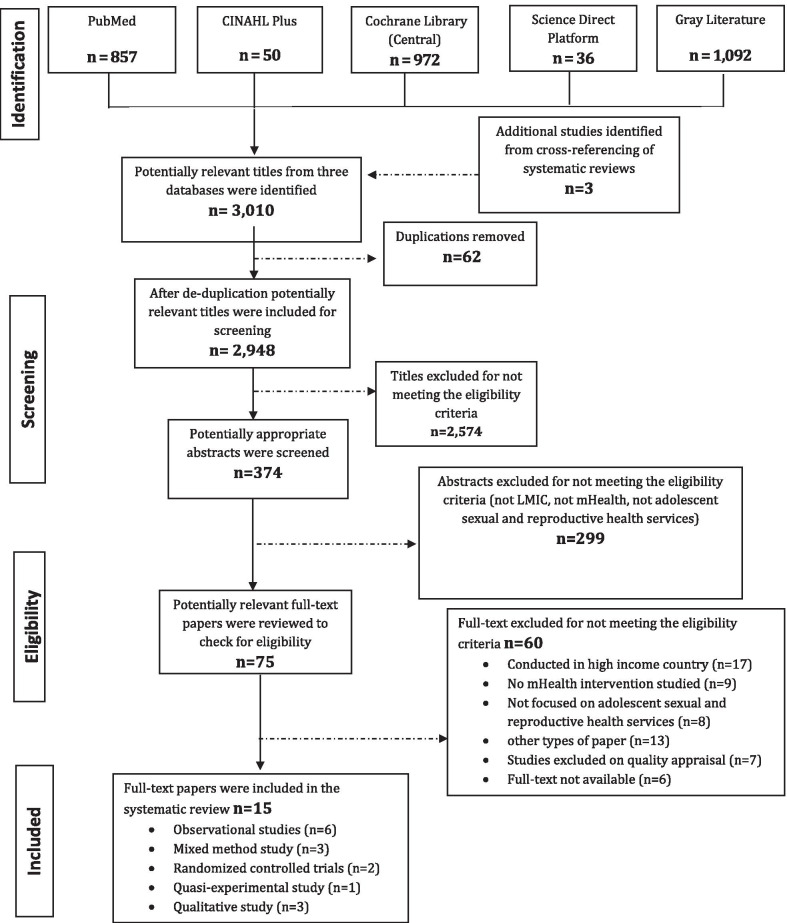
Methods: Databases including PubMed, CINAHL Plus, Science Direct, Cochrane Central, and grey literature were searched between January 01, 2005 and March 31, 2020 to identify various types of mHealth interventions that are used to improve SRH services for young people in LMICs. Of 2948 titles screened after duplication, 374 potentially relevant abstracts were obtained. Out of 374 abstracts, 75 abstracts were shortlisted. Full text of 75 studies were reviewed using a pre-defined data extraction sheet. A total of 15 full-text studies were included in the final analysis.
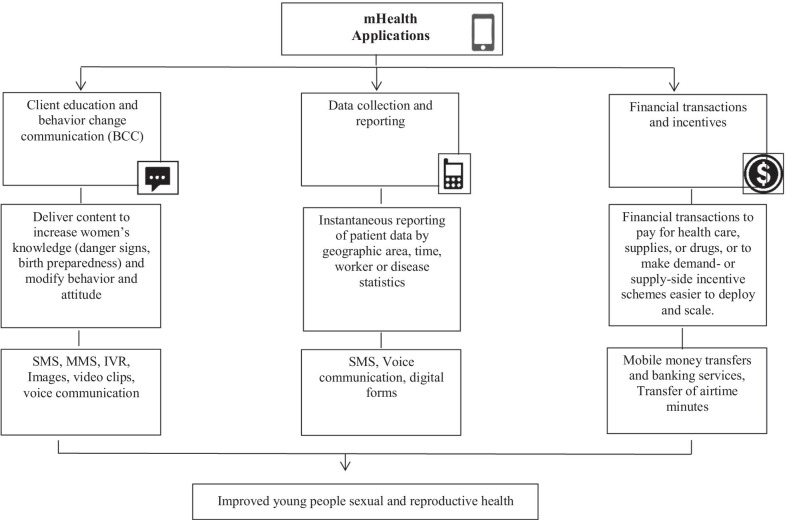
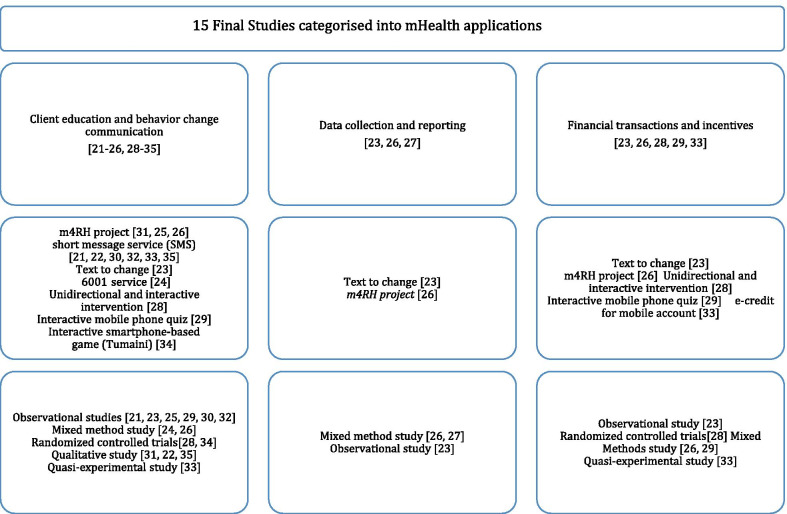
Results: The final 15 studies were categorized into three main mHealth applications including client education and behavior change communication, data collection and reporting, and financial transactions and incentives. The most reported use of mHealth was for client education and behavior change communication [n = 14, 93%] followed by financial transactions and incentives, and data collection and reporting Little evidence exists on other types of mHealth applications described in Labrique et al. framework. Included studies evaluated the impact of mHealth interventions on access to SRH services (n = 9) and SRH outcomes (n = 6). mHealth interventions in included studies addressed barriers of provider prejudice, stigmatization, discrimination, fear of refusal, lack of privacy, and confidentiality. The studies also identified barriers to uptake of mHealth interventions for SRH including decreased technological literacy, inferior network coverage, and lower linguistic competency.
Conclusion: The review provides detailed information about the implementation of mobile phones at different levels of the healthcare system for improving young people SRH outcomes. This systematic review recommends that barriers to uptake mHealth interventions be adequately addressed to increase the potential use of mobile phones for improving access to SRH awareness and services.
Systematic review registration: PROSPERO CRD42018087585 (Feb 5, 2018).
Keywords: Barriers; Facilitators; Low and middle-income countries; Mobile phones; Systematic review; Young people sexual and reproductive health; mHealth.
Conflict of interest statement
The authors declare that they have no competing interests.
Figures
References
-
- Williamson NE. Motherhood in childhood: facing the challenge of adolescent pregnancy. New York: United Nations Population Fund; 2013.
-
- Singh S, et al. Adding it up. The benefits of investing in sexual and reproductive health care. New York: Guttmacher Institute; 2003. - PubMed
-
- Nurmi J. Sexual and reproductive mHealth. Better Access to Health Care through Mobile phones. Geneva: Geneva Foundation for Medical Education and Research; 2013. p. 24.
-
- UCL Public Policy . mHealth: can mobile technology improve health in low- and middleincome countries. London: UCL Public Policy Briefing; 2015.
Publication types
MeSH terms
LinkOut - more resources
Full Text Sources
Other Literature Sources
Medical
