


Biochemical transformation of bacterial lipopolysaccharides by acyloxyacyl hydrolase reduces host injury and promotes recovery
- PMID: 33454018
- PMCID: PMC7762960
- DOI: 10.1074/jbc.REV120.015254
Biochemical transformation of bacterial lipopolysaccharides by acyloxyacyl hydrolase reduces host injury and promotes recovery
Abstract
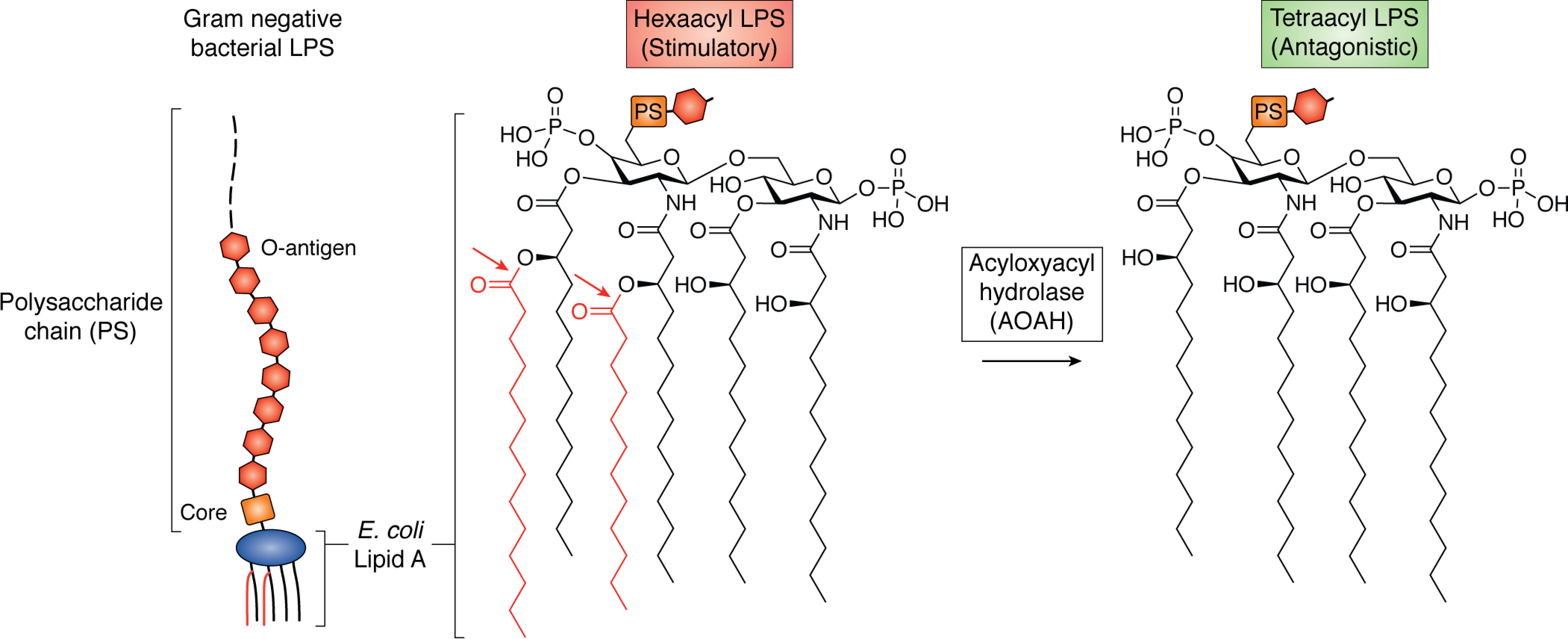
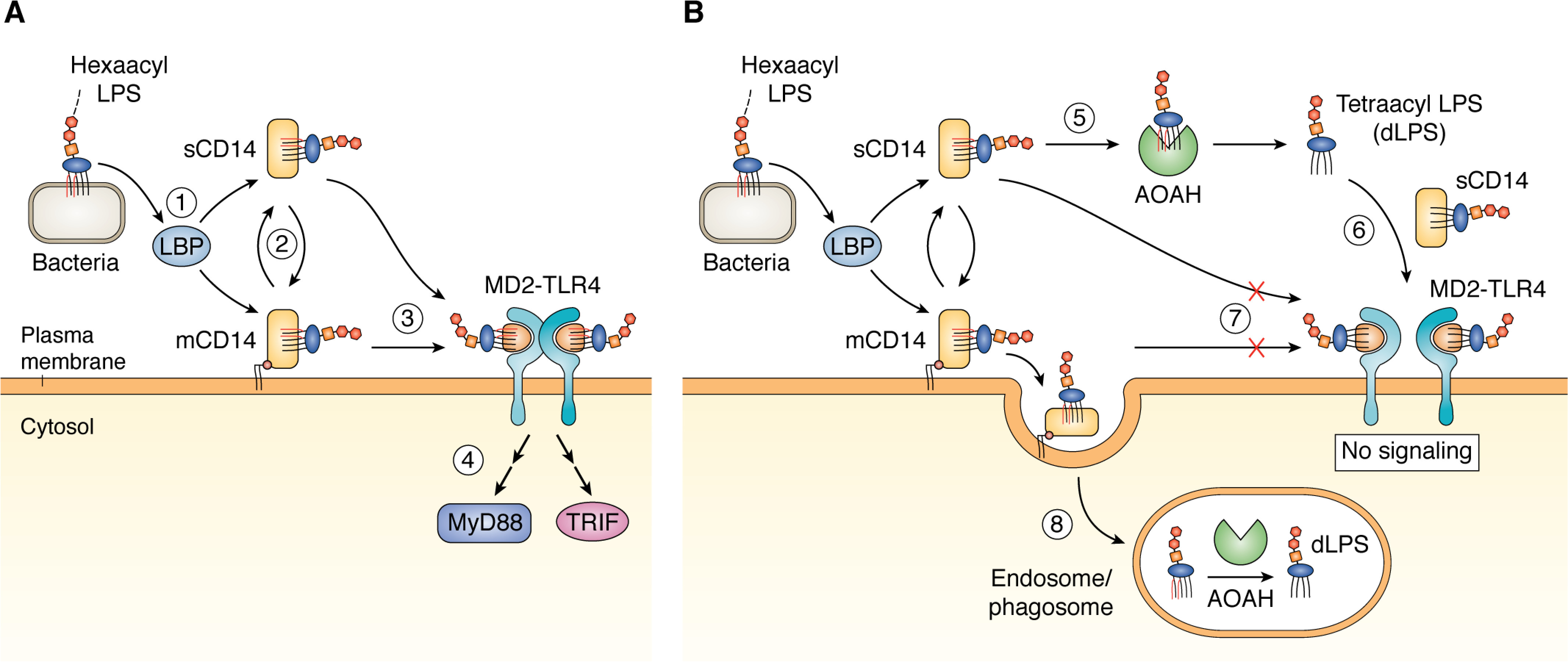
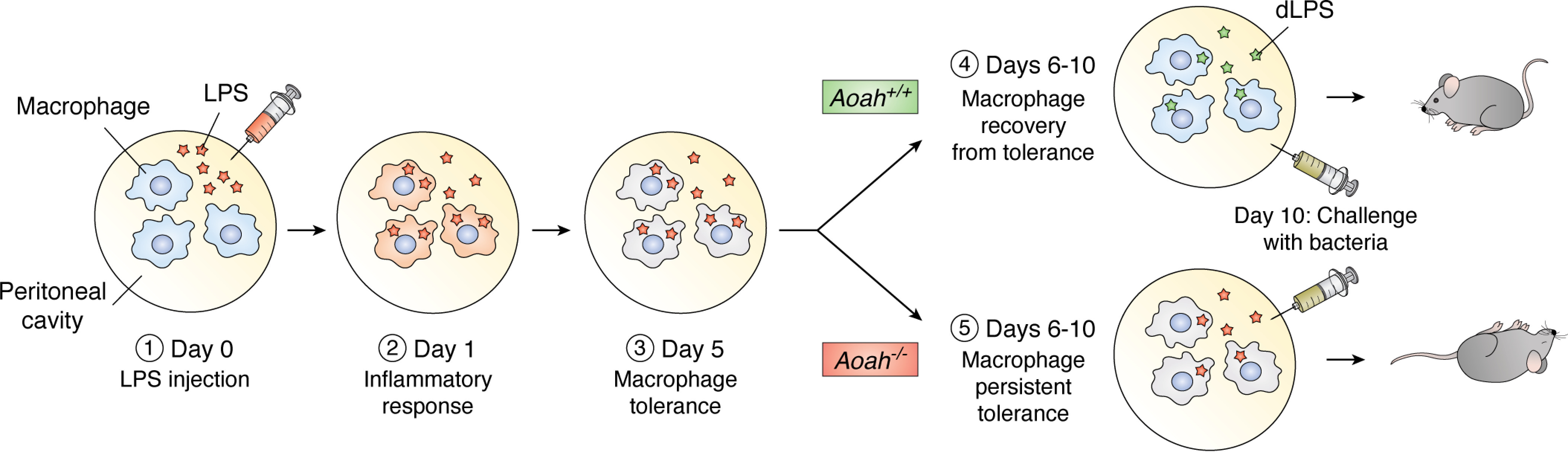
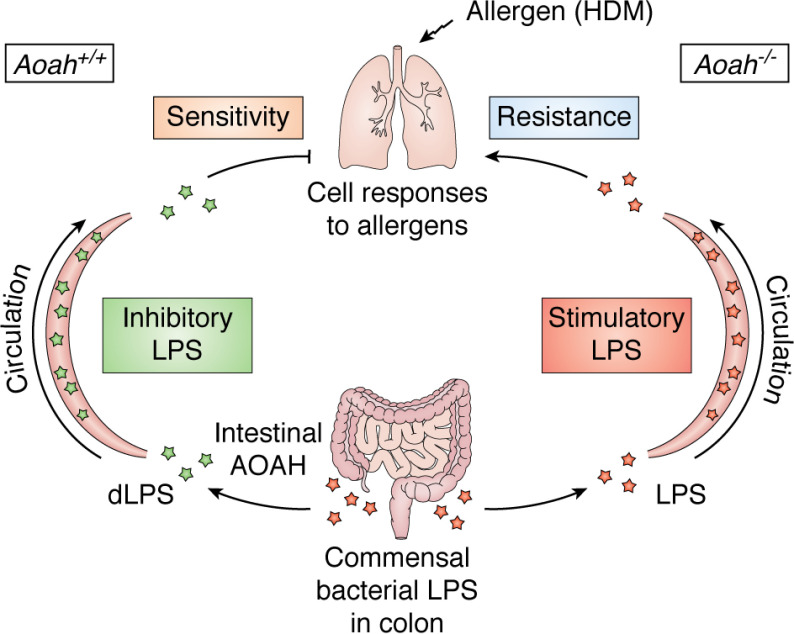
Animals can sense the presence of microbes in their tissues and mobilize their own defenses by recognizing and responding to conserved microbial structures (often called microbe-associated molecular patterns (MAMPs)). Successful host defenses may kill the invaders, yet the host animal may fail to restore homeostasis if the stimulatory microbial structures are not silenced. Although mice have many mechanisms for limiting their responses to lipopolysaccharide (LPS), a major Gram-negative bacterial MAMP, a highly conserved host lipase is required to extinguish LPS sensing in tissues and restore homeostasis. We review recent progress in understanding how this enzyme, acyloxyacyl hydrolase (AOAH), transforms LPS from stimulus to inhibitor, reduces tissue injury and death from infection, prevents prolonged post-infection immunosuppression, and keeps stimulatory LPS from entering the bloodstream. We also discuss how AOAH may increase sensitivity to pulmonary allergens. Better appreciation of how host enzymes modify LPS and other MAMPs may help prevent tissue injury and hasten recovery from infection.
Keywords: AOAH; CD14; Toll-like receptor 4 (TLR4); acyloxyacyl hydrolase; colitis; inflammation; lipid A; lipopolysaccharide (LPS); macrophage; natural killer cells (NK cells); tolerance.
Copyright © 2020.
Conflict of interest statement
The authors declare that they have no conflicts of interest with the contents of this article
Figures
References
-
- Thomas L. (1974) The Lives of a Cell, Viking Press, New York
-
- Elsbach P., Weiss J., Franson R. C., Beckerdite-Quagliata S., Schneider A., and Harris L. (1979) Separation and purification of a potent bactericidal/permeability-increasing protein and a closely associated phospholipase A2 from rabbit polymorphonuclear leukocytes: observations on their relationship. J. Biol. Chem. 254, 11000–11009 - PubMed
Publication types
MeSH terms
Substances
Grants and funding
LinkOut - more resources
Full Text Sources
Research Materials
