


Review
doi: 10.1016/j.bjae.2019.01.001.
Epub 2019 Feb 15.
Medicines safety in anaesthetic practice
Affiliations
- PMID: 33456884
- PMCID: PMC7808005
- DOI: 10.1016/j.bjae.2019.01.001
Item in Clipboard
Review
Medicines safety in anaesthetic practice
BJA Educ.
2019 May.
No abstract available
Conflict of interest statement
The authors declare that they have no conflicts of interest.
Figures

Classification of medication errors based on a psychological approach. Reproduced, with permission from Jeffrey Aronson.
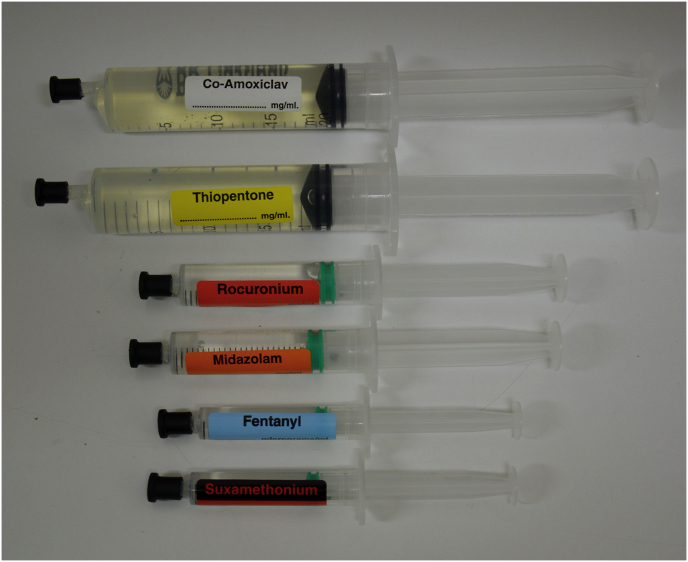
Accidental awareness during general anaesthesia has been caused by a syringe swap of 2 ml (e.g. succinylcholine rather than fentanyl), 5 ml (e.g. midazolam rather than non-depolarising drugs), or 20 ml (e.g. antibiotics rather than thiopental).
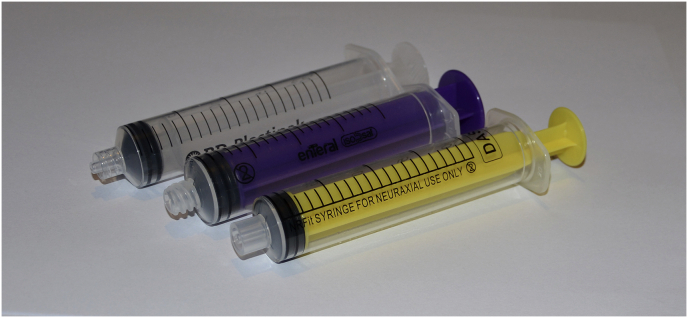
From left to right: Luer-lock syringe for intravenous use, ENFit standard syringe for enteral use, and NRFit standard syringe for central neuraxial and regional anaesthesia.
References
-
- Australian and New Zealand College of Anesthetists PS51 Guidelines for the safe management and use of medications in anaesthesia. 2018. http://www.anzca.edu.au/documents/ps51-2009-guidelines-for-the-safe-admi... Available from.
-
- Webster C.S., Merry A.F., Larsson L., McGrath K.A., Weller J. The frequency and nature of drug administration error during anaesthesia. Anaesth Intensive Care. 2001;29:494–500. - PubMed
-
- Gariel C., Cogniat B., Desgranges F.P., Chassard D., Bouvet L. Incidence, characteristics, and predictive factors for medication errors in paediatric anaesthesia: a prospective incident monitoring study. Br J Anaesth. 2018;120:563–570. - PubMed
Publication types
LinkOut - more resources
Full Text Sources
