


A single neural network for cone-beam computed tomography-based radiotherapy of head-and-neck, lung and breast cancer
- PMID: 33458310
- PMCID: PMC7807541
- DOI: 10.1016/j.phro.2020.04.002
A single neural network for cone-beam computed tomography-based radiotherapy of head-and-neck, lung and breast cancer
Abstract
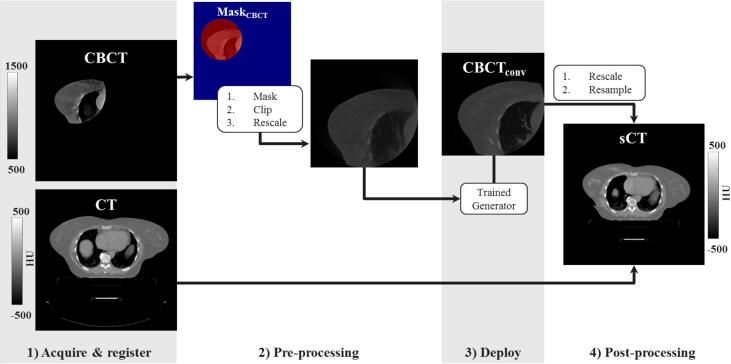
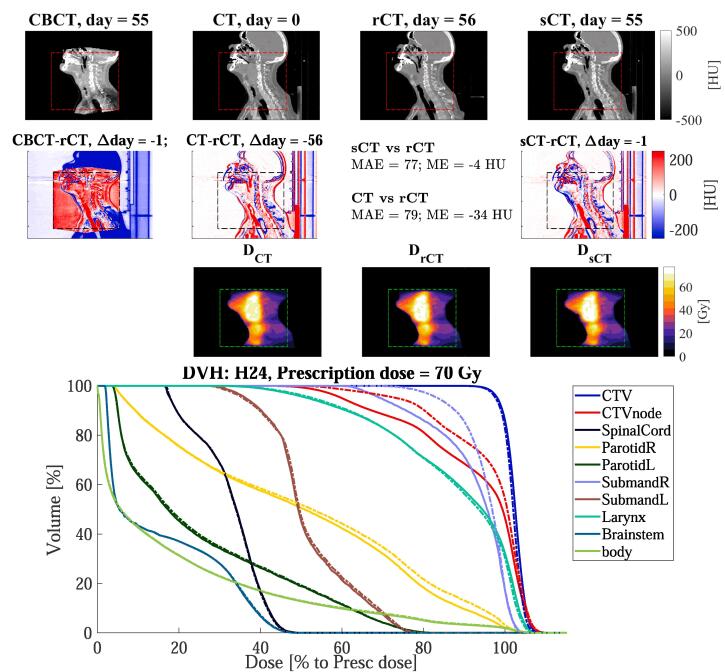
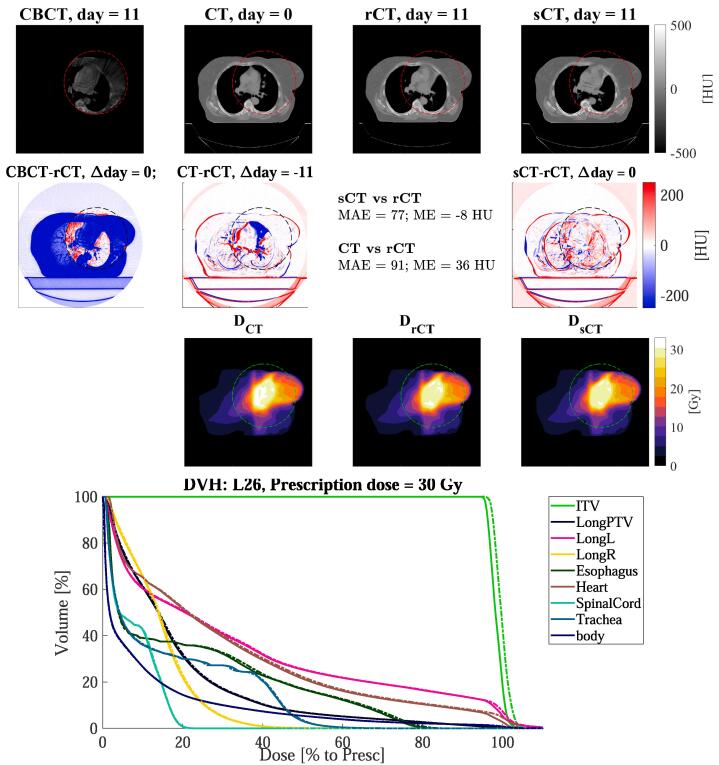
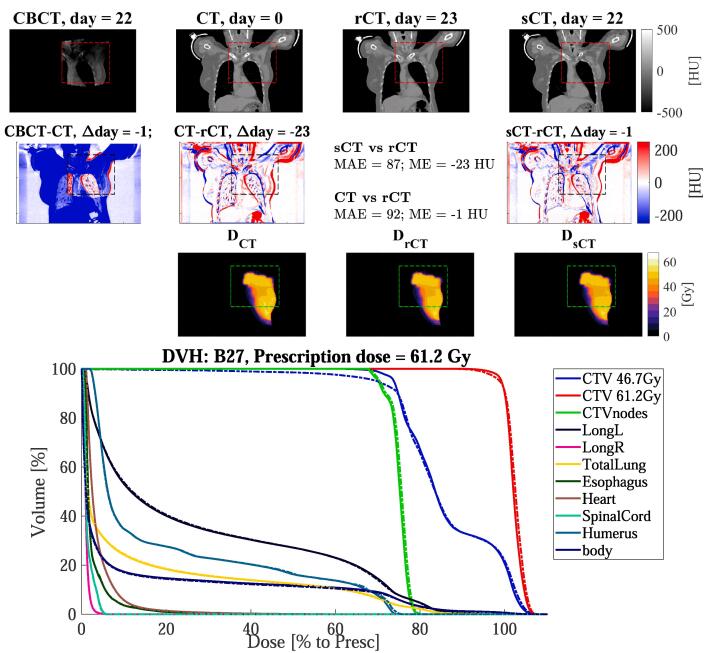
Background and purpose Adaptive radiotherapy based on cone-beam computed tomography (CBCT) requires high CT number accuracy to ensure accurate dose calculations. Recently, deep learning has been proposed for fast CBCT artefact corrections on single anatomical sites. This study investigated the feasibility of applying a single convolutional network to facilitate dose calculation based on CBCT for head-and-neck, lung and breast cancer patients. Materials and Methods Ninety-nine patients diagnosed with head-and-neck, lung or breast cancer undergoing radiotherapy with CBCT-based position verification were included in this study. The CBCTs were registered to planning CT according to clinical procedures. Three cycle-consistent generative adversarial networks (cycle-GANs) were trained in an unpaired manner on 15 patients per anatomical site generating synthetic-CTs (sCTs). Another network was trained with all the anatomical sites together. Performances of all four networks were compared and evaluated for image similarity against rescan CT (rCT). Clinical plans were recalculated on rCT and sCT and analysed through voxel-based dose differences and -analysis. Results A sCT was generated in 10 s. Image similarity was comparable between models trained on different anatomical sites and a single model for all sites. Mean dose differences were obtained in high-dose regions. Mean gamma (3%, 3 mm) pass-rates were achieved for all sites. Conclusion Cycle-GAN reduced CBCT artefacts and increased similarity to CT, enabling sCT-based dose calculations. A single network achieved CBCT-based dose calculation generating synthetic CT for head-and-neck, lung, and breast cancer patients with similar performance to a network specifically trained for each anatomical site.
Keywords: Adaptive radiotherapy; Artificial intelligence; CBCT; Deep learning; Dose calculation; Image-guided radiotherapy; Image-to-image translation; Machine learning.
© 2020 The Author(s).
Conflict of interest statement
The authors declare that they have no known competing financial interests or personal relationships that could have appeared to influence the work reported in this paper.
Figures
References
LinkOut - more resources
Full Text Sources
Research Materials
