


Field demonstration of irradiated sodium alginate as tea production booster
- PMID: 33458447
- PMCID: PMC7797376
- DOI: 10.1016/j.heliyon.2020.e05881
Field demonstration of irradiated sodium alginate as tea production booster
Abstract
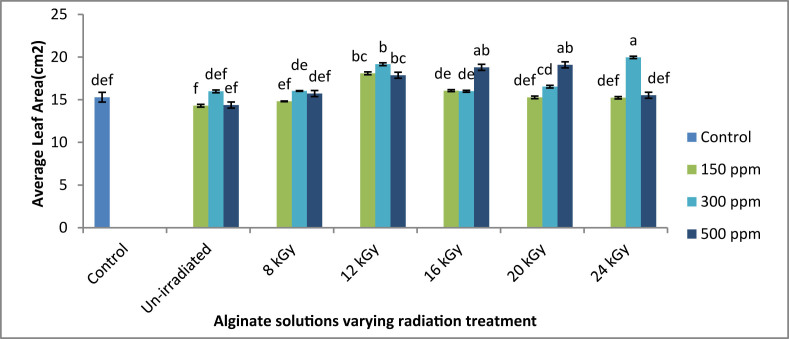
Sodium alginate oligomers were tested for tea plant growth promoter and anti-fungal agent in this experiment. Sodium alginate solutions were irradiated by Co-60 gamma radiation with different radiation doses to produce the oligomers. Irradiated solutions were then diluted into 150, 300 and 500 ppm prior to foliar application. Solutions were applied through foliar spraying at 7 days interval and the best response of tea plants in terms of various attributes were recorded. Tea buds were collected in 10 days of interval and the growth attributes like- total number of buds, fresh weight of buds, average leaf area and weight per bud, weight of made tea etc. were calculated. The experiment was continued up to 12 weeks and the attributes were averaged to get results per plucking. 12 kGy radiation doses along with 300ppm solution showed the best results and about 36% increase in productivity was found based on the fresh weight of buds. Total fungal count in tea leaves was also found to be reduced greatly. Based on the present study, irradiated sodium alginate could be used as safe and environmentally friendly agent to increase tea production.
Keywords: Gamma radiation; Growth promoting activity; Natural growth promoter; Sodium alginate; Tea production.
© 2020 The Authors.
Conflict of interest statement
The authors declare no conflict of interest.
Figures



References
-
- Aftab T., Naeem M., Idrees M., Khan M.M.A., Varshney L. Simultaneous use of irradiated sodium alginate and nitrogen and phosphorus fertilizers enhance growth, biomass and artemisinin biosynthesis in Artemisia annua L. J. Appl. Res. Med. Aromatic Plants. 2016;3(4):186–194.
-
- Ahmad I., Das T.T., Yasin M., Hossain M.A. Study on biochemical compounds, antioxidant activity and organoleptic taste of some spice tea. Agri. Food Sci. Res. 2016;3(2):53–58.
-
- Ahmad I., Mazumder A.Z.M.S., Begum F., Hossain M.A., Hoque M.M. Physico-chemical characteristics and assessment of cup quality of tea collected from various tea estates of different countries. J. Appl. Sci. Technol. 2013;9(1):51–54.
-
- Ahmad I., Obaidullah M., Hossain M.A., Ali M., Islam M.S. In vitro biological control of branch canker (Macrophoma theiocola) disease of tea. ESci. J. Plant Pathol. 2013;2(3):163–169.
-
- Ahmad I., Hossain M.A. Present status of Bangladesh tea sector in respect of world tea: an overview. J. Appl. Sci. Technol. 2013;9(1):116–128.
LinkOut - more resources
Full Text Sources
Other Literature Sources
