


The lipoprotein NlpD in Cronobacter sakazakii responds to acid stress and regulates macrophage resistance and virulence by maintaining membrane integrity
- PMID: 33459158
- PMCID: PMC7834084
- DOI: 10.1080/21505594.2020.1870336
The lipoprotein NlpD in Cronobacter sakazakii responds to acid stress and regulates macrophage resistance and virulence by maintaining membrane integrity
Abstract
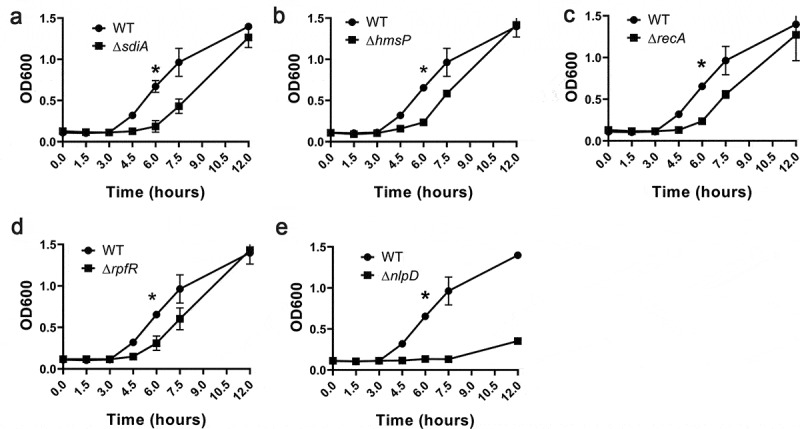
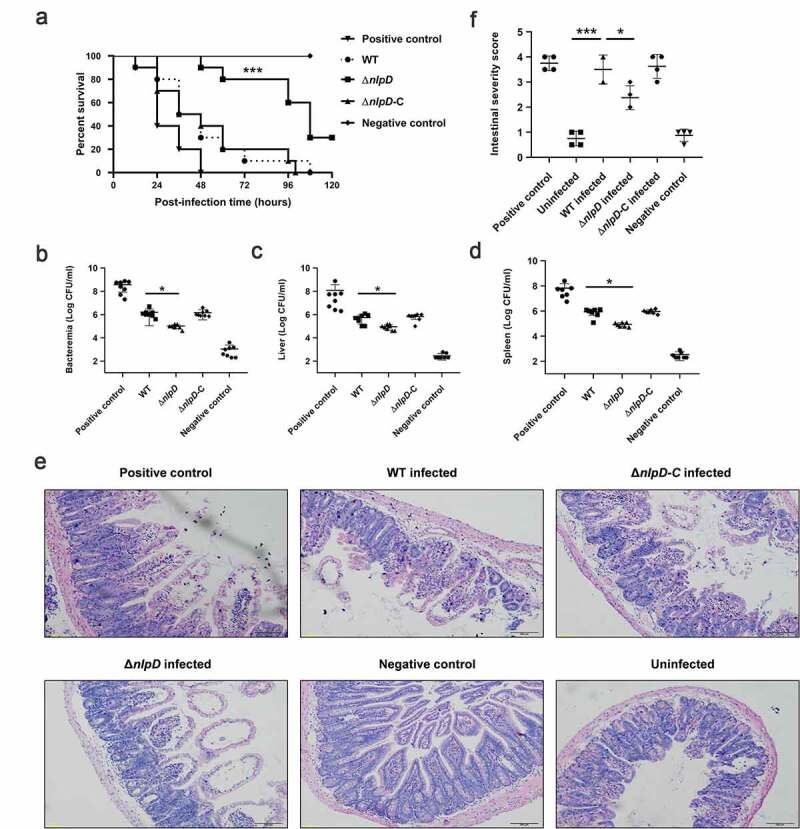
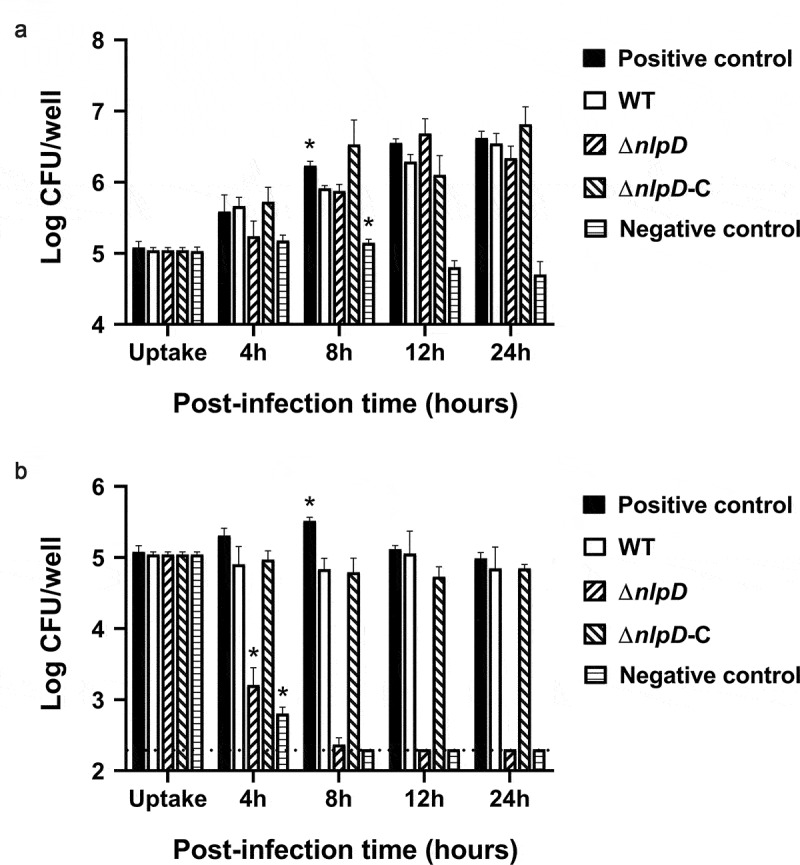
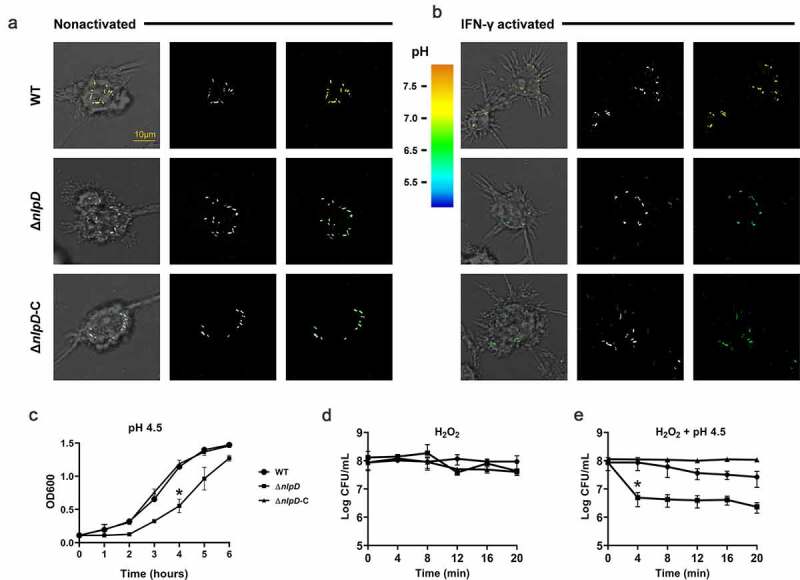
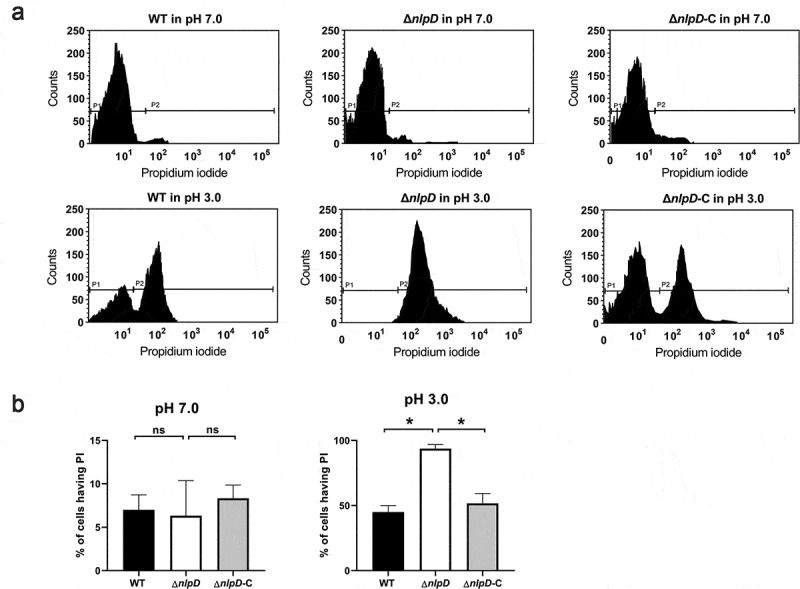
Cronobacter sakazakii, an emerging opportunistic pathogen, is implicated in severe foodborne outbreak infections in premature and full-term infants. Generally, acid tolerance is vital for the pathogenesis of foodborne pathogens; however, its role in C. sakazakii virulence remains largely unknown. To screen out acid-tolerance determinants from transposon mutants, anovel counterselection method using gentamicin and acid was developed. Using the counterselection method and growth assay, we screened several acid-sensitive mutants and found that nlpD encodes an acid-resistance factor in C. sakazakii. Compared to the wild-type strain, the nlpD mutant exhibited attenuated virulence in a rat model. Using macrophage THP-1 cells and a pH probe, we verified that nlpD enables bacteria to resist macrophages by resisting acidification. Finally, we confirmed that nlpD maintains C. sakazakii membrane integrity in acid using propidium iodide permeabilization assays via flow cytometry. Our results confirm that nlpD is a novel virulence factor that permits C. sakazakii to survive under acid stress conditions. Considering that NlpD is a conserved lipoprotein located in the bacterial outer membrane, NlpD could be used as a target for drug development.
Keywords: Cronobacter sakazakii; acid resistance; lipoprotein; membrane integrity.
Conflict of interest statement
The authors have no competing interests to disclose.
Figures
References
-
- Elkhawaga AA, Hetta HF, Osman NS, et al. Emergence of Cronobacter sakazakii in cases of neonatal sepsis in Upper Egypt first report in North Africa. BMC Microbiol. 2020;11:215. .Epub 2019/12/29. 10.3389/fmicb.2020.00215. PubMed PMID: 32210926; PubMed Central PMCID: PMCPmc6935241 Pmc7075355. - PMC - PubMed
-
- Guo D, Wang S, Li J, et al. The antimicrobial activity of coenzyme Q(0) against planktonic and biofilm forms of Cronobacter sakazakii. Food Microbiol. 2020;86:103337. .Epub 2019/11/11. PubMed PMID: 31703870. - PubMed
-
- Chen Z, Zhang Y, Lin R, et al. Cronobacter sakazakii induces necrotizing enterocolitis by regulating NLRP3 inflammasome expression via TLR4. J Med Microbiol. 2020;69(5):748–758. .Epub 2020/03/27. PubMed PMID: 32209170. - PubMed
-
- Control CfD, Prevention . Enterobacter sakazakii infections associated with the use of powdered infant formula–tennessee, 2001. MMWR Morb Mortal Wkly Rep. 2002;51(14):297. - PubMed
-
- Wang M, Wang L, Wu P, et al. Genomics and experimental analysis reveal a novel factor contributing to the virulence of cronobacter sakazakii strains associated with neonate infection. J Infect Dis. 2019;220(2):306–315. .Epub 2019/03/06. PubMed PMID: 30835279. - PubMed
Publication types
MeSH terms
Substances
LinkOut - more resources
Full Text Sources
Other Literature Sources
