


Cartilage endplate stem cells inhibit intervertebral disc degeneration by releasing exosomes to nucleus pulposus cells to activate Akt/autophagy
- PMID: 33459443
- PMCID: PMC8048856
- DOI: 10.1002/stem.3322
Cartilage endplate stem cells inhibit intervertebral disc degeneration by releasing exosomes to nucleus pulposus cells to activate Akt/autophagy
Erratum in
-
Erratum.Stem Cells. 2021 Dec;39(12):E6. doi: 10.1002/stem.3464. Stem Cells. 2021. PMID: 34866289 Free PMC article. No abstract available.
-
Correction to: Cartilage Endplate Stem Cells Inhibit Intervertebral Disc Degeneration by Releasing Exosomes to Nucleus Pulposus Cells to Activate Akt/Autophagy.Stem Cells. 2023 Apr 25;41(4):415. doi: 10.1093/stmcls/sxac092. Stem Cells. 2023. PMID: 36821781 No abstract available.
Abstract
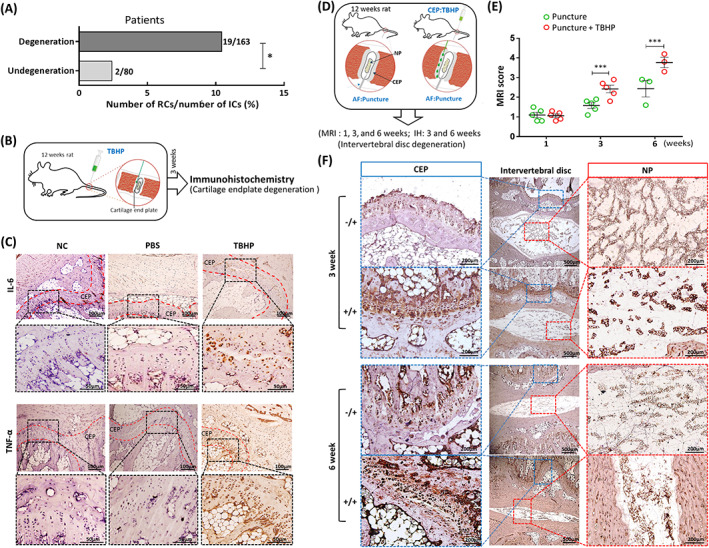
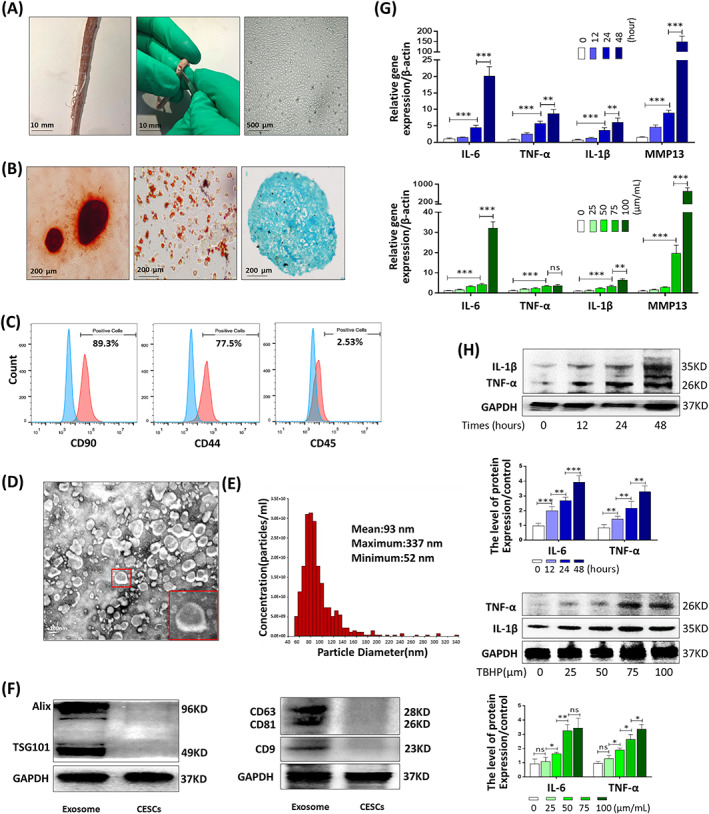
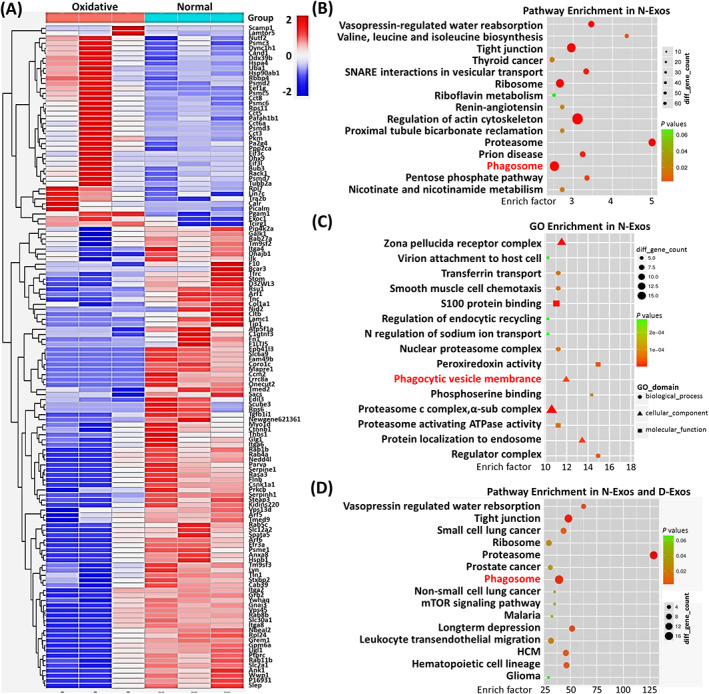
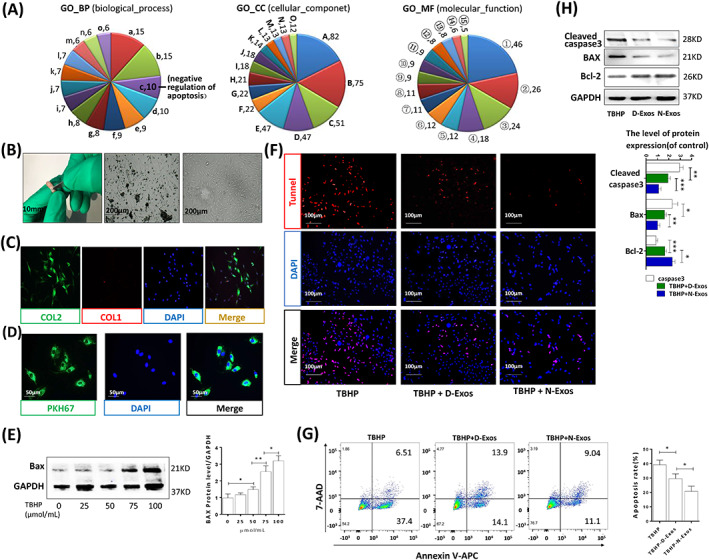
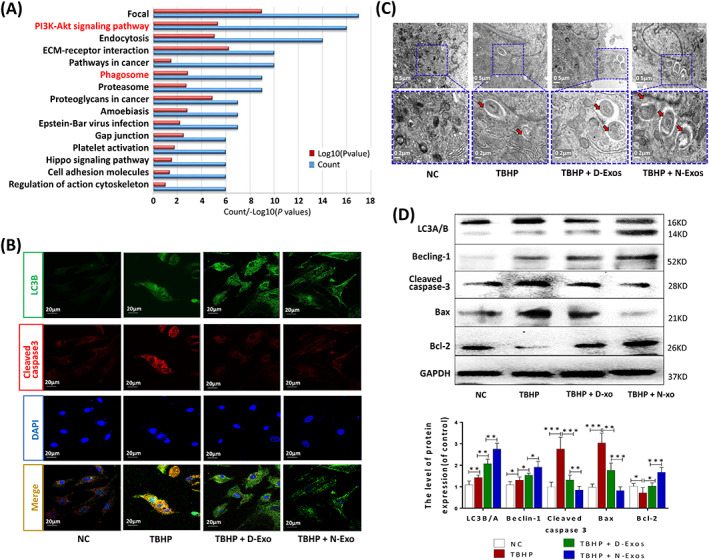
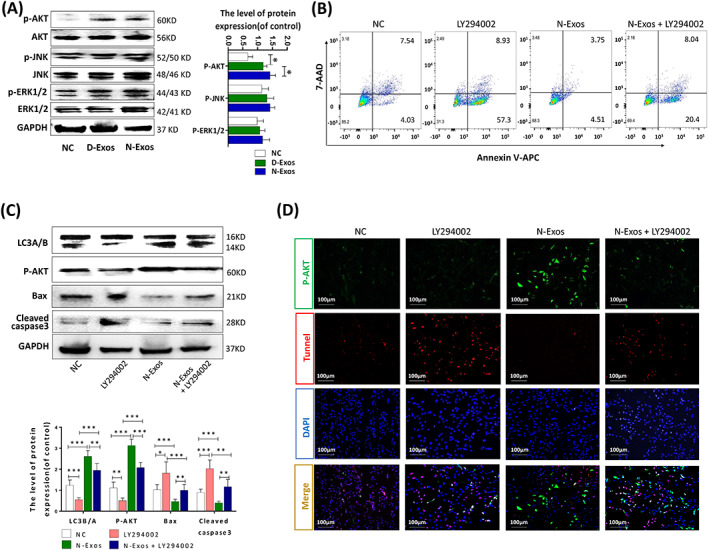
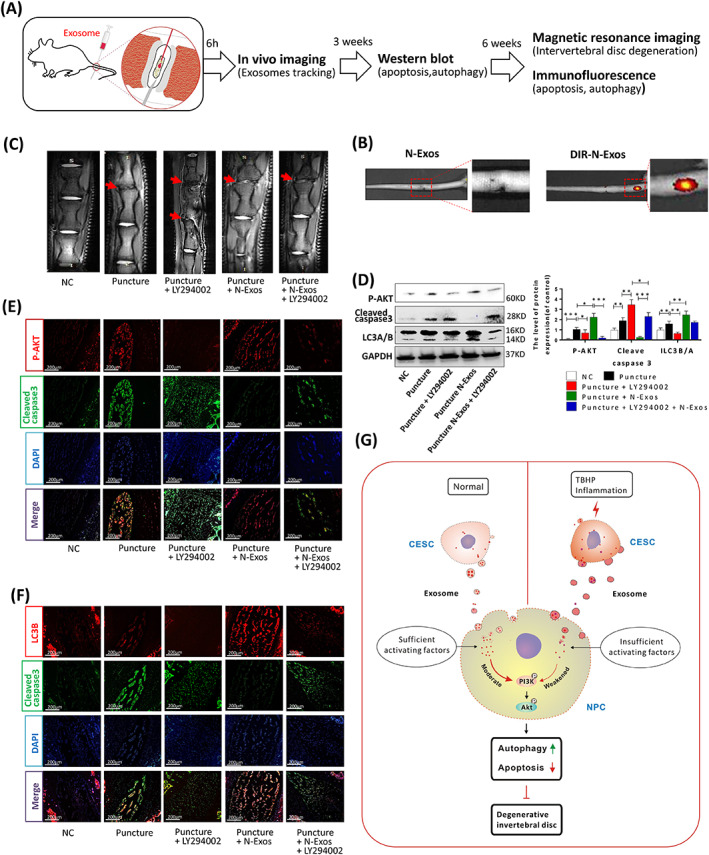
Degeneration of the cartilage endplate (CEP) induces intervertebral disc degeneration (IVDD). Nucleus pulposus cell (NPC) apoptosis is also an important exacerbating factor in IVDD, but the cascade mechanism in IVDD is not clear. We investigated the apoptosis of NPCs and IVDD when stimulated by normal cartilage endplate stem cell (CESC)-derived exosomes (N-Exos) and degenerated CESC-derived exosomes (D-Exos) in vitro and in vivo. Tert-butyl hydroperoxide (TBHP) was used to induce inflammation of CESCs. The bioinformatics differences between N-Exos and D-Exos were analyzed using mass spectrometry, heat map, and Kyoto Encyclopedia of Genes and Genomes (KEGG) enrichment analysis. NPC apoptosis was examined using TUNEL staining. The involvement of the AKT and autophagy signaling pathways was investigated using the signaling inhibitor LY294002. Magnetic resonance imaging, Western blotting, and immunofluorescence staining were used to evaluate the therapeutic effects of N-Exos in rats with IVDD. TBHP effectively induced inflammation and the degeneration of CEP in rat. N-Exos were more conducive to autophagy activation than D-Exos. The apoptotic rate of NPCs decreased obviously after treatment with N-Exos compared to D-Exos. N-Exos inhibited NPCs apoptosis and attenuated IVDD in rat via activation of the AKT and autophagy pathways. These results are the first findings to confirm that CEP delayed the progression of IVDD via exosomes. The therapeutic effects of N-Exos on NPC apoptosis inhibition and the slowing of IVDD progression were more effective than D-Exos due to activation of the PI3K/AKT/autophagy pathway, which explained the increase in the incidence of IVDD after inflammation of the CEP.
Keywords: apoptosis; autophagy; cartilage endplate stem cells; exosome; intervertebral disc degeneration.
©2021 The Authors. Stem Cells published by Wiley Periodicals LLC on behalf of AlphaMed Press 2020.
Conflict of interest statement
The authors declared no potential conflicts of interest.
Figures
References
Publication types
MeSH terms
Substances
LinkOut - more resources
Full Text Sources
Other Literature Sources
Medical
