


Self-stigma in Serious Mental Illness: A Systematic Review of Frequency, Correlates, and Consequences
- PMID: 33459793
- PMCID: PMC8563656
- DOI: 10.1093/schbul/sbaa181
Self-stigma in Serious Mental Illness: A Systematic Review of Frequency, Correlates, and Consequences
Abstract
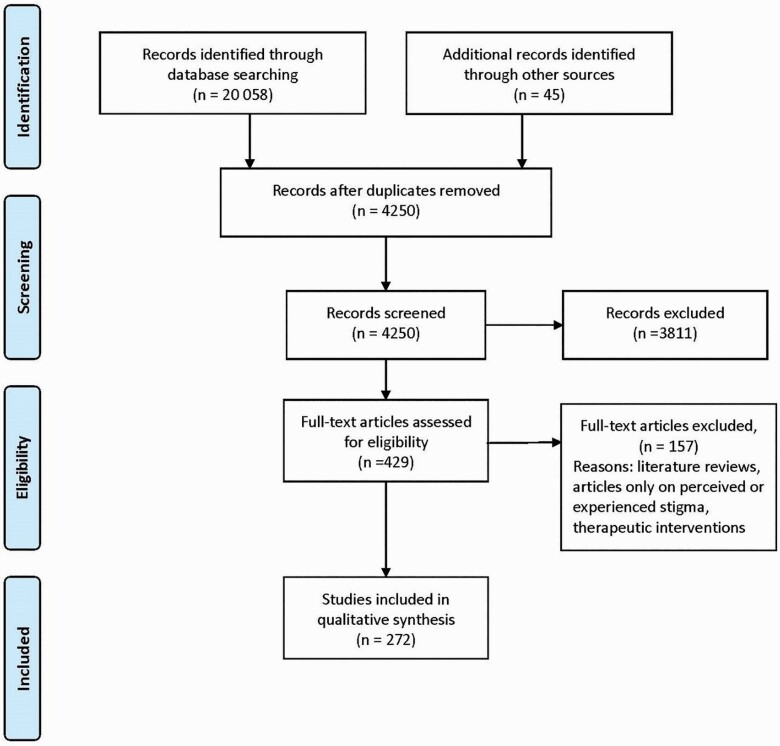
Self-stigma is associated with poor clinical and functional outcomes in Serious Mental Illness (SMI). There has been no review of self-stigma frequency and correlates in different cultural and geographic areas and SMI. The objectives of the present study were: (1) to review the frequency, correlates, and consequences of self-stigma in individuals with SMI; (2) to compare self-stigma in different geographical areas and to review its potential association with cultural factors; (3) to evaluate the strengths and limitations of the current body of evidence to guide future research. A systematic electronic database search (PubMed, Web of Science, PsycINFO, Scopus, and Ovid SP Cumulative Index to Nursing and Allied Health Literature [CINAHL]) following PRISMA guidelines, was conducted on the frequency, correlates, and consequences of self-stigma in SMI. Out of 272 articles, 80 (29.4%) reported on the frequency of self-stigma (n = 25 458), 241 (88.6%) on cross-sectional correlates of self-stigma and 41 (15.0%) on the longitudinal correlates and consequences of self-stigma. On average, 31.3% of SMI patients reported high self-stigma. The highest frequency was in South-East Asia (39.7%) and the Middle East (39%). Sociodemographic and illness-related predictors yielded mixed results. Perceived and experienced stigma-including from mental health providers-predicted self-stigma, which supports the need to develop anti-stigma campaigns and recovery-oriented practices. Increased transition to psychosis and poor clinical and functional outcomes are both associated with self-stigma. Psychiatric rehabilitation and recovery-oriented early interventions could reduce self-stigma and should be better integrated into public policy.
Keywords: correlates; prevalence; psychiatric rehabilitation; self-stigma; serious mental illness.
© The Author(s) 2021. Published by Oxford University Press on behalf of the Maryland Psychiatric Research Center.All rights reserved. For permissions, please email: journals.permissions@oup.com.
Figures
References
-
- Link BG, Phelan JC. Conceptualizing stigma. Annu Rev Sociol. 2001;27:363–385.
-
- Thornicroft G, Brohan E, Rose D, Sartorius N, Leese M; INDIGO Study Group . Global pattern of experienced and anticipated discrimination against people with schizophrenia: a cross-sectional survey. Lancet. 2009;373(9661):408–415. - PubMed
-
- Thoits PA. Resisting the stigma of mental illness. Soc Psychol Q. 2011;74(1):6–28.
Publication types
MeSH terms
LinkOut - more resources
Full Text Sources
Other Literature Sources
Medical
