


The FEES box: A novel barrier to contain particles during aerosol-generating procedures
- PMID: 33460980
- PMCID: PMC7834572
- DOI: 10.1016/j.amjoto.2020.102888
The FEES box: A novel barrier to contain particles during aerosol-generating procedures
Abstract
Purpose: Due to the COVID-19 pandemic, aerosol-generating procedures (AGPs) such as flexible endoscopic evaluation of swallowing (FEES) have been deemed high-risk and in some cases restricted, indicating the need for additional personal protective equipment. The aim of this study was to erect and study a protective barrier for FEES.
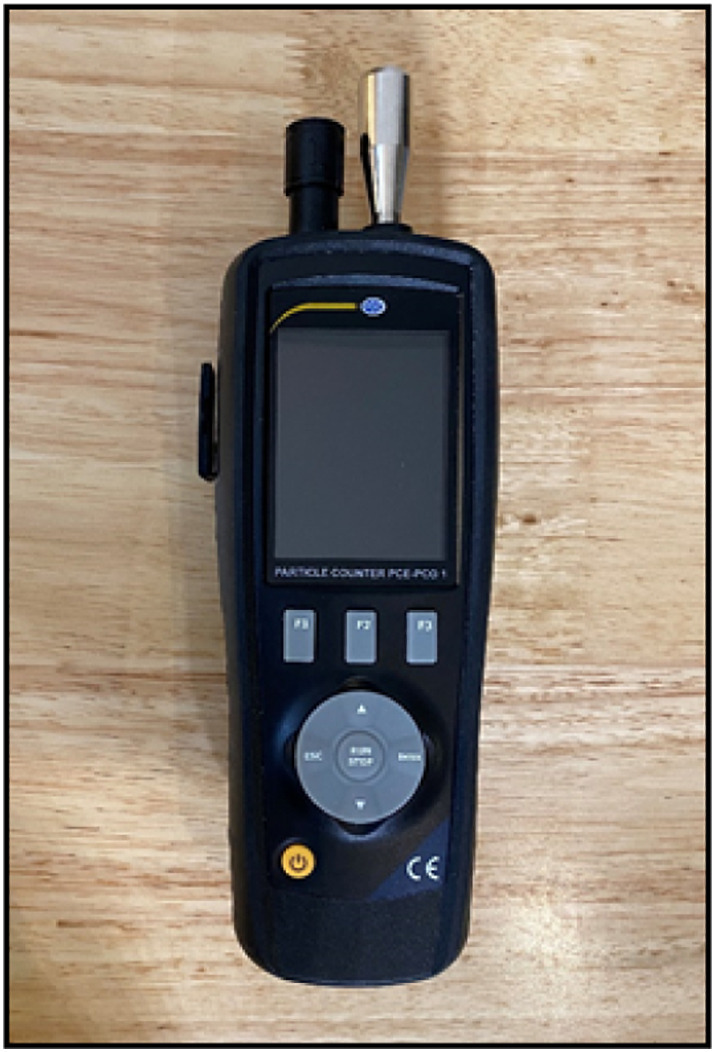
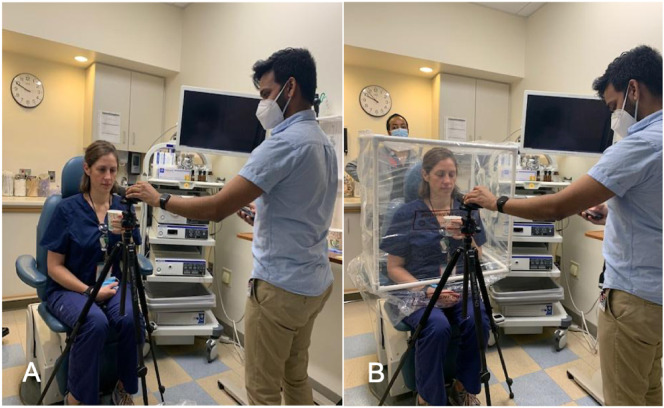
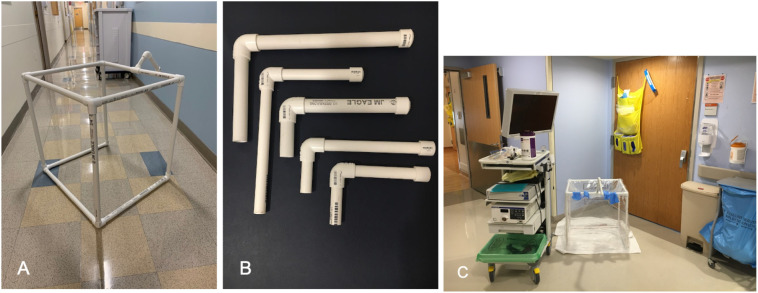
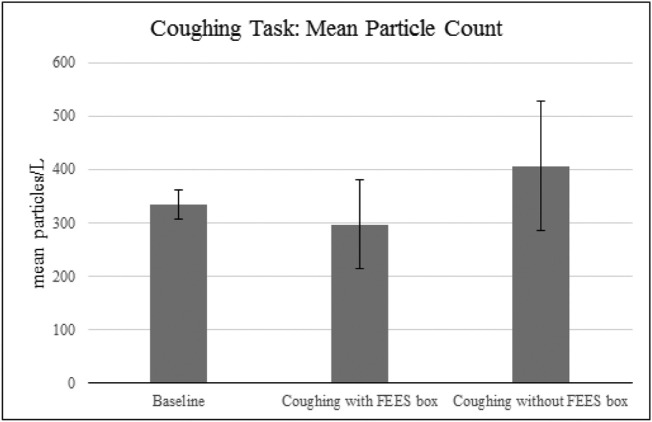
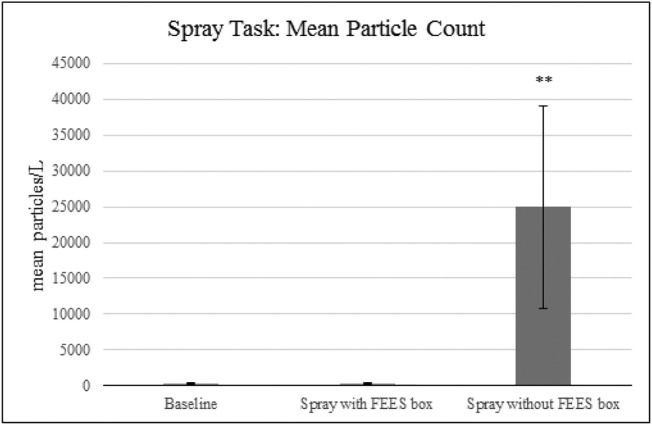
Materials and methods: A PVC cube was constructed to fit over a patient while allowing for upright endoscopy. A plastic drape was fitted over the cube, and the protective barrier was subsequently named the "FEES Box." Three different particulate-generating tasks were carried out: sneezing, coughing, and spraying water from an atomizer bottle. Each task was completed within and without the FEES Box, and particulate was measured with a particle counter. The average particles/L detected during the three tasks, and baseline measurements, were statistically compared.
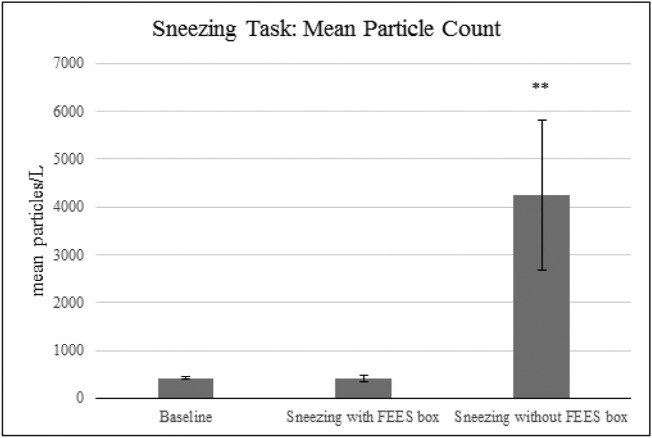
Results: Without the FEES Box in place, the sneezing and spraying tasks resulted in a statistically significant increase in particles above baseline (p < 0.001 and p = 0.004, respectively); coughing particulate never reached levels significantly higher than baseline (p = 0.230). With use of the FEES Box, there was no statistically significant increase in particles above baseline in any of the three tasks.
Conclusion: The FEES Box effectively contained particles generated during sneezes and an atomizer spray. It would also likely mitigate coughing particulate, but coughing did not generate a significant increase in particles above baseline. Further research is warranted to test the efficacy of the FEES Box in containing particulate matter during a complete FEES procedure.
Keywords: Aerosols; COVID-19; FEES; Particulate; Speech-Language Pathology.
Copyright © 2021 Elsevier Inc. All rights reserved.
Conflict of interest statement
All authors declare they have no financial, consultant, institutional, or other relationships that may lead to a bias or conflict of interest.
Figures

References
-
- W. H. Organization. "Modes of transmission of virus causing COVID-19: implications for IPC precaution recommendations." (accessed October 26, 2020).
MeSH terms
Substances
LinkOut - more resources
Full Text Sources
Other Literature Sources
Medical
