


Aging and CMV discordance are associated with increased immune diversity between monozygotic twins
- PMID: 33461563
- PMCID: PMC7812659
- DOI: 10.1186/s12979-021-00216-1
Aging and CMV discordance are associated with increased immune diversity between monozygotic twins
Abstract
Background: Broadly, much of variance in immune system phenotype has been linked to the influence of non-heritable factors rather than genetics. In particular, two non-heritable factors: aging and human cytolomegavirus (CMV) infection, have been known to account for significant inter-individual immune variance. However, many specific relationships between them and immune composition remain unclear, especially between individuals over narrower age ranges. Further exploration of these relationships may be useful for informing personalized intervention development.
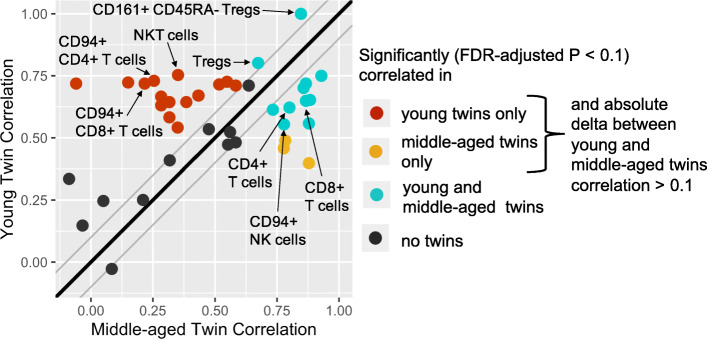
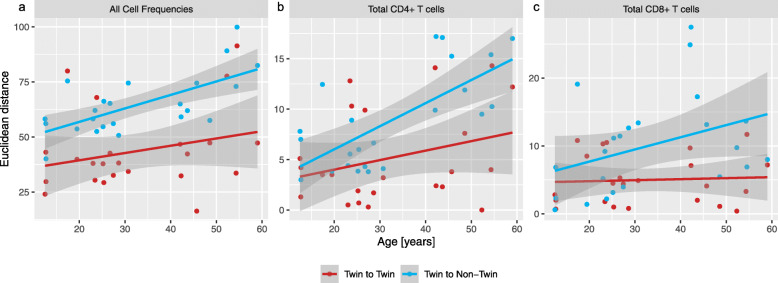
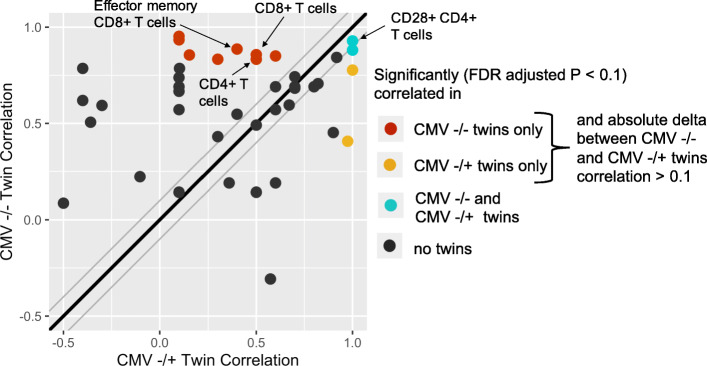
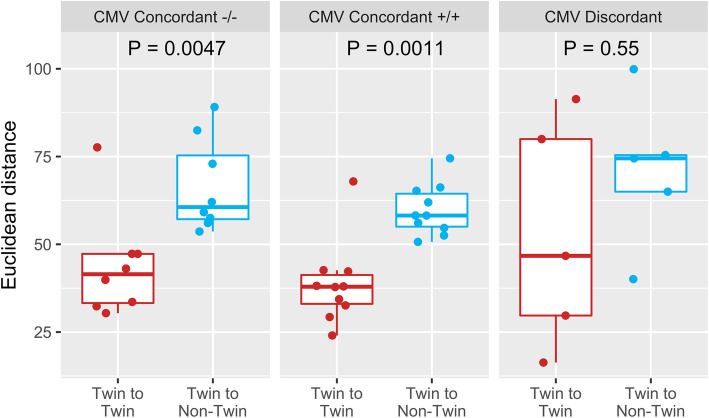
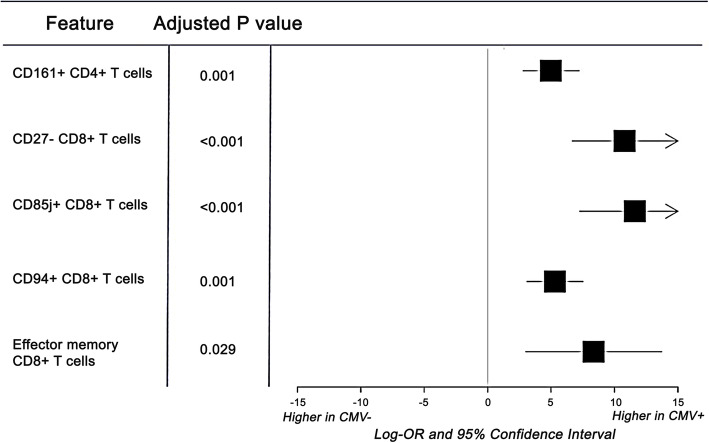
Results: To address this need, we evaluated 41 different cell type frequencies by mass cytometry and identified their relationships with aging and CMV seropositivity. Analyses were done using 60 healthy individuals, including 23 monozygotic twin pairs, categorized into young (12-31 years) and middle-aged (42-59 years). Aging and CMV discordance were associated with increased immune diversity between monozygotic twins overall, and particularly strongly in various T cell populations. Notably, we identified 17 and 11 cell subset frequencies as relatively influenced and uninfluenced by non-heritable factors, respectively, with results that largely matched those from studies on older-aged cohorts. Next, CD4+ T cell frequency was shown to diverge with age in twins, but with lower slope than in demographically similar non-twins, suggesting that much inter-individual variance in this cell type can be attributed to interactions between genetic and environmental factors. Several cell frequencies previously associated with memory inflation, such as CD27- CD8+ T cells and CD161+ CD4+ T cells, were positively correlated with CMV seropositivity, supporting findings that CMV infection may incur rapid aging of the immune system.
Conclusions: Our study confirms previous findings that aging, even within a relatively small age range and by mid-adulthood, and CMV seropositivity, both contribute significantly to inter-individual immune diversity. Notably, we identify several key immune cell subsets that vary considerably with aging, as well as others associated with memory inflation which correlate with CMV seropositivity.
Keywords: Aging; Cytomegalovirus; Human immunology; Mass cytometry (CyTOF); Monozygotic twins.
Conflict of interest statement
Dr. Nadeau reports grants from National Institute of Allergy and Infectious Diseases (NIAID), Food Allergy Research & Education (FARE), End Allergies Together (EAT), Allergenis, and Ukko Pharma; Grant awardee at NIAID, National Institute of Environmental Health Sciences (NIEHS), National Heart, Lung, and Blood Institute (NHLBI), and the Environmental Protection Agency (EPA); is involved in Clinical trials with Regeneron, Genentech, AImmune Therapeutics, DBV Technologies, AnaptysBio, Adare Pharmaceuticals, and Stallergenes-Greer; Research Sponsorship by Novartis, Sanofi, Astellas, Nestle; Data and Safety Monitoring Board member at Novartis and NHLBI; Cofounded Before Brands, Alladapt, ForTra, and Iggenix; Chief Intellectual Office at FARE, Director of the World Allergy Organization (WAO) Center of Excellence at Stanford, Personal fees from Regeneron, Astrazeneca, ImmuneWorks, and Cour Pharmaceuticals; Consultant and Advisory Board Member at European Academy of Allergy and Clinical Immunology (EAACI) Research and Outreach Committee, Ukko, Before Brands, Alladapt, IgGenix, Probio, Vedanta, Centecor, Seed, Novartis, NHBLI, EPA, National Scientific Committee of Immune Tolerance Network (ITN) and NIH Programs; US patents for basophil test, multifood immunotherapy and prevention, monoclonal antibody from plasmablasts, and a device for diagnostics. The remaining authors declare no relevant competing interests.
Figures
References
Grants and funding
LinkOut - more resources
Full Text Sources
Other Literature Sources
Research Materials
