Enhanced biofilm and extracellular matrix production by chronic carriage versus acute isolates of Salmonella Typhi
- PMID: 33465146
- PMCID: PMC7815147
- DOI: 10.1371/journal.ppat.1009209
Enhanced biofilm and extracellular matrix production by chronic carriage versus acute isolates of Salmonella Typhi
Erratum in
-
Correction: Enhanced biofilm and extracellular matrix production by chronic carriage versus acute isolates of Salmonella Typhi.PLoS Pathog. 2021 Apr 12;17(4):e1009512. doi: 10.1371/journal.ppat.1009512. eCollection 2021 Apr. PLoS Pathog. 2021. PMID: 33844705 Free PMC article.
Abstract
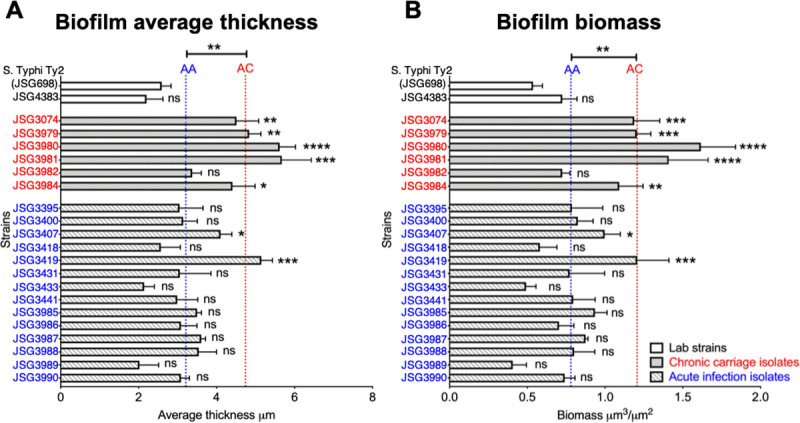
Salmonella Typhi is the primary causative agent of typhoid fever; an acute systemic infection that leads to chronic carriage in 3-5% of individuals. Chronic carriers are asymptomatic, difficult to treat and serve as reservoirs for typhoid outbreaks. Understanding the factors that contribute to chronic carriage is key to development of novel therapies to effectively resolve typhoid fever. Herein, although we observed no distinct clustering of chronic carriage isolates via phylogenetic analysis, we demonstrated that chronic isolates were phenotypically distinct from acute infection isolates. Chronic carriage isolates formed significantly thicker biofilms with greater biomass that correlated with significantly higher relative levels of extracellular DNA (eDNA) and DNABII proteins than biofilms formed by acute infection isolates. Importantly, extracellular DNABII proteins include integration host factor (IHF) and histone-like protein (HU) that are critical to the structural integrity of bacterial biofilms. In this study, we demonstrated that the biofilm formed by a chronic carriage isolate in vitro, was susceptible to disruption by a specific antibody against DNABII proteins, a successful first step in the development of a therapeutic to resolve chronic carriage.
Conflict of interest statement
The authors have declared that no competing interests exist.
Figures



References
Publication types
MeSH terms
Substances
Grants and funding
- BBS/E/F/000PR10349/BB_/Biotechnology and Biological Sciences Research Council/United Kingdom
- BBS/E/F/000PR10348 /BB_/Biotechnology and Biological Sciences Research Council/United Kingdom
- 215515/Z/19/Z/WT_/Wellcome Trust/United Kingdom
- R21 AI153752/AI/NIAID NIH HHS/United States
- BB/R012504/1/BB_/Biotechnology and Biological Sciences Research Council/United Kingdom
LinkOut - more resources
Full Text Sources
Other Literature Sources