


Design and Characterization of a DNA Vaccine Based on Spike with Consensus Nucleotide Sequence against Infectious Bronchitis Virus
- PMID: 33466810
- PMCID: PMC7830736
- DOI: 10.3390/vaccines9010050
Design and Characterization of a DNA Vaccine Based on Spike with Consensus Nucleotide Sequence against Infectious Bronchitis Virus
Abstract
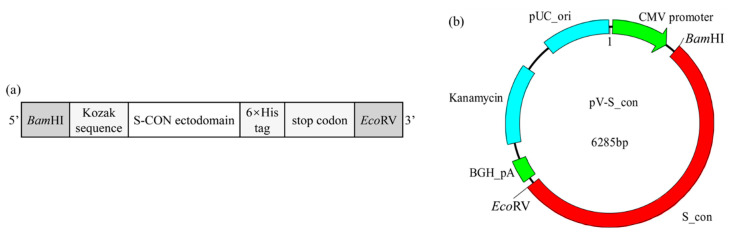
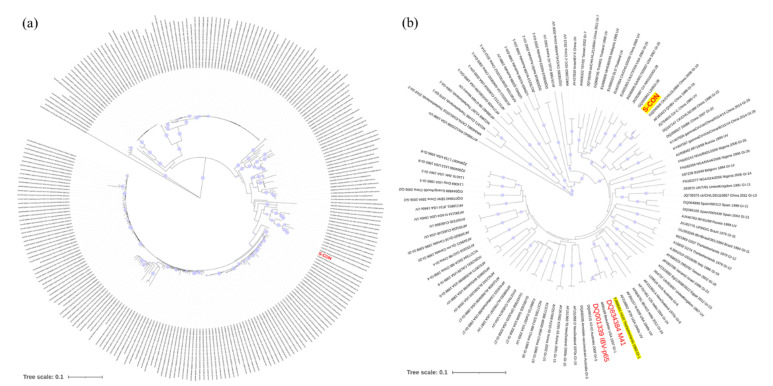
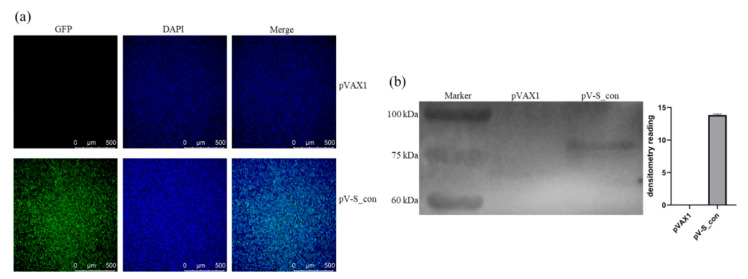
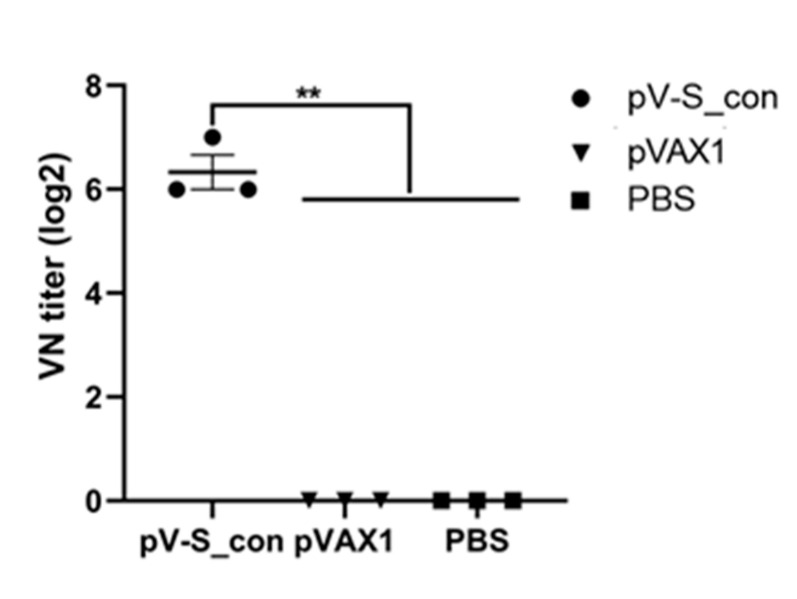
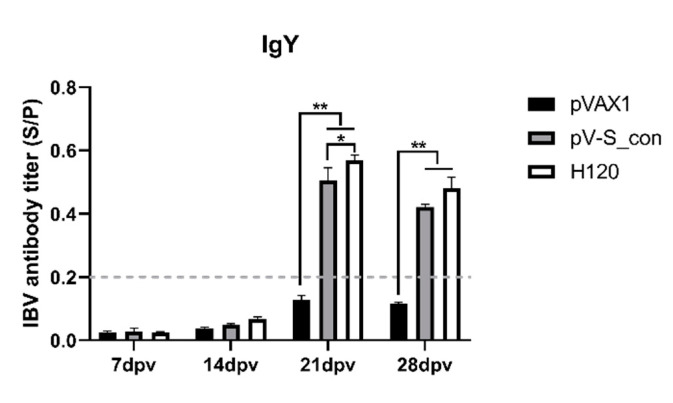
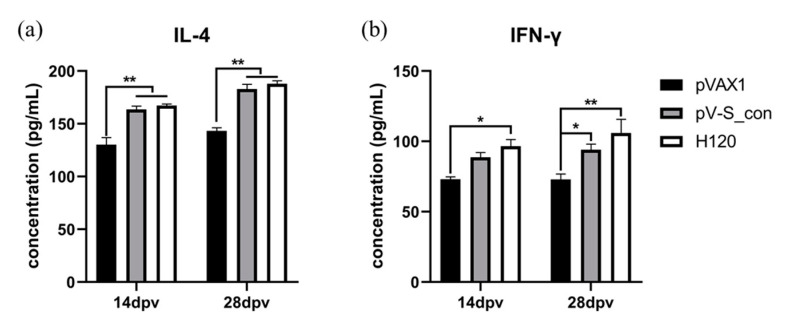
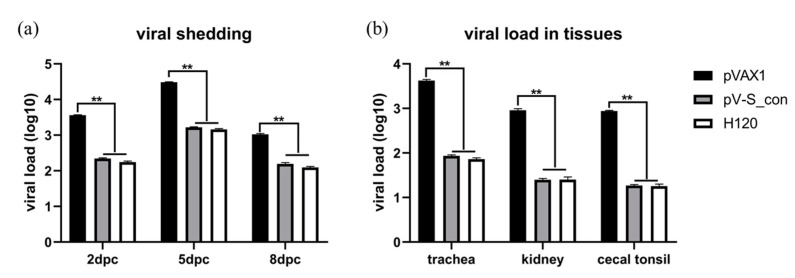
Avian coronavirus infectious bronchitis virus (IBV) causes severe economic losses in the poultry industry, but its control is hampered by the continuous emergence of new genotypes and the lack of cross-protection among different IBV genotypes. We designed a new immunogen based on a spike with the consensus nucleotide sequence (S_con) that may overcome the extraordinary genetic diversity of IBV. S_con was cloned into a pVAX1 vector to form a new IBV DNA vaccine, pV-S_con. pV-S_con could be correctly expressed in HD11 cells with corresponding post-translational modification, and induced a neutralizing antibody response to the Vero-cell-adapted IBV strain Beaudette (p65) in mice. To further evaluate its immunogenicity, specific-pathogen-free (SPF) chickens were immunized with the pV-S_con plasmid and compared with the control pVAX1 vector and the H120 vaccine. Detection of IBV-specific antibodies and cell cytokines (IL-4 and IFN-γ) indicated that vaccination with pV-S_con efficiently induced both humoral and cellular immune responses. After challenge with the heterologous strain M41, virus shedding and virus loading in tissues was significantly reduced both by pV-S_con and its homologous vaccine H120. Thus, pV-S_con is a promising vaccine candidate for IBV, and the consensus approach is an appealing method for vaccine design in viruses with high variability.
Keywords: DNA vaccine; consensus nucleotide sequence; heterologous challenge; infectious bronchitis virus; spike ectodomain.
Conflict of interest statement
The authors declare no conflict of interest.
Figures
References
-
- Ellis S., Keep S.P., Britton P., De Wit S., Bickerton E., Vervelde L. Recombinant Infectious Bronchitis Viruses Expressing Chimeric Spike Glycoproteins Induce Partial Protective Immunity against Homologous Challenge despite Limited Replication In Vivo. J. Virol. 2018;92:e01473-18. doi: 10.1128/JVI.01473-18. - DOI - PMC - PubMed
Grants and funding
LinkOut - more resources
Full Text Sources
Other Literature Sources
Research Materials
