


Treatment of Diffuse Alveolar Hemorrhage: Controlling Inflammation and Obtaining Rapid and Effective Hemostasis
- PMID: 33466873
- PMCID: PMC7830514
- DOI: 10.3390/ijms22020793
Treatment of Diffuse Alveolar Hemorrhage: Controlling Inflammation and Obtaining Rapid and Effective Hemostasis
Abstract
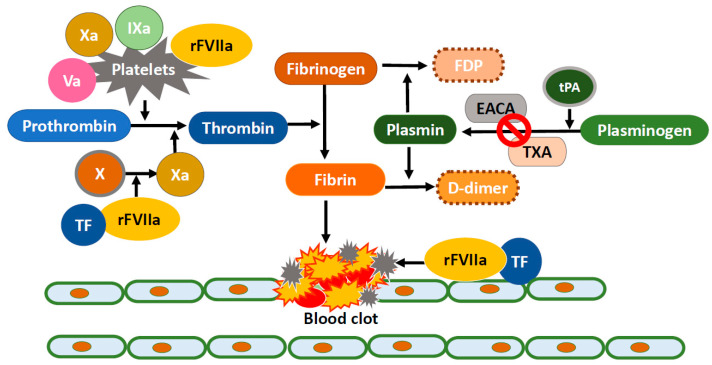
Diffuse alveolar hemorrhage (DAH) is a life-threatening pulmonary complication in patients with hematologic malignancies or systemic autoimmune disorders. Pathologic findings show pulmonary capillaritis, bland hemorrhage, diffuse alveolar damage, and hemosiderin-laden macrophages, but in the majority of cases, pathogenesis remains unclear. Despite the severity and high mortality, the current treatment options for DAH remain empirical. Systemic treatment to control inflammatory activity including high-dose corticosteroids, cyclophosphamide, and rituximab and supportive care have been applied, but largely unsuccessful in critical cases. Activated recombinant factor VII (FVIIa) can achieve rapid local hemostasis and has been administered either systemically or intrapulmonary for the treatment of DAH. However, there is no randomized controlled study to evaluate the efficacy and safety, and the use of FVIIa for DAH remains open to debate. This review discusses the pathogenesis, diverse etiologies causing DAH, diagnosis, and treatments focusing on hemostasis using FVIIa. In addition, the risks and benefits of the off-label use of FVIIa in pediatric patients will be discussed in detail.
Keywords: coagulopathy; corticosteroids; diffuse alveolar hemorrhage; hematopoietic stem cell transplantation; hemostasis; lung injury; pediatric; recombinant factor VIIa; rituximab; vasculitis.
Conflict of interest statement
The author declare that the research was conducted without any commercial or financial relationships that could be construed as a potential conflict of interest.
Figures
References
-
- Blatny J., Mathew P., Monagle P., Ovesna P., Fiamoli V. Safety and efficacy of recombinant activated factor VII in nonhemophilia children with severe or life-threatening bleeding: A report from the SeveNBleeP registry. Blood Coagul. Fibrinolysis. 2014;25:326–332. doi: 10.1097/MBC.0000000000000036. - DOI - PubMed
Publication types
MeSH terms
Substances
Grants and funding
LinkOut - more resources
Full Text Sources
Other Literature Sources
Medical
