


Effects of Positive Human Contact during Gestation on the Behaviour, Physiology and Reproductive Performance of Sows
- PMID: 33467148
- PMCID: PMC7830568
- DOI: 10.3390/ani11010214
Effects of Positive Human Contact during Gestation on the Behaviour, Physiology and Reproductive Performance of Sows
Abstract
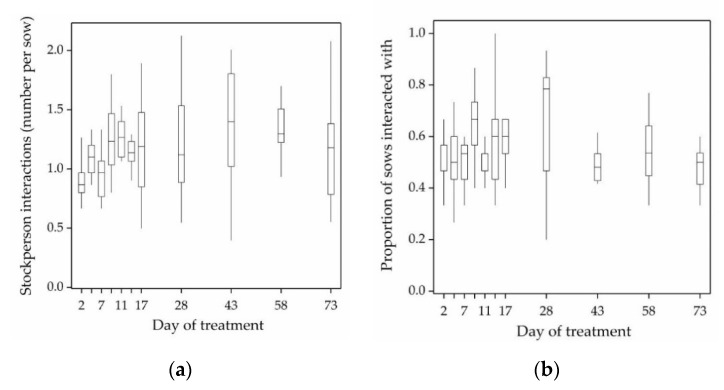
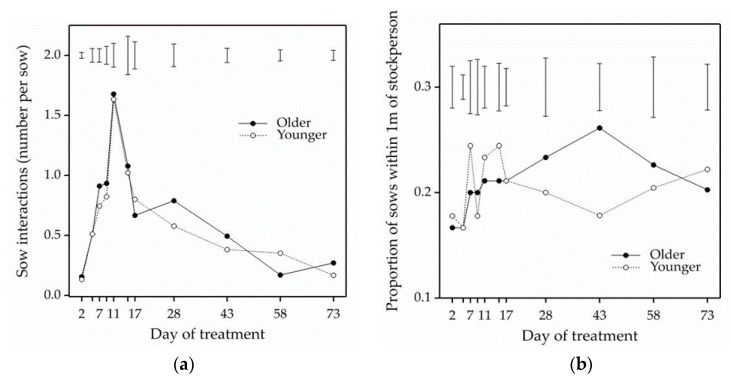
Previous positive interactions with humans may ameliorate the stress response of farm animals to aversive routine practices such as painful or stressful procedures, particularly those associated with stockpeople. We studied the effects of positive handling by providing younger (parity 1-2) and older (parity 3-8) sows housed in pens of fifteen (n = 24 pens in total) with either positive human contact (+HC) or routine human contact (control) during gestation. The +HC treatment involved a familiar stockperson patting and scratching sows and was imposed at a pen-level for 2 min daily. Measurements studied included behavioural, physiological and productivity variables. The +HC sows showed reduced avoidance of the stockperson conducting pregnancy testing and vaccination in the home pens, however the behavioural and cortisol responses of sows in a standard unfamiliar human approach test did not differ. There were no effects of +HC on aggression between sows, serum cortisol or serum brain-derived neurotrophic factor concentrations during gestation, or on the behavioural and cortisol response to being moved to farrowing crates. There were also no effects of +HC on the maternal responsiveness of sows, farrowing rate or the number of piglets born alive, stillborn or weaned. Sows in the +HC pens reduced their physical interaction with the stockpeople imposing the treatment after 2 weeks, which suggests the sows may have habituated to the novel or possible rewarding elements of the handling treatment. This experiment shows that regular positive interaction with stockpeople does reduce sows' fear of stockpeople, but does not always confer stress resilence.
Keywords: animal welfare; handling; positive human contact; reproduction; sows; stress.
Conflict of interest statement
The authors declare no conflict of interest.
Figures
References
-
- Moberg G.P. Biological response to stress: Implications for animal welfare. In: Moberg G.P., Mench J.A., editors. The Biology of Animal Stress. CABI Publishing; Wallingford, UK: 2000. pp. 1–21.
-
- Waiblinger S., Menke C., Korff J., Bucher A. Previous handling and gentle interactions affect behaviour and heart rate of dairy cows during a veterinary procedure. Appl. Anim. Behav. Sci. 2004;85:31–42. doi: 10.1016/j.applanim.2003.07.002. - DOI
-
- Lürzel S., Münsch C., Windschnurer I., Futschik A., Palme R., Waiblinger S. The influence of gentle interactions on avoidance distance towards humans, weight gain and physiological parameters in group-housed dairy calves. Appl. Anim. Behav. Sci. 2015;172:9–16. doi: 10.1016/j.applanim.2015.09.004. - DOI
Grants and funding
LinkOut - more resources
Full Text Sources
Other Literature Sources
