. 2021 Jan 16;13(1):117.
doi: 10.3390/v13010117.

MicroRNAs for Virus Pathogenicity and Host Responses, Identified in SARS-CoV-2 Genomes, May Play Roles in Viral-Host Co-Evolution in Putative Zoonotic Host Species

Affiliations

MicroRNAs for Virus Pathogenicity and Host Responses, Identified in SARS-CoV-2 Genomes, May Play Roles in Viral-Host Co-Evolution in Putative Zoonotic Host Species

Sigrun Lange et al. Viruses. .

Abstract

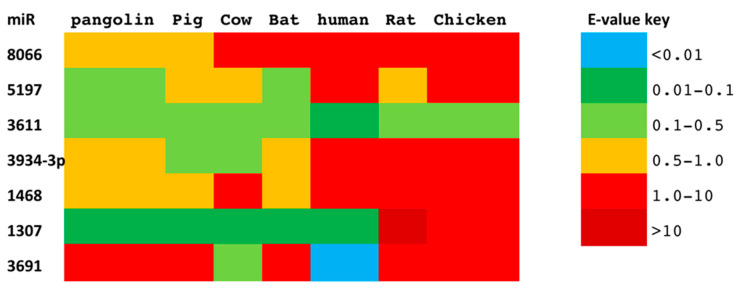
Our recent study identified seven key microRNAs (miR-8066, 5197, 3611, 3934-3p, 1307-3p, 3691-3p, 1468-5p) similar between SARS-CoV-2 and the human genome, pointing at miR-related mechanisms in viral entry and the regulatory effects on host immunity. To identify the putative roles of these miRs in zoonosis, we assessed their conservation, compared with humans, in some key wild and domestic animal carriers of zoonotic viruses, including bat, pangolin, pig, cow, rat, and chicken. Out of the seven miRs under study, miR-3611 was the most strongly conserved across all species; miR-5197 was the most conserved in pangolin, pig, cow, bat, and rat; miR-1307 was most strongly conserved in pangolin, pig, cow, bat, and human; miR-3691-3p in pangolin, cow, and human; miR-3934-3p in pig and cow, followed by pangolin and bat; miR-1468 was most conserved in pangolin, pig, and bat; while miR-8066 was most conserved in pangolin and pig. In humans, miR-3611 and miR-1307 were most conserved, while miR-8066, miR-5197, miR-3334-3p and miR-1468 were least conserved, compared with pangolin, pig, cow, and bat. Furthermore, we identified that changes in the miR-5197 nucleotides between pangolin and human can generate three new miRs, with differing tissue distribution in the brain, lung, intestines, lymph nodes, and muscle, and with different downstream regulatory effects on KEGG pathways. This may be of considerable importance as miR-5197 is localized in the spike protein transcript area of the SARS-CoV-2 genome. Our findings may indicate roles for these miRs in viral-host co-evolution in zoonotic hosts, particularly highlighting pangolin, bat, cow, and pig as putative zoonotic carriers, while highlighting the miRs' roles in KEGG pathways linked to viral pathogenicity and host responses in humans. This in silico study paves the way for investigations into the roles of miRs in zoonotic disease.

Keywords: COVID-19; SARS-CoV-2; co-evolution; microRNA; viral pathogenesis; zoonosis.


Conflict of interest statement

The authors declare no conflict of interest.

Figures
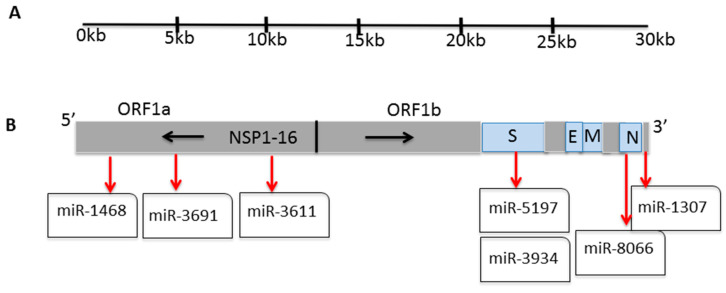
Figure 1
Figure 1
SARS-CoV-2 polycistronic genome. (A) The genome of SARS-CoV-2 organized in individual ORFs. (B) miR-1468, 3691, 3611, 5197, 3934, 8066, and 1307 locations on the SARS-CoV-2 genome (S spike; E envelope; M membrane; N nucleocapsid; NSP non-structural proteins; ORF Open reading frame).
Figure 2
Figure 2
Conservation of seven SARS-CoV-2 miRs between pangolin, pig, cow, bat, rat, chicken, and human. The conservation between the seven SARS-CoV-2 miR sequences, compared with the putative zoonotic species under study and humans. Color-coding is by E-value (sequences are provided as a Supplementary Table S1).
Figure 3
Figure 3
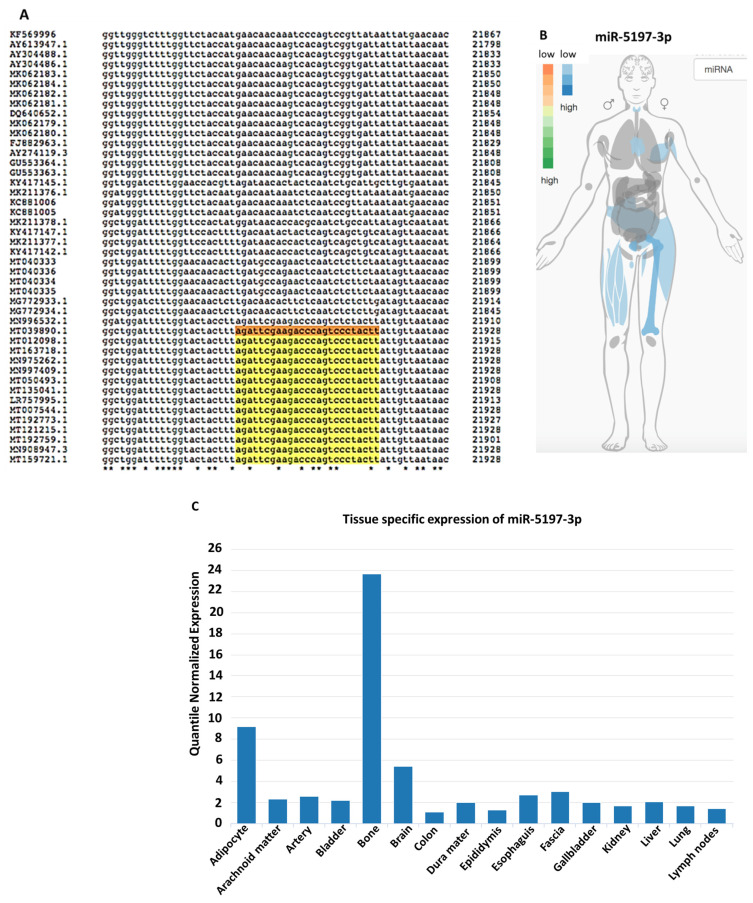
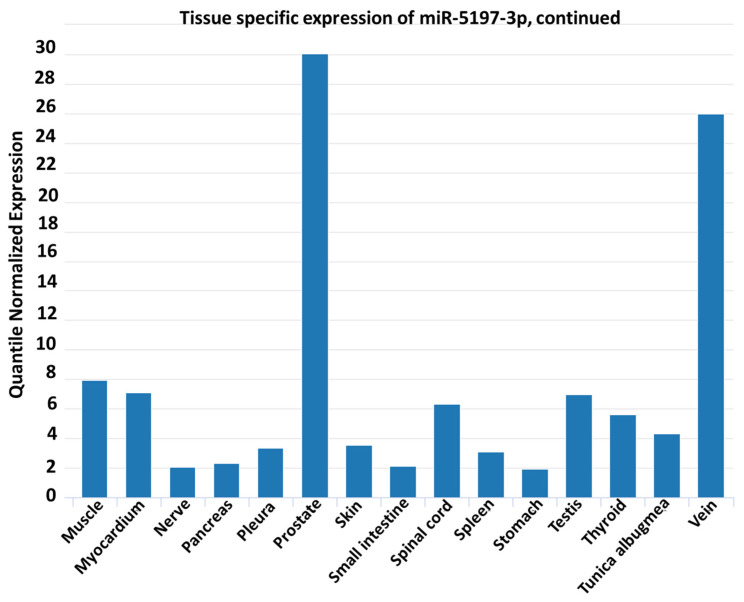
Analysis of miR-5197with respect to sequence conservation and tissue distribution. (A) Conservation of hsa-miR-5197 in different coronavirus samples is shown in Clustal Omega multiple sequence alignment (https://www.ebi.ac.uk/Tools/services/rest/clustalo/result/clustalo-I20200807-161825-0106-73056325-p2m/aln-clustal_num. Selected sequences were taken from Ref. [32]). (B) IMOTA ((Interactive Multi-Omics-Tissue Atlas) presentation of specific genes affected by miR-5197 in a tissue-specific manner. (C) miR-5197 expression levels and tissue distribution are shown according to tissue atlas.
Figure 3
Figure 3
Analysis of miR-5197with respect to sequence conservation and tissue distribution. (A) Conservation of hsa-miR-5197 in different coronavirus samples is shown in Clustal Omega multiple sequence alignment (https://www.ebi.ac.uk/Tools/services/rest/clustalo/result/clustalo-I20200807-161825-0106-73056325-p2m/aln-clustal_num. Selected sequences were taken from Ref. [32]). (B) IMOTA ((Interactive Multi-Omics-Tissue Atlas) presentation of specific genes affected by miR-5197 in a tissue-specific manner. (C) miR-5197 expression levels and tissue distribution are shown according to tissue atlas.
Figure 4
Figure 4
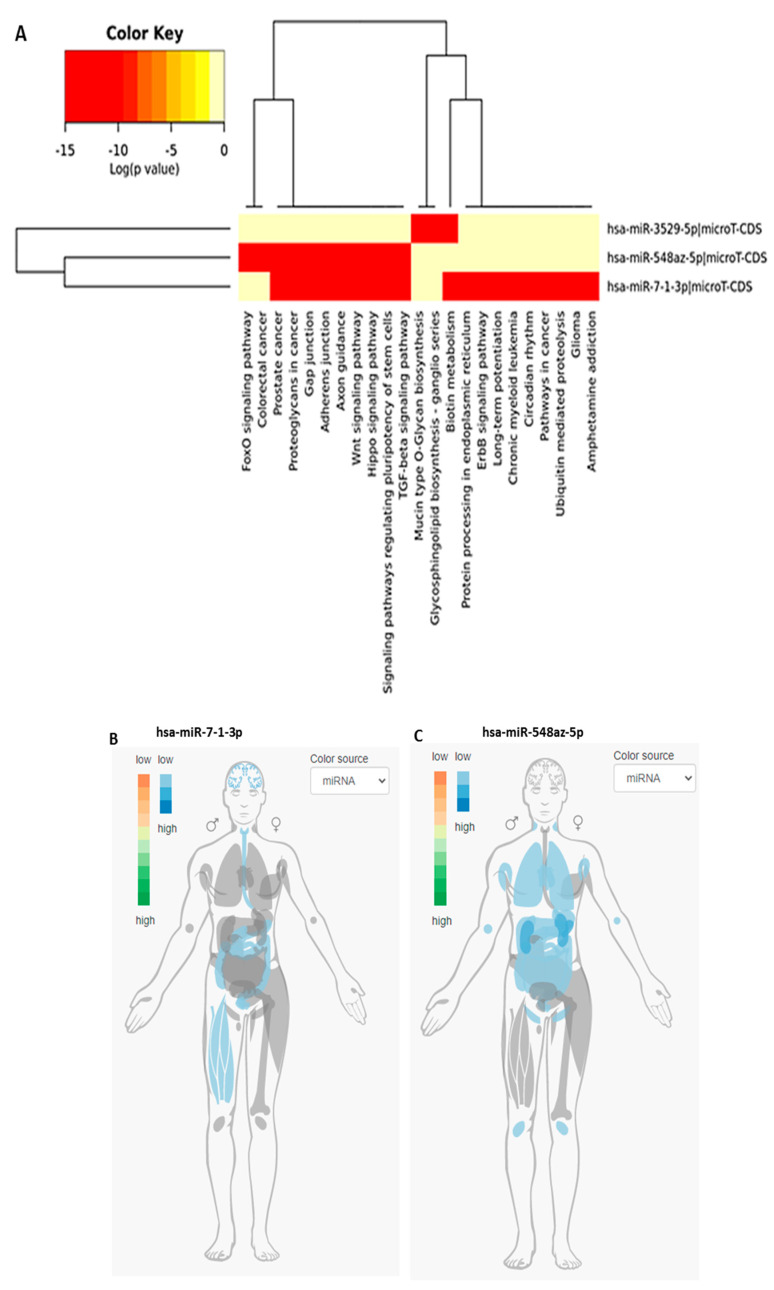
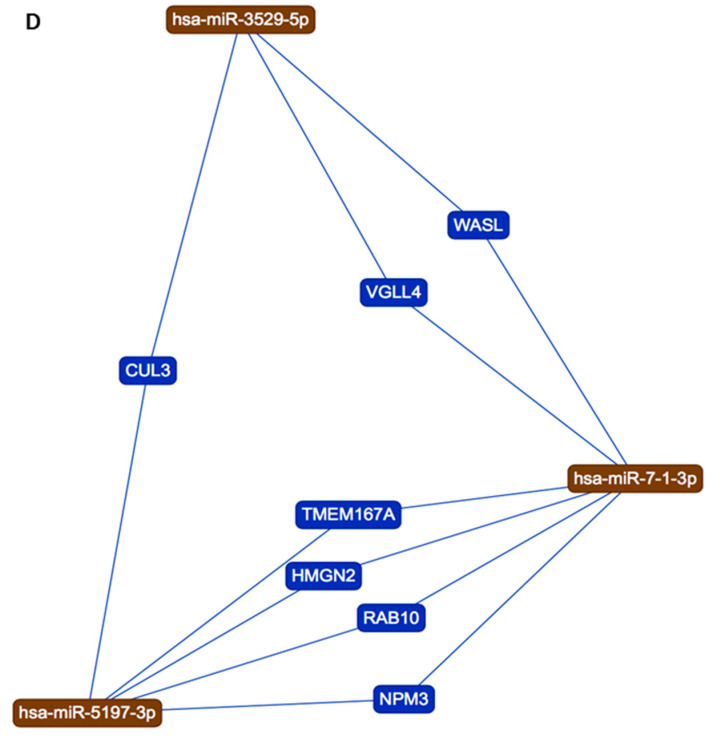
(A) Sequence differences between pangolin and human sequences for miR-5197 lead to the generation of three new miRs, which affect different signaling axes according to KEGG analysis. (B) and (C) IMOTA analysis for miR-7-1-3p and miR-548az-5p, respectively (IMOTA does not include miR-3529-5p); (D) Interaction networks with miR-5197, miR-3529-5p and miR-7-1-3p were analyzed by using miRTargetLink Human [28]. Four genes are regulated by both miR-5197-3p and miR-7-1-3p (NPM3, RAB10, HMGN2, TMEM167A), while CUL3 is regulated by both miR-5197-3p and miR-3529-5p, and VGLL4 and WASL are dependent on both miR-3529-5p and miR-7-1-3p.
Figure 4
Figure 4
(A) Sequence differences between pangolin and human sequences for miR-5197 lead to the generation of three new miRs, which affect different signaling axes according to KEGG analysis. (B) and (C) IMOTA analysis for miR-7-1-3p and miR-548az-5p, respectively (IMOTA does not include miR-3529-5p); (D) Interaction networks with miR-5197, miR-3529-5p and miR-7-1-3p were analyzed by using miRTargetLink Human [28]. Four genes are regulated by both miR-5197-3p and miR-7-1-3p (NPM3, RAB10, HMGN2, TMEM167A), while CUL3 is regulated by both miR-5197-3p and miR-3529-5p, and VGLL4 and WASL are dependent on both miR-3529-5p and miR-7-1-3p.
Figure 5
Figure 5
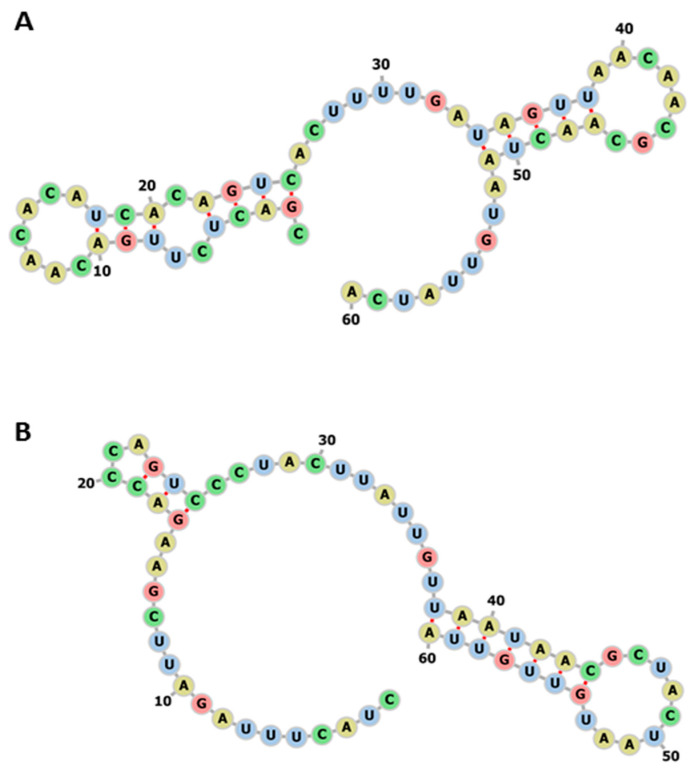
The impact of the divergence (given in Table 1) of miR-5197 in pangolin compared with human. (A) The RNA secondary structure of pangolin miR-5197 (MFE structure: −4.70 kcal/mol; centroid structure: −3.10 kcal/mol kcal/mol) (B) The RNA secondary structures of human miR-5197 (MFE structure: −3.20 kcal/mol; centroid structure: −2.90 kcal/mol) using RNAfold tool. (http://rna.tbi.univie.ac.at//cgi-bin/RNAWebSuite/RNAfold.cgi.).

References

    1. Andersen K.G., Rambaut A., Lipkin W.I., Holmes E.C., Garry R.F. The proximal origin of SARS-CoV-2. Nat. Med. 2020;26:450–452. doi: 10.1038/s41591-020-0820-9. - DOI - PMC - PubMed
    1. Recalcati S. Cutaneous manifestations in COVID-19: A first perspective. J. Eur. Acad. Dermatol. Venereol. 2020;34:e212–e213. doi: 10.1111/jdv.16387. - DOI - PubMed
    1. Driggin E., Madhavan M.V., Bikdeli B., Chuich T., Laracy J., Biondi-Zoccai G., Brown T.S., Der Nigoghossian C., Zidar D.A., Haythe J., et al. Cardiovascular Considerations for Patients, Health Care Workers, and Health Systems During the Coronavirus Disease 2019 (COVID-19) Pandemic. J. Am. Coll. Cardiol. 2020;75:2352–2371. doi: 10.1016/j.jacc.2020.03.031. - DOI - PMC - PubMed
    1. Mousa A.Y., Broce M., Lucas B.D., Jr. Cardiovascular Disease Novel Coronavirus and the Search for Investigational Therapies. J. Vasc. Surg. 2020 doi: 10.1016/j.jvs.2020.04.503. - DOI - PMC - PubMed
    1. Mahmud E., Dauerman H.L., Welt F.G., Messenger J.C., Rao S.V., Grines C., Mattu A., Kirtane A.J., Jauhar R., Meraj P., et al. Management of Acute Myocardial Infarction During the COVID-19 Pandemic. J. Am. Coll. Cardiol. :2020. doi: 10.1002/ccd.28946. - DOI - PMC - PubMed

LinkOut - more resources