Review
. 2021 Jan 15;13(1):110.
doi: 10.3390/v13010110.

Virulence during Newcastle Disease Viruses Cross Species Adaptation

Affiliations
Review

Virulence during Newcastle Disease Viruses Cross Species Adaptation

Claudio L Afonso. Viruses. .

Abstract

The hypothesis that host adaptation in virulent Newcastle disease viruses (NDV) has been accompanied by virulence modulation is reviewed here. Historical records, experimental data, and phylogenetic analyses from available GenBank sequences suggest that currently circulating NDVs emerged in the 1920-1940's from low virulence viruses by mutation at the fusion protein cleavage site. These viruses later gave rise to multiple virulent genotypes by modulating virulence in opposite directions. Phylogenetic and pathotyping studies demonstrate that older virulent NDVs further evolved into chicken-adapted genotypes by increasing virulence (velogenic-viscerotropic pathotypes with intracerebral pathogenicity indexes [ICPIs] of 1.6 to 2), or into cormorant-adapted NDVs by moderating virulence (velogenic-neurotropic pathotypes with ICPIs of 1.4 to 1.6), or into pigeon-adapted viruses by further attenuating virulence (mesogenic pathotypes with ICPIs of 0.9 to 1.4). Pathogenesis and transmission experiments on adult chickens demonstrate that chicken-adapted velogenic-viscerotropic viruses are more capable of causing disease than older velogenic-neurotropic viruses. Currently circulating velogenic-viscerotropic viruses are also more capable of replicating and of being transmitted in naïve chickens than viruses from cormorants and pigeons. These evolutionary virulence changes are consistent with theories that predict that virulence may evolve in many directions in order to achieve maximum fitness, as determined by genetic and ecologic constraints.

Keywords: NDV; evolution; host adaptation; virulence.


Conflict of interest statement

The author declares no conflict of interest.

Figures
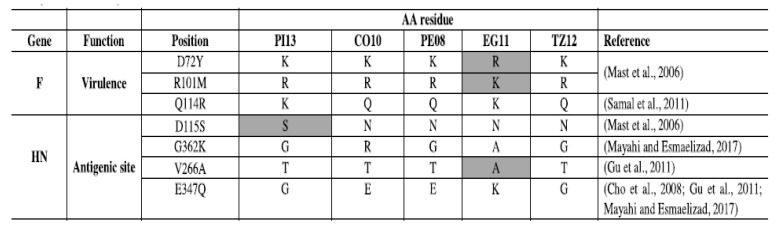
Figure 1
Figure 1
Amino acid changes in viruses of different genotypes. Excerpts from Ferreira, H.L.; Taylor, T.L.; Dimitrov, K.M.; Sabra, M.; Afonso, C.L.; Suarez, D.L. Virulent Newcastle disease viruses from chicken origin are more pathogenic and transmissible to chickens than viruses normally maintained in wild birds [55].
Figure 2
Figure 2
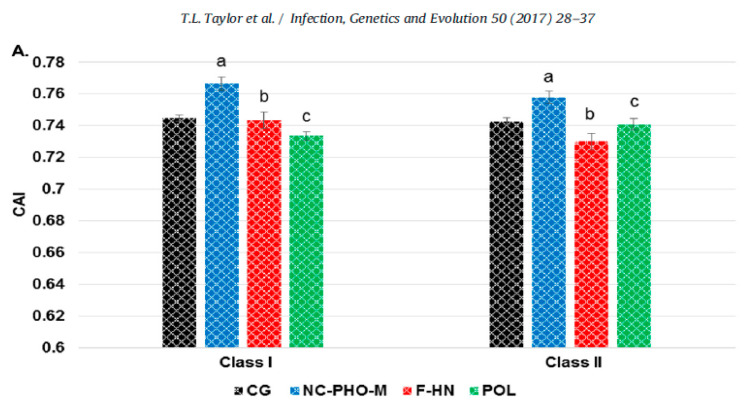
Codon usage adaptation in genomes of class I and II viruses. Excerpts from Figure 2 in Taylor, T.L.; Dimitrov, K.M.; Afonso, C.L. Genome-wide analysis reveals class and gene-specific codon usage adaptation in avian paramyxoviruses 1. [62]. Avian paramyxoviruses 1 display differences in codon usage between the three transcriptional genomic regions. A) The average codon adaptation index (CAI) value for the complete genome and each genomic region (NC-PHO-M, F-HN, and POL) for class I (n = 29) and class II (n = 259) viruses was determined using Gallus gallus as a reference genome. The complete genome result is in black, NC-PHO-M is in blue, F-HN is in red, and POL is in green. Standard error bars are shown, and statistically significant differences between the same regions between classes are shown (Pb 0.01) with corresponding letters.
Figure 3
Figure 3
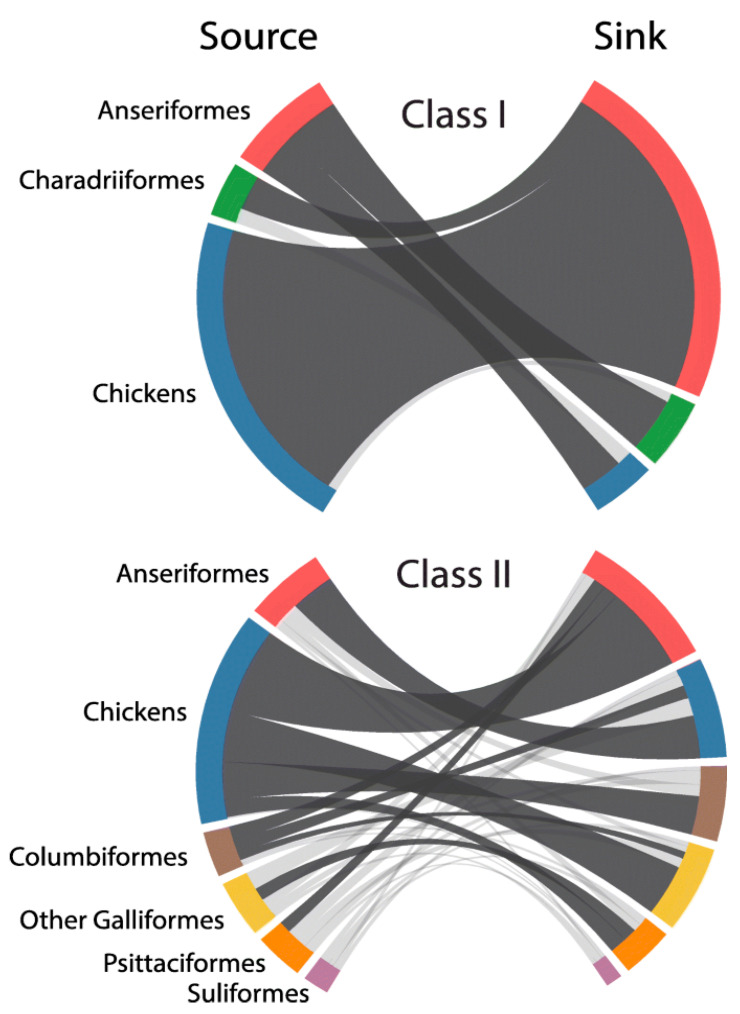
Inter-host transmission of Newcastle disease viruses (NDV). Excerpts from Figure 2 in Hicks, J.T.; Dimitrov, K.M.; Afonso, C.L.; Ramey, A.M.; Bahl, J. Global phylodynamic analysis of avian paramyxovirus-1 provides evidence of inter-host transmission and intercontinental spatial diffusion [64] Class I and class II chord diagrams representing the fully resolved transition matrix between host orders. Chord width between source and sink host state is proportional to the median transition rate per year. Dark gray chords are statistically supported (BF > 3.0). Colors correspond to host order: Anseriformes—red, Charadriiformes—green, domestic chickens—blue, Columbiformes—brown, other Galliformes—yellow, Psittaciformes—orange, Suliformes—purple.
Figure 4
Figure 4
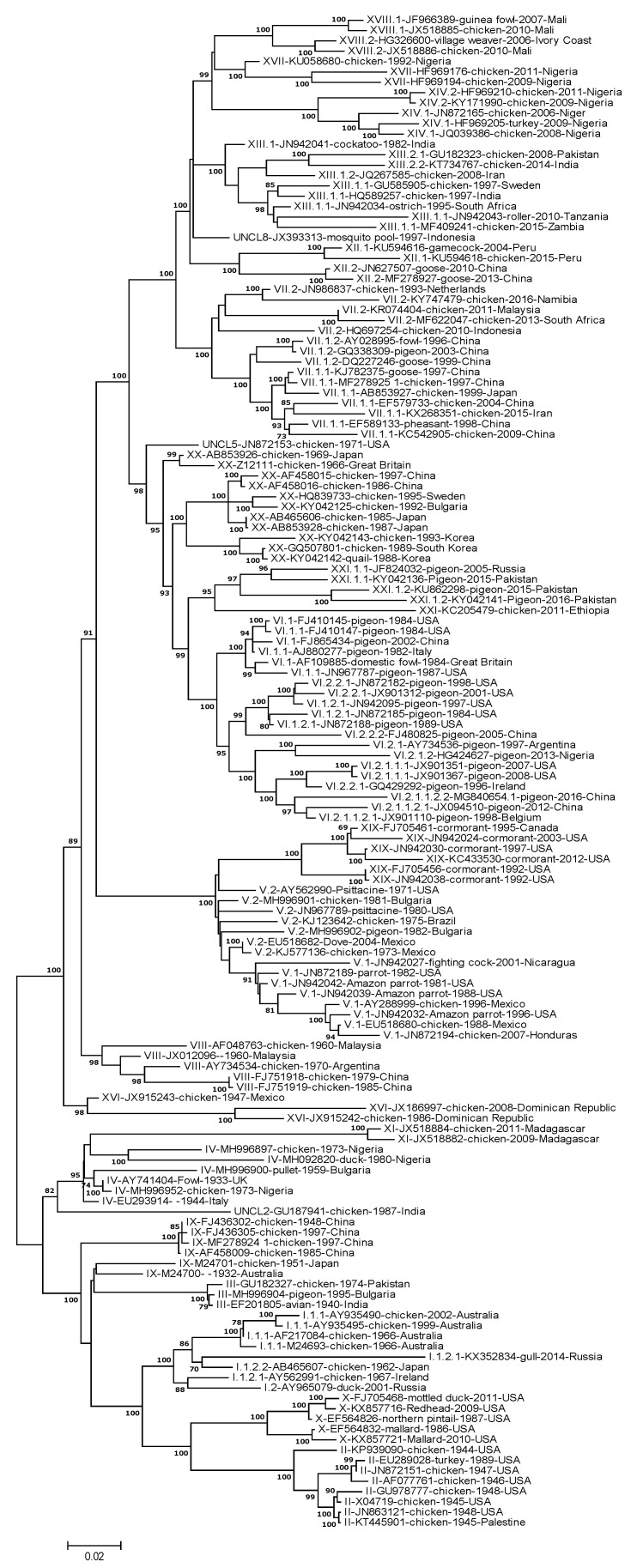
Molecular phylogenetic analysis of NDVs representing historical and current genotypes by the maximum likelihood method. The evolutionary history was inferred by using the maximum-likelihood method based on the general time reversible model. The tree with the highest log likelihood (−32,597.46) is shown. Virus description in the tree includes genotype classification, accession number, host, year of isolation and country as described by Dimitrov [22]. The percentage of trees in which the associated taxa clustered together is shown next to the branches. Initial tree(s) for the heuristic search were obtained automatically by applying neighbor-join and BioNJ algorithms to a matrix of pairwise distances estimated using the maximum composite likelihood (MCL) approach and then selecting the topology with superior log likelihood value. The tree is drawn to scale, with branch lengths measured in the number of substitutions per site. The analysis involved 146 nucleotide sequences. Codon positions included were 1st+2nd+3rd+noncoding. All positions containing gaps and missing data were eliminated. There were a total of 1653 positions in the final dataset. Evolutionary analyses were conducted in MEGA7 [69].
Figure 5
Figure 5
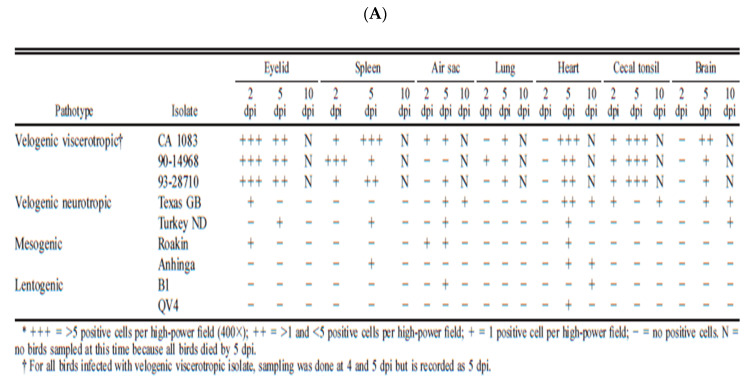
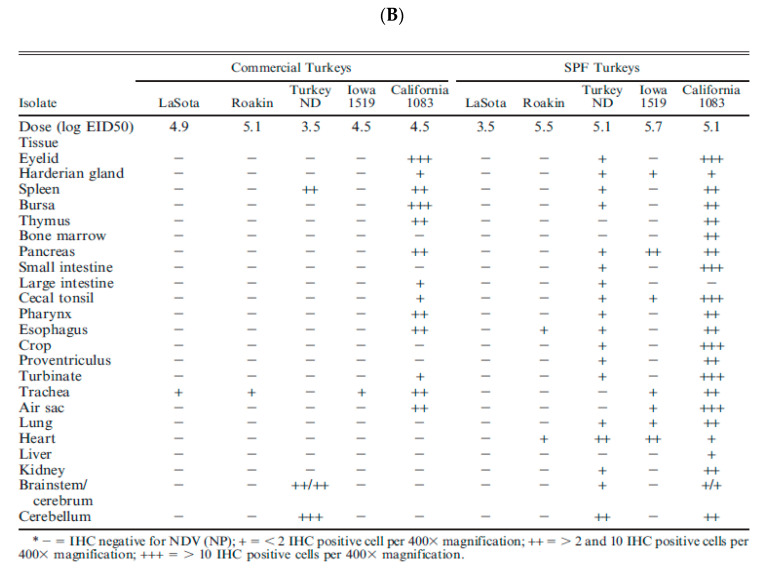
Pathogenesis comparison between vvNDV and vnNDV. (A) Excerpts from Brown, C.; King, D.J.; Seal, B.S. Pathogenesis of Newcastle Disease in Chickens Experimentally Infected with Viruses of Different Virulence. [16]. (B) Excerpts from Piacenti, A.M.; King, D.J.; Seal, B.S.; Zhang, J.; Brown, C.C. Pathogenesis of Newcastle disease in commercial and specific pathogen-free turkeys experimentally infected with isolates of different virulence [73].
Figure 5
Figure 5
Pathogenesis comparison between vvNDV and vnNDV. (A) Excerpts from Brown, C.; King, D.J.; Seal, B.S. Pathogenesis of Newcastle Disease in Chickens Experimentally Infected with Viruses of Different Virulence. [16]. (B) Excerpts from Piacenti, A.M.; King, D.J.; Seal, B.S.; Zhang, J.; Brown, C.C. Pathogenesis of Newcastle disease in commercial and specific pathogen-free turkeys experimentally infected with isolates of different virulence [73].
Figure 6
Figure 6
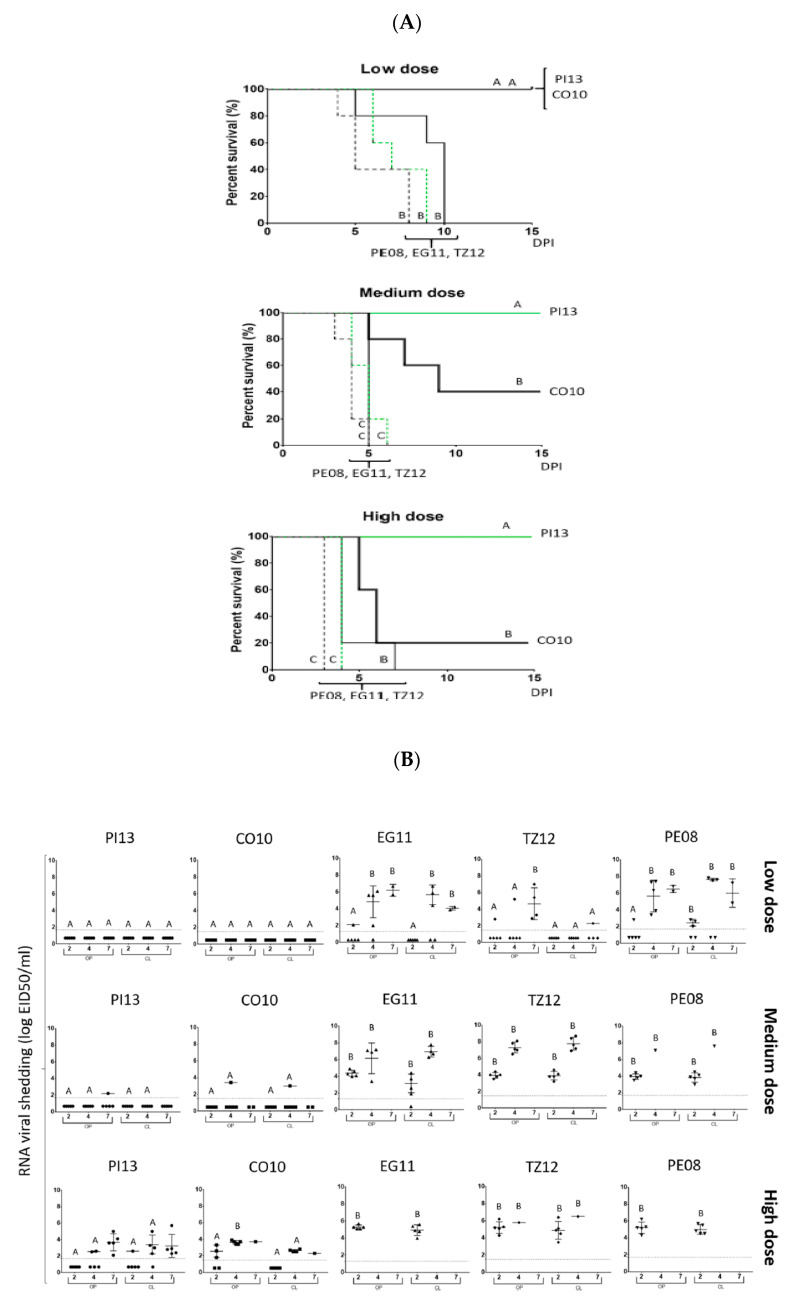
Comparison of the capacity for virulence, replication and shedding between chicken and wild bird isolates. Excerpts from Figures 1 and 3 in Ferreira, H.L.; Taylor, T.L.; Dimitrov, K.M.; Sabra, M.; Afonso, C.L.; Suarez, D.L. Virulent Newcastle disease viruses from the chicken origin are more pathogenic and transmissible to chickens than viruses normally maintained in wild birds [55]. (A) Survival curves of directly inoculated birds. Chickens were separated into 3 groups for each virus and inoculated with a low, medium, and high dose of the five NDV strains (PE08, EG11, TZ12, CO10, PI13). Mortality in each experimental group was followed daily over 14 days. No common letters indicate significant differences (p < 0.5). (B) Virus shedding is directly inoculated birds after inoculation with chicken- and wild bird-origin NDV. NDV titers were estimated in both oropharyngeal (OP) or cloacal swab (CL) swabs of directly inoculated birds with three different doses of NDV strains at 2, 4, and 7 DPI. The detection limit of the different RRT-PCR assays targeting the NDV strains varied between 1.5 and 1.7 log10EID50/mL and are shown as dotted lines on the Y-axis. Mean and standard deviation of the mean for positive swabs at each time point are shown as bars. No common letters (A or B) differ significantly (p < 0.05) when comparing oropharyngeal or cloacal swab samples from the different viruses with the same infectious dose and same sampling point. Non-detected swabs were added below the limit of detection for each virus.

References

    1. Kaleta E.F., Baldauf C. Newcastle disease in free-living and pet birds. In: Alexander D.J., editor. Newcastle Disease. Kluwer Academic Publishers; Boston, MA, USA: 1988. pp. 197–246.
    1. Miller P.J., Koch G. Newcastle disease. In: Swayne D.E., Glisson J.R., McDougald L.R., Nolan L.K., Suarez D.L., Nair V., editors. Diseases of Poultry. Wiley-Blackwell; Hoboken, NJ, USA: 2013. pp. 89–138.
    1. Brown V.R., Bevins S.N. A Review of Virulent Newcastle Disease Viruses in the United States and the Role of Wild Birds in Viral Persistence and Spread. Vet. Res. 2017;48:68. doi: 10.1186/s13567-017-0475-9. - DOI - PMC - PubMed
    1. Park M.S., Garcia-Sastre A., Cros J.F., Basler C.F., Palese P. Newcastle Disease Virus V Protein Is a Determinant of Host Range Restriction. J. Virol. 2003;77:9522–9532. doi: 10.1128/JVI.77.17.9522-9532.2003. - DOI - PMC - PubMed
    1. Jang J., Hong S.H., Choi D., Choi K.S., Kang S., Kim I.H. Overexpression of Newcastle Disease Virus (NDV) V Protein Enhances NDV Production Kinetics in Chicken Embryo Fibroblasts. Appl. Microbiol. Biotechnol. 2010;85:1509–1520. doi: 10.1007/s00253-009-2189-z. - DOI - PubMed

LinkOut - more resources