


Mitochondrial Functionality in Inflammatory Pathology-Modulatory Role of Physical Activity
- PMID: 33467642
- PMCID: PMC7831038
- DOI: 10.3390/life11010061
Mitochondrial Functionality in Inflammatory Pathology-Modulatory Role of Physical Activity
Abstract
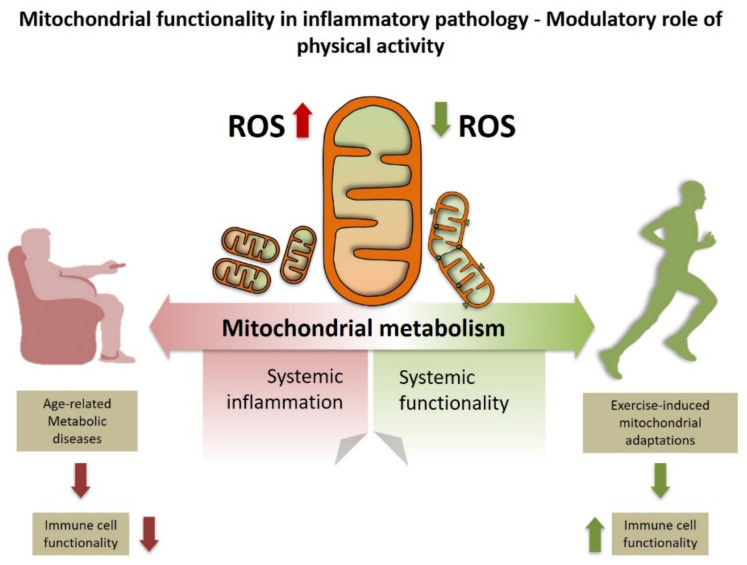
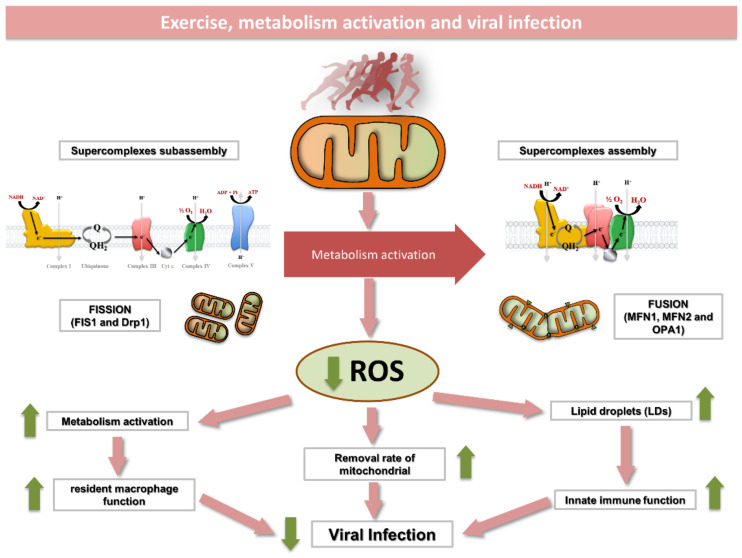
The incidence and severity of metabolic diseases can be reduced by introducing healthy lifestyle habits including moderate exercise. A common observation in age-related metabolic diseases is an increment in systemic inflammation (the so-called inflammaging) where mitochondrial reactive oxygen species (ROS) production may have a key role. Exercise prevents these metabolic pathologies, at least in part, due to its ability to alter immunometabolism, e.g., reducing systemic inflammation and by improving immune cell metabolism. Here, we review how exercise regulates immunometabolism within contracting muscles. In fact, we discuss how circulating and resident macrophages alter their function due to mitochondrial signaling, and we propose how these effects can be triggered within skeletal muscle in response to exercise. Finally, we also describe how exercise-induced mitochondrial adaptations can help to fight against virus infection. Moreover, the fact that moderate exercise increases circulating immune cells must be taken into account by public health agencies, as it may help prevent virus spread. This is of interest in order to face not only acute respiratory-related coronavirus (SARS-CoV) responsible for the COVID-19 pandemic but also for future virus infection challenges.
Keywords: COVID-19; exercise; immune system; metabolic disease; mitochondria.
Conflict of interest statement
The authors declare no conflict of interest.
Figures
References
-
- Acín-Pérez R., Iborra S., Martí-Mateos Y., Cook E.C.L., Conde-Garrosa R., Petcherski A., Muñoz M.M., Martínez de Mena R., Krishnan K.C., Jiménez C., et al. Fgr kinase is required for proinflammatory macrophage activation during diet-induced obesity. Nat. Metab. 2020;2:974–988. doi: 10.1038/s42255-020-00273-8. - DOI - PMC - PubMed
-
- Escoll P., Platon L., Buchrieser C. Roles of Mitochondrial Respiratory Complexes during Infection. Immunometabolism. 2019;1:e190011. doi: 10.20900/immunometab20190011. - DOI
Publication types
LinkOut - more resources
Full Text Sources
Other Literature Sources
Miscellaneous
