


The impact of ageing and sex on sympathetic neurocirculatory regulation
- PMID: 33468420
- PMCID: PMC8282778
- DOI: 10.1016/j.semcdb.2021.01.001
The impact of ageing and sex on sympathetic neurocirculatory regulation
Abstract
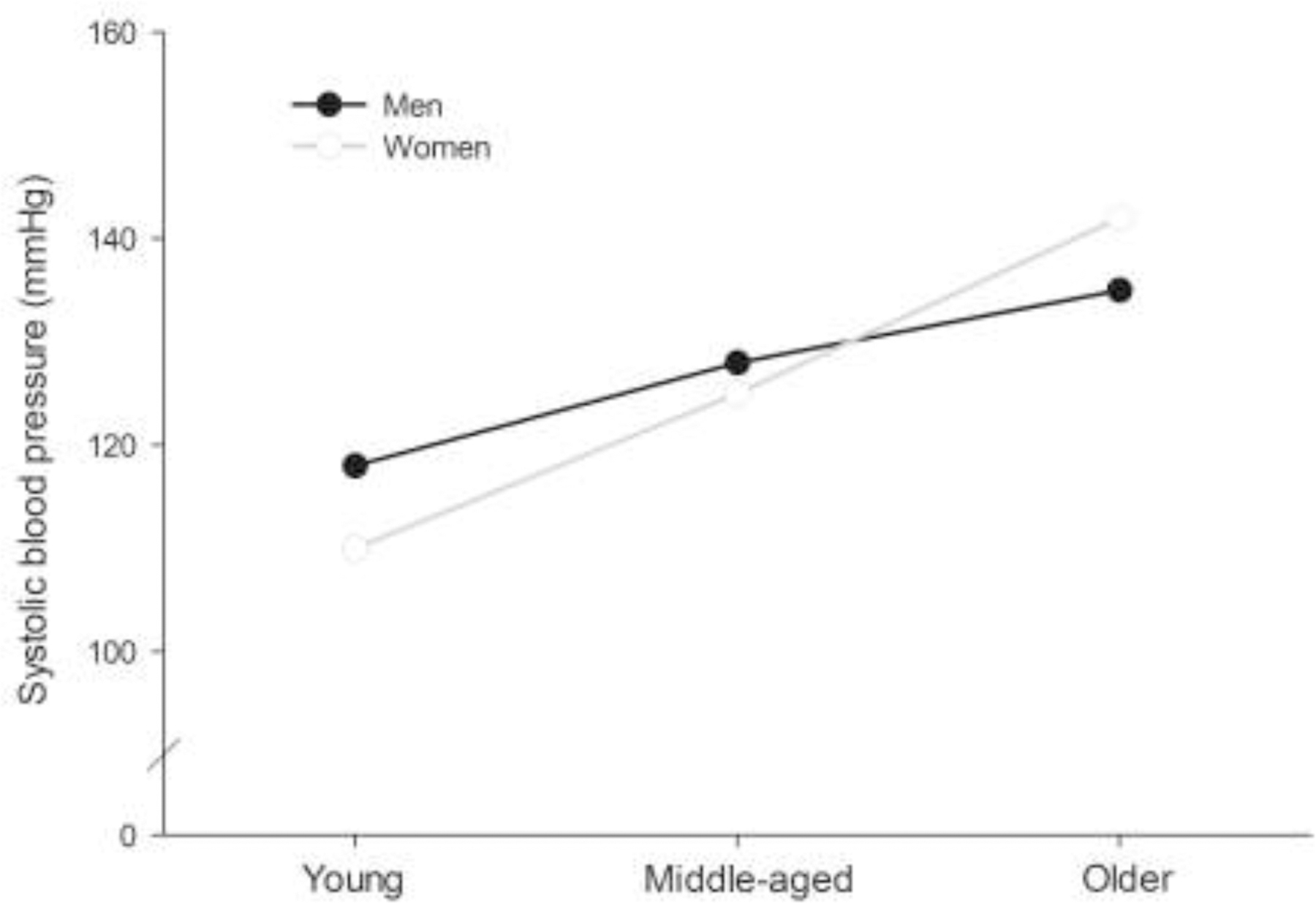
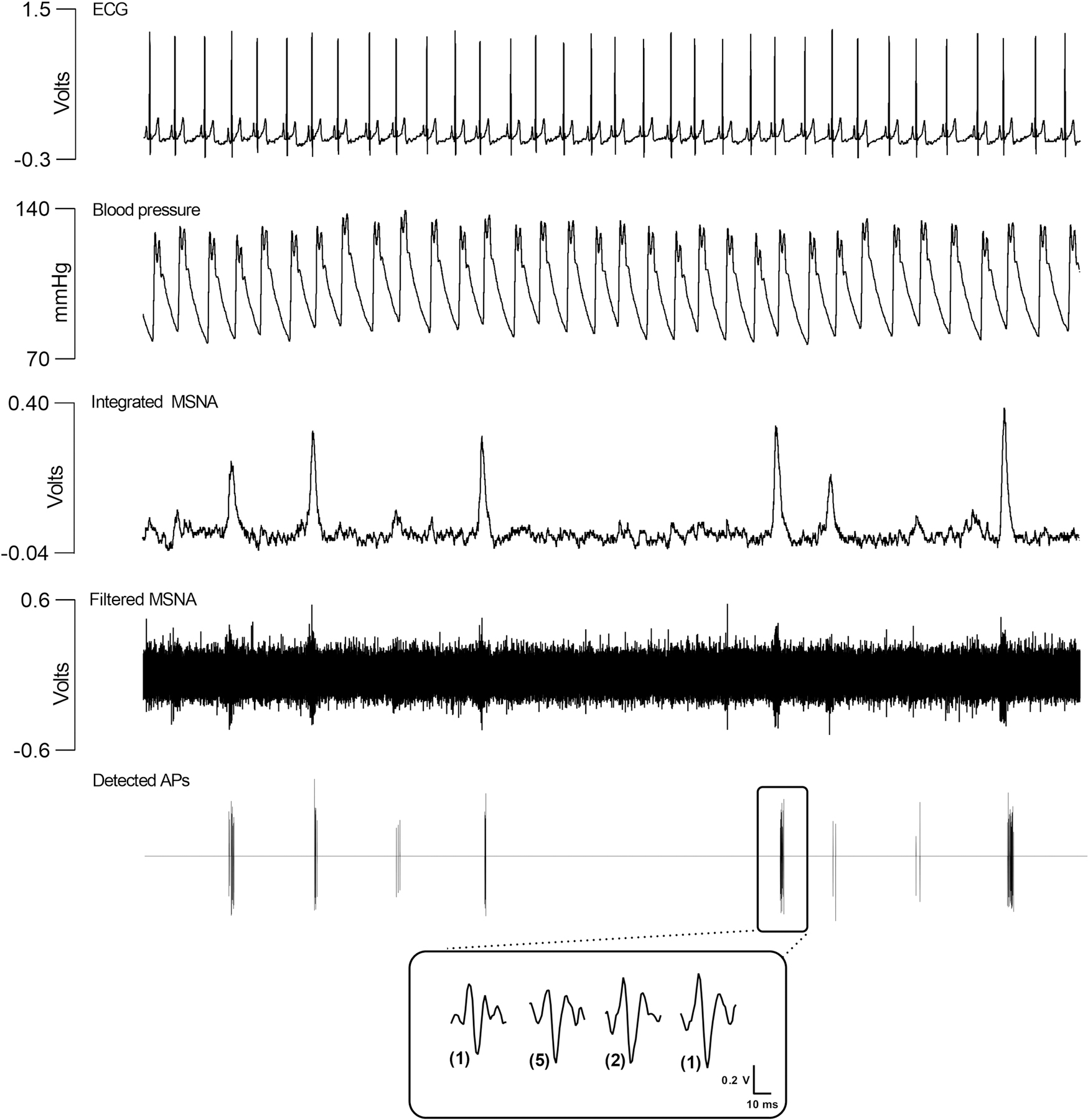
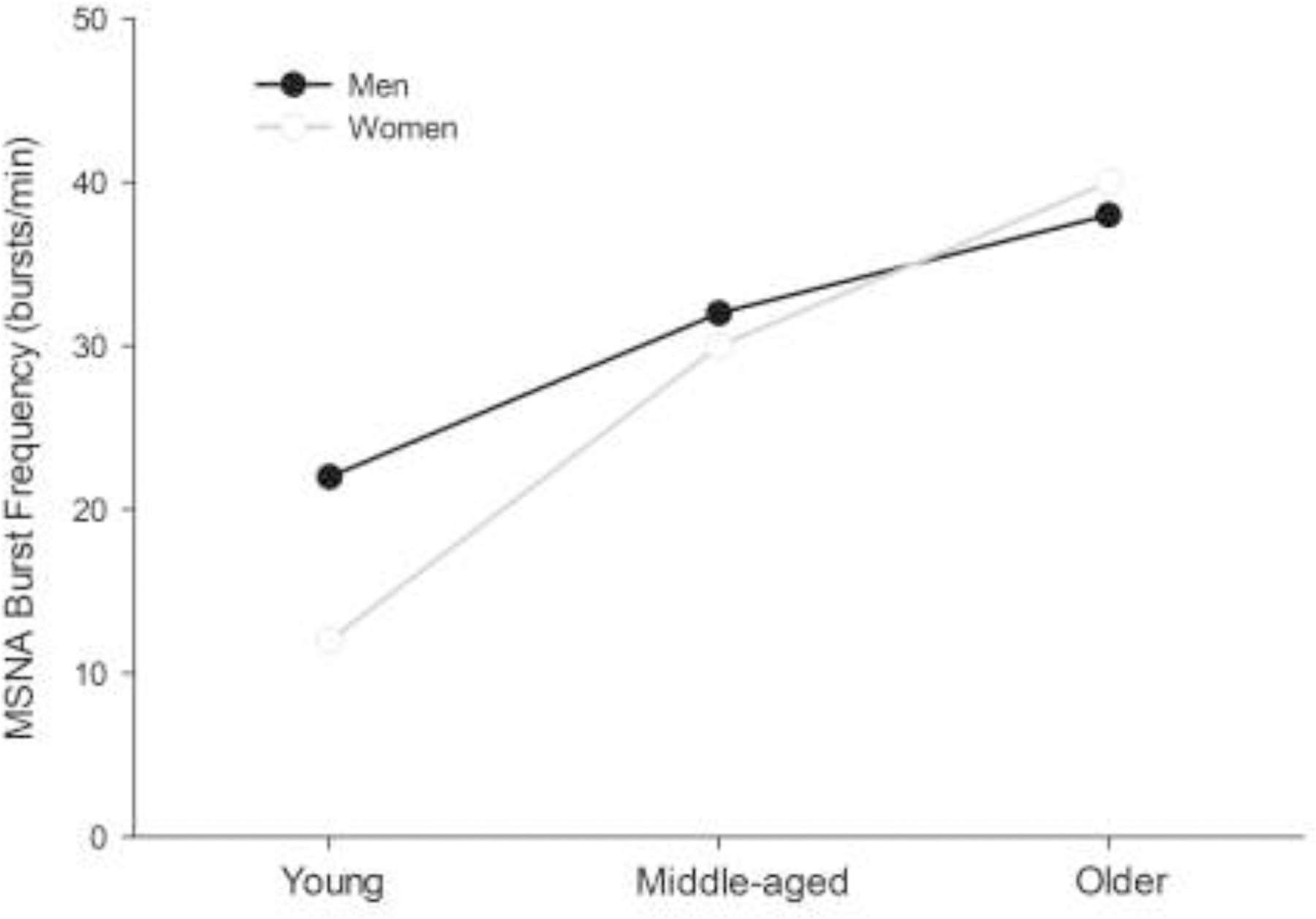
The sympathetic nervous system represents a critical mechanism for homoeostatic blood pressure regulation in humans. This review focuses on age-related alterations in neurocirculatory regulation in men and women by highlighting human studies that examined the relationship between muscle sympathetic nerve activity (MSNA) acquired by microneurography and circulatory variables (e.g., blood pressure, vascular resistance). We frame this review with epidemiological evidence highlighting sex-specific patterns in age-related blood pressure increases in developed nations. Indeed, young women exhibit lower blood pressure than men, but women demonstrate larger blood pressure increases with age, such that by about age 60 years, blood pressure is greater in women. Sympathetic neurocirculatory mechanisms contribute to sex differences in blood pressure rises with age. Muscle sympathetic nerve activity increases with age in both sexes, but women demonstrate greater age-related increases. The circulatory adjustments imposed by MSNA - referred to as neurovascular transduction or autonomic (sympathetic) support of blood pressure - differ in men and women. For example, whereas young men demonstrate a positive relationship between resting MSNA and vascular resistance, this relationship is absent in young women due to beta-2 adrenergic vasodilation, which offsets alpha-adrenergic vasoconstriction. However, post-menopausal women demonstrate a positive relationship between MSNA and vascular resistance due to a decline in beta-2 adrenergic vasodilatory mechanisms. Emerging data suggest that greater aerobic fitness appears to modulate neurocirculatory regulation, at least in young, healthy men and women. This review also highlights recent advances in microneurographic recordings of sympathetic action potential discharge, which may nuance our understanding of age-related alterations in sympathetic neurocirculatory regulation in humans.
Keywords: Ageing; Blood pressure; Microneurography; Muscle sympathetic nerve activity; Neural control of the circulation; Neurovascular transduction; Sex differences.
Copyright © 2021 Elsevier Ltd. All rights reserved.
Conflict of interest statement
Declaration of interests
The authors declare that they have no known competing financial interests or personal relationships that could have appeared to influence the work reported in this paper.
Figures
References
-
- Whelton PK, Carey RM, Aronow WS, Casey DE Jr, Collins KJ, Dennison Himmelfarb C, DePalma SM, Gidding S, Jamerson KA, Jones DW, Guideline for the prevention, detection, evaluation, and management of high blood pressure in adults: a report of the American College of Cardiology/American Heart Association Task Force on Clinical Practice Guidelines, J. Am. Coll. Cardiol 71 (2017) 1269–1324. - PubMed
-
- Forouzanfar MH, Liu P, Roth GA, Ng M, Biryukov S, Marczak L, Alexander L, Estep K, Abate KH, Akinyemiju TF, Global burden of hypertension and systolic blood pressure of at least 110 to 115 mm Hg, 1990–2015, Jama 317 (2017) 165–182. - PubMed
-
- Chobanian AV, Bakris GL, Black HR, Cushman WC, Green LA, Izzo JL Jr, Jones DW, Materson BJ, Oparil S, Wright JT Jr, Seventh report of the joint national committee on prevention, detection, evaluation, and treatment of high blood pressure, Hypertension. 42 (2003) 1206–1252. - PubMed
-
- Martins D, Nelson K, Pan D, Tareen N, Norris K, The effect of gender on age-related blood pressure changes and the prevalence of isolated systolic hypertension among older adults: data from NHANES III., J. Gender-Specific Med. JGSM Off. J. Partnersh. Women’s Heal. Columbia 4 (2001) 10. - PubMed
Publication types
MeSH terms
Grants and funding
LinkOut - more resources
Full Text Sources
Other Literature Sources
