


I Like the Way You Eat It: Lemur (Indri indri) Gut Mycobiome and Geophagy
- PMID: 33471174
- PMCID: PMC8282574
- DOI: 10.1007/s00248-020-01677-5
I Like the Way You Eat It: Lemur (Indri indri) Gut Mycobiome and Geophagy
Abstract
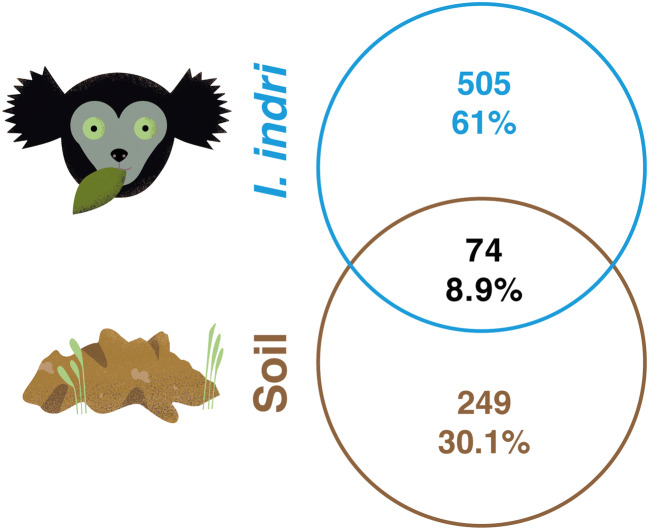
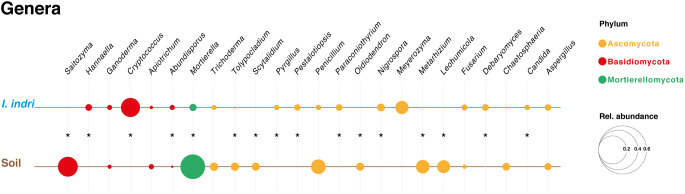
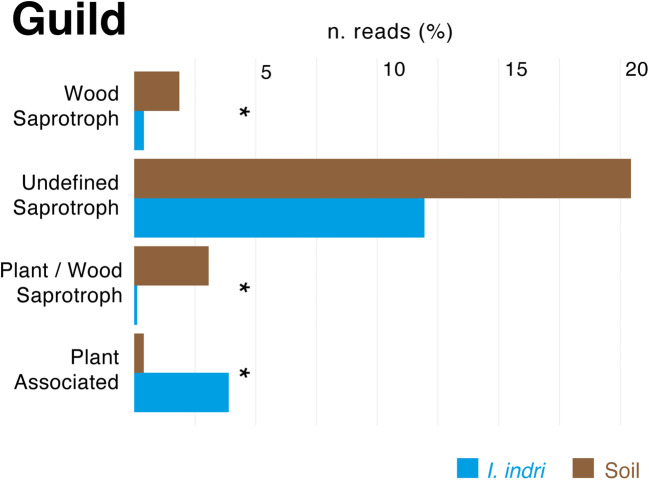
Here, we investigated the possible linkages among geophagy, soil characteristics, and gut mycobiome of indri (Indri indri), an endangered lemur species able to survive only in wild conditions. The soil eaten by indri resulted in enriched secondary oxide-hydroxides and clays, together with a high concentration of specific essential micronutrients. This could partially explain the role of the soil in detoxification and as a nutrient supply. Besides, we found that soil subject to geophagy and indris' faeces shared about 8.9% of the fungal OTUs. Also, several genera (e.g. Fusarium, Aspergillus and Penicillium) commonly associated with soil and plant material were found in both geophagic soil and indri samples. On the contrary, some taxa with pathogenic potentials, such as Cryptococcus, were only found in indri samples. Further, many saprotrophs and plant-associated fungal taxa were detected in the indri faeces. These fungal species may be involved in the digestion processes of leaves and could have a beneficial role in their health. In conclusion, we found an intimate connection between gut mycobiome and soil, highlighting, once again, the potential consequent impacts on the wider habitat.
Keywords: Conservation; Gut; Indri indri; Mycobiome; Non-human primates; Soil quality.
© 2021. The Author(s).
Conflict of interest statement
The authors declare that they have no conflict of interest.
Figures
References
-
- Young SL, Sherman PW, Pelto GH. Why on eartH ?: evaluating hypotheses about the physiological functions of human geophagy author (s): Sera L . Young , Paul W . Sherman , Julius B . Lucks and Gretel H. Pelto Source : Quarterly Rev Biol. 2016;86(2):97–120. - PubMed
-
- Semel BP, Baden AL, Salisbury RL, McGee EM, Wright PC, Arrigo-Nelson SJ. Assessing the function of geophagy in a Malagasy rain forest lemur. Biotropica. 2019;51:769–780. doi: 10.1111/btp.12699. - DOI
-
- Andriaholinirina N, Baden A, Blanco M, Chikhi L, Cooke A, Davies N, Dolch R, Donati G, Ganzhorn J, Golden C, Groeneveld LF, Hapke A, Irwin M, Johnson S, Kappeler P, King T, Lewis R, Louis EE, Markolf M, Mass V, Mittermeier RA, Nichols R, Patel E, Rabarivola CJ, Raharivololona B, Rajaobelina S, Rakotoarisoa G, Rakotomanga B, Rakotonanahary J, Rakotondrainibe H, Rakotondratsimba G, Rakotondratsimba M, Rakotonirina L, Ralainasolo FB, Ralison J, Ramahaleo T, Ranaivoarisoa JF, Randrianahaleo SI, Randrianambinina B, Randrianarimanana L, Randrianasolo H, Randriatahina G, Rasamimananana H, Rasolofoharivelo T, Rasoloharijaona S, Ratelolahy F, Ratsimbazafy J, Ratsimbazafy N, Razafindraibe H, Razafindramanana J, Rowe N, Salmona J, Seiler M, Volampeno S, Wright P, Youssouf J, Zaonarivelo J, Zaramody A (2020) Indri indri. The IUCN Red List of Threatened Species. The IUCN Red List of Threatened Species. Version 2020-3. https://www.iucnredlist.org
MeSH terms
LinkOut - more resources
Full Text Sources
Other Literature Sources
