


Characterization of the complete chloroplast genome of the Eastern gamagrass, Tripsacum dactyloides
- PMID: 33474032
- PMCID: PMC7800761
- DOI: 10.1080/23802359.2017.1413312
Characterization of the complete chloroplast genome of the Eastern gamagrass, Tripsacum dactyloides
Abstract
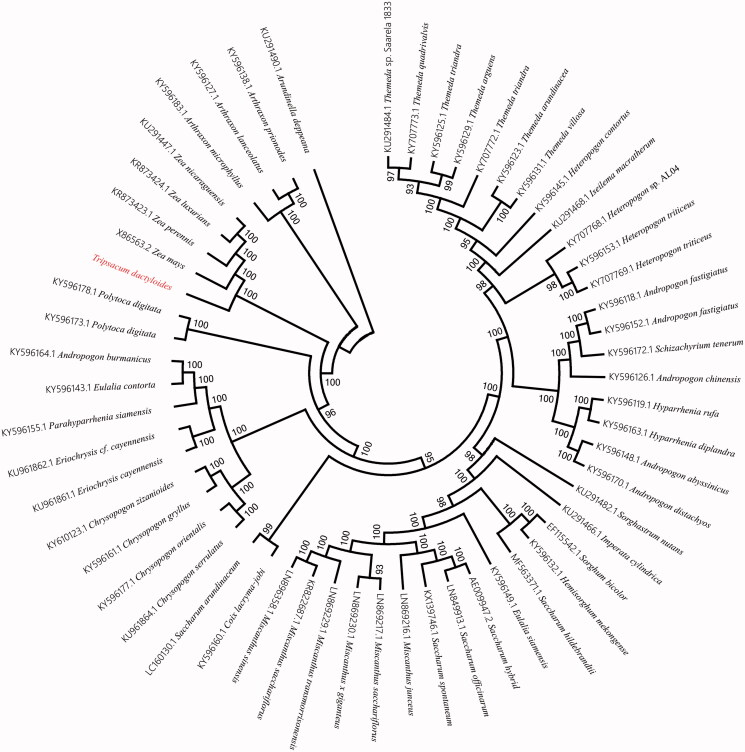
Tripsacum dactyloides, known as eastern gamagrass, is used as a donor of valuable traits. It grows naturally in the same region where maize is commercially cultured in the USA and has the ability to hybridize to maize. The wild genotype of eastern gamagrass is threaten by the gene flow from the transgenic maize. The circular genome is 141,050 bp in length and contains 120 genes, including 73 protein-coding genes (PCG), 39 transfer RNA genes (tRNA) and eight ribosomal RNA genes (rRNA). The overall nucleotide composition is: 30.8% A, 19.2% C, 19.3% G, 30.7% T, with a total G + C content of 38.5%. The phylogenetic tree was constructed to explore the taxonomic status of Tripsacum dactyloides, which contributes to phylogenetic studies and further conservation strategies for this species.
Keywords: Tripsacum dactyloides; chloroplast genome; illumina sequencing; phylogenetic analysis.
© 2017 The Author(s). Published by Informa UK Limited, trading as Taylor & Francis Group.
Conflict of interest statement
The authors have declared that no competing interests exist.
Figures
References
-
- Andrews S. 2010. FastQC: a quality control tool for high throughput sequence data. http://www.bioinformatics.babraham.ac.uk/projects/fastqc
-
- Bergquist R. 1981. Transfer from Tripsacum dactyloides to corn of a major gene locus conditioning resistance to Puccinia sorghi. Phytopathology. 71:518–520.
-
- Berthaud J, Savidan Y.. 1989. Genetic resources of Tripsacum and gene transfer to maize.
LinkOut - more resources
Full Text Sources
