


The impact of parental trauma, parenting difficulty, and planned family separation on the behavioral health of West African immigrant children in New York City
- PMID: 33475411
- PMCID: PMC8500549
- DOI: 10.1037/tra0001011
The impact of parental trauma, parenting difficulty, and planned family separation on the behavioral health of West African immigrant children in New York City
Abstract
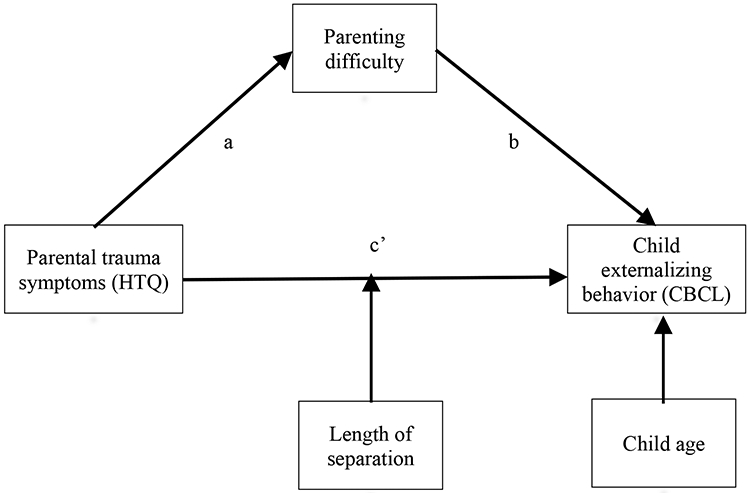
Objective: The association between parental mental health difficulties and poor child outcomes is well documented. Few studies have investigated the intergenerational effects of trauma in immigrant populations. This study examined the relationships among parental trauma, parenting difficulty, duration of planned family separation, and child externalizing behavior in an archival dataset of West African voluntary and forced immigrants in New York City. We hypothesized that parenting difficulty would mediate the association between parental posttraumatic stress and child externalizing behavior and that this association would be stronger for parent-child dyads that had undergone lengthier separations during migration.
Method: Ninety-one parents reported on their posttraumatic stress symptoms using the Harvard Trauma Questionnaire (HTQ) and on the behavioral health of one child between the ages of 5 and 12 years using the externalizing items of the Child Behavior Checklist (CBCL Externalizing). A 4-item self-report scale assessed difficulty parenting in the last month.
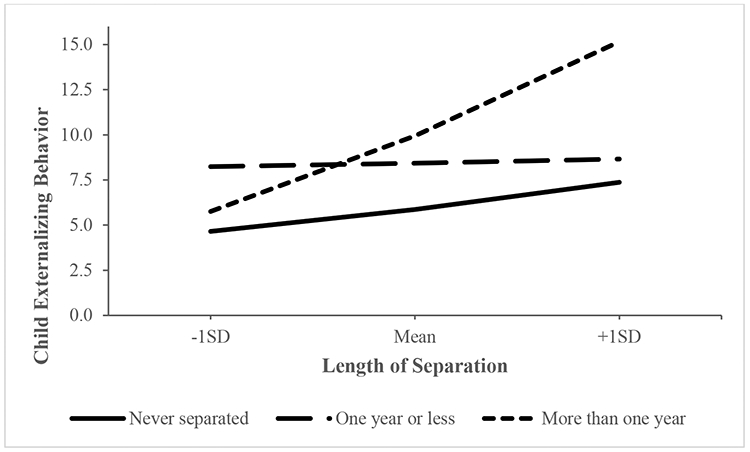
Results: Linear regression analyses showed that parenting difficulty partially mediated the relationship between HTQ and CBCL scores. The relationship between HTQ and CBCL scores was not significant for parents separated from their children for one year or less but was significant for those never separated or separated for longer than 1 year. Higher HTQ scores were most strongly associated with higher CBCL Externalizing scores for those separated longer than one year.
Conclusions: Findings suggest that children of immigrants recovering from trauma are at risk of exhibiting behavioral symptoms and highlight a potential intervention target for improving child outcomes in immigrant families. (PsycInfo Database Record (c) 2021 APA, all rights reserved).
Conflict of interest statement
We have no known conflicts of interest to disclose.
Figures
References
-
- Ajduković M, & Ajduković D (1993). Psychological well-being of refugee children. Child Abuse & Neglect, 17(6), 843–854. - PubMed
-
- Almqvist K, & Broberg AG (1999). Mental health and social adjustment in young refugee children y 3½ years after their arrival in Sweden. Journal of the American Academy of Child & Adolescent Psychiatry, 38(6), 723–730. - PubMed
-
- Angel B, Hjern A, & Ingleby D (2001). Effects of war and organized violence on children: a study of Bosnian refugees in Sweden. American Journal of Orthopsychiatry, 71(1), 4–15. - PubMed
-
- Baron RM, & Kenny DA (1986). The moderator–mediator variable distinction in social psychological research: Conceptual, strategic, and statistical considerations. Journal of Personality and Social Psychology, 51(6), 1173. - PubMed
MeSH terms
Grants and funding
LinkOut - more resources
Full Text Sources
Other Literature Sources
Medical
