


Vertebral fracture: epidemiology, impact and use of DXA vertebral fracture assessment in fracture liaison services
- PMID: 33475820
- PMCID: PMC7929949
- DOI: 10.1007/s00198-020-05804-3
Vertebral fracture: epidemiology, impact and use of DXA vertebral fracture assessment in fracture liaison services
Abstract
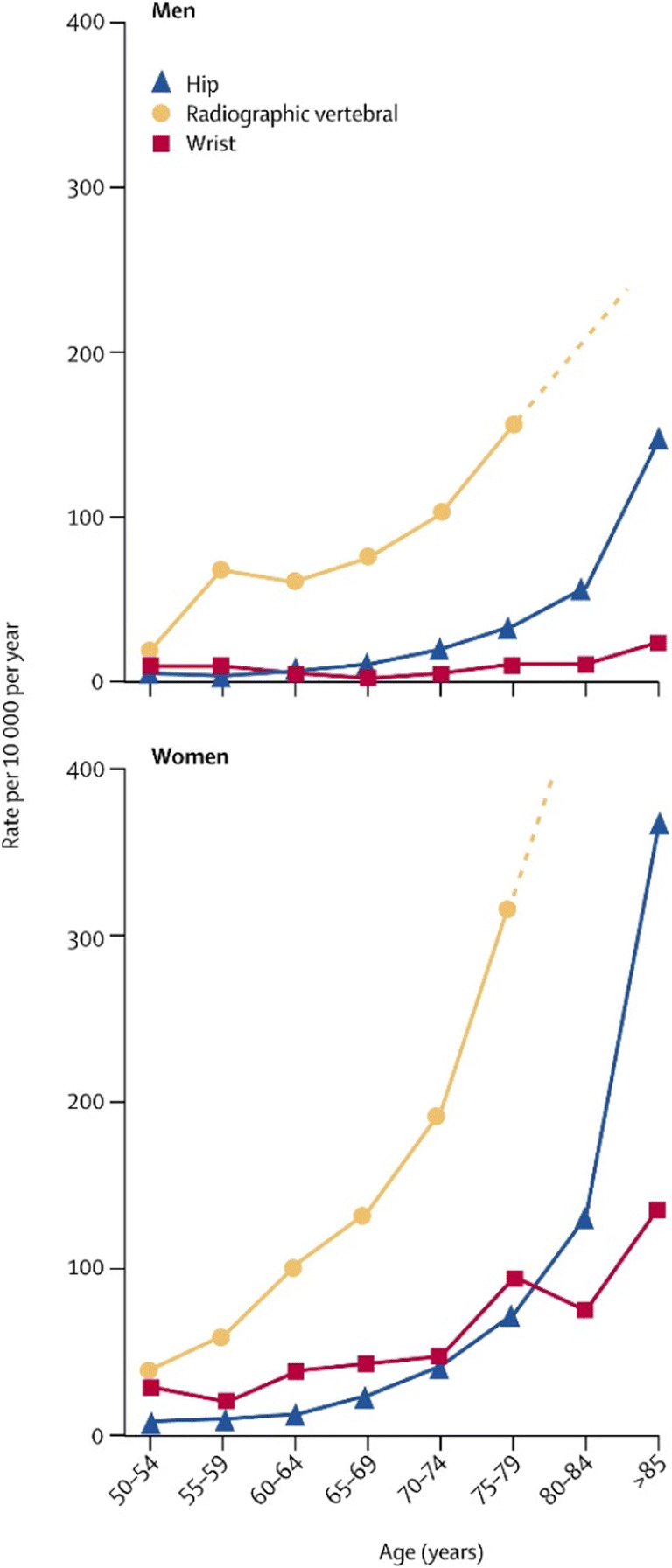
Vertebral fractures are independent risk factors for vertebral and nonvertebral fractures. Since vertebral fractures are often missed, the relatively new introduction of vertebral fracture assessment (VFA) for imaging of the lateral spine during DXA-measurement of the spine and hips may contribute to detect vertebral fractures. We advocate performing a VFA in all patients with a recent fracture visiting a fracture liaison service (FLS). Fracture liaison services (FLS) are important service models for delivering secondary fracture prevention for older adults presenting with a fragility fracture. While commonly age, clinical risk factors (including fracture site and number of prior fracture) and BMD play a crucial role in determining fracture risk and indications for treatment with antiosteoporosis medications, prevalent vertebral fractures usually remain undetected. However, vertebral fractures are important independent risk factors for future vertebral and nonvertebral fractures. A development of the DXA technology, vertebral fracture assessment (VFA), allows for assessment of the lateral spine during the regular DXA bone mineral density measurement of the lumbar spine and hips. Recent approaches to the stratification of antiosteoporosis medication type according to baseline fracture risk, and differences by age in the indication for treatment by prior fracture mean that additional information from VFA may influence initiation and type of treatment. Furthermore, knowledge of baseline vertebral fractures allows reliable definition of incident vertebral fracture events during treatment, which may modify the approach to therapy. In this manuscript, we will discuss the epidemiology and clinical significance of vertebral fractures, the different methods of detecting vertebral fractures, and the rationale for, and implications of, use of VFA routinely in FLS. • Vertebral fracture assessment is a tool available on modern DXA instruments and has proven ability to detect vertebral fractures, the majority of which occur without a fall and without the signs and symptoms of an acute fracture. • Most osteoporosis guidelines internationally suggest that treatment with antiosteoporosis medications should be considered for older individuals (e.g., 65 years +) with a recent low trauma fracture without the need for DXA. • Younger individuals postfracture may be risk-assessed on the basis of FRAX® probability including DXA and associated treatment thresholds. • Future fracture risk is markedly influenced by both site, number, severity, and recency of prior fracture; awareness of baseline vertebral fractures facilitates definition of true incident vertebral fracture events occurring during antiosteoporosis treatment. • Detection of previously clinically silent vertebral fractures, defining site of prior fracture, might alter treatment decisions in younger or older FLS patients, consistent with recent IOF-ESCEO guidance on baseline-risk-stratified therapy, and provides a reliable baseline from which to define new, potentially therapy-altering, vertebral fracture events.
Keywords: Bone mineral density (BMD); Fracture liaison service (FLS); Osteoporosis; Vertebral fracture; Vertebral fracture assessment (VFA); epidemiology.
Conflict of interest statement
WFL: received fees for lectures and advisory boards from Amgen, Eli Lilly, UCB, Pfizer, Galapagos and Curaphar; JZ: no conflict of interest; NRF: no conflict of interest; NCH: reports consultancy, lecture fees and honoraria from Alliance for Better Bone Health, AMGEN, MSD, Eli Lilly, Servier, Shire, UCB, Kyowa Kirin, Consilient Healthcare, Radius Health and Internis Pharma. CC: received lecture fees and honoraria from Amgen, Danone, Eli Lilly, GSK, Kyowa Kirin, Medtronic, Merck, Nestlé, Novartis, Pfizer, Roche, Servier, Shire, Takeda and UCB. MKJ: received fees for lectures and advisory boards from Amgen, UCB, KLA: Amgen, Astellas, Chugai, Renapharma, UCB.
Figures
References
-
- Kanis JA. Assessment of fracture risk and its application to screening for postmenopausal osteoporosis: synopsis of a WHO report. WHO Study Group. Osteoporos Int. 1994;4:368–381. - PubMed
-
- Khosla S, Cauley JA, Compston J, Kiel DP, Rosen C, Saag KG, Shane E. Addressing the crisis in the treatment of osteoporosis: a path forward. J Bone Miner Res. 2017;32:424–430. - PubMed
MeSH terms
Grants and funding
- MC_UP_A620_1015/MRC_/Medical Research Council/United Kingdom
- MC_PC_21003/MRC_/Medical Research Council/United Kingdom
- MC_UU_12011/2/MRC_/Medical Research Council/United Kingdom
- MC_U147585819/MRC_/Medical Research Council/United Kingdom
- MC_PC_21001/MRC_/Medical Research Council/United Kingdom
- MC_UP_A620_1014/MRC_/Medical Research Council/United Kingdom
- MC_UU_12011/1/MRC_/Medical Research Council/United Kingdom
- G0601019/MRC_/Medical Research Council/United Kingdom
- G0400491/MRC_/Medical Research Council/United Kingdom
- MC_U147585827/MRC_/Medical Research Council/United Kingdom
- MC_PC_21000/MRC_/Medical Research Council/United Kingdom
- MC_U147585824/MRC_/Medical Research Council/United Kingdom
- MR/J000094/1/MRC_/Medical Research Council/United Kingdom
LinkOut - more resources
Full Text Sources
Other Literature Sources
Medical
