


Ozone therapy for the treatment of COVID-19 pneumonia: A scoping review
- PMID: 33476982
- PMCID: PMC7752030
- DOI: 10.1016/j.intimp.2020.107307
Ozone therapy for the treatment of COVID-19 pneumonia: A scoping review
Abstract
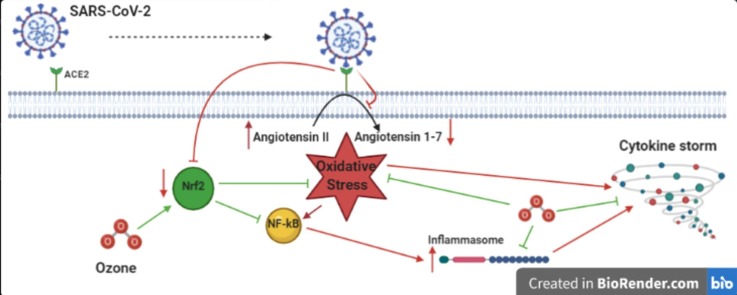
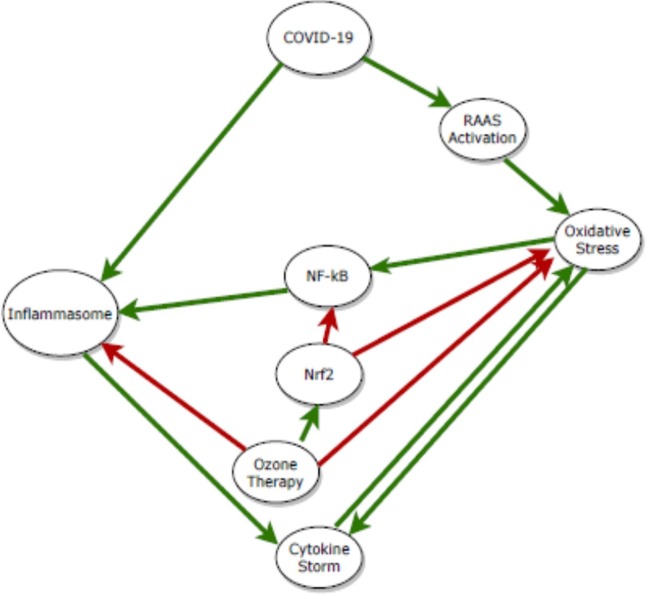
Severe forms of COVID-19 can evolve into pneumonia, featured by acute respiratory failure due to acute lung injury (ALI) and acute respiratory distress syndrome (ARDS). In viral diseases, the replication of viruses is seemingly stimulated by an imbalance between pro-oxidant and antioxidant activity as well as by the deprivation of antioxidant mechanisms. In COVID-19 pneumonia, oxidative stress also appears to be highly detrimental to lung tissues. Although inhaling ozone (O3) gas has been shown to be toxic to the lungs, recent evidence suggests that its administration via appropriate routes and at small doses can paradoxically induce an adaptive reaction capable of decreasing the endogenous oxidative stress. Ozone therapy is recommended to counter the disruptive effects of severe COVID-19 on lung tissues, especially if administered in early stages of the disease, thereby preventing the progression to ARDS.
Keywords: ALI; ARDS; COVID-19; Oxidative stress; Ozone (O3) the; Pneumonia.
Copyright © 2020 Elsevier B.V. All rights reserved.
Conflict of interest statement
The authors declare that they have no known competing financial interests or personal relationships that could have appeared to influence the work reported in this paper.
Figures
References
-
- Drosten C., Günther S., Preiser W., et al. Identification of a novel coronavirus in patients with severe acute respiratory syndrome. N. Engl. J. Med. 2003;348(20):1967–1976. - PubMed
Publication types
MeSH terms
Substances
LinkOut - more resources
Full Text Sources
Other Literature Sources
Medical
