


The Great Escape: The Power of Cancer Stem Cells to Evade Programmed Cell Death
- PMID: 33477367
- PMCID: PMC7830655
- DOI: 10.3390/cancers13020328
The Great Escape: The Power of Cancer Stem Cells to Evade Programmed Cell Death
Abstract
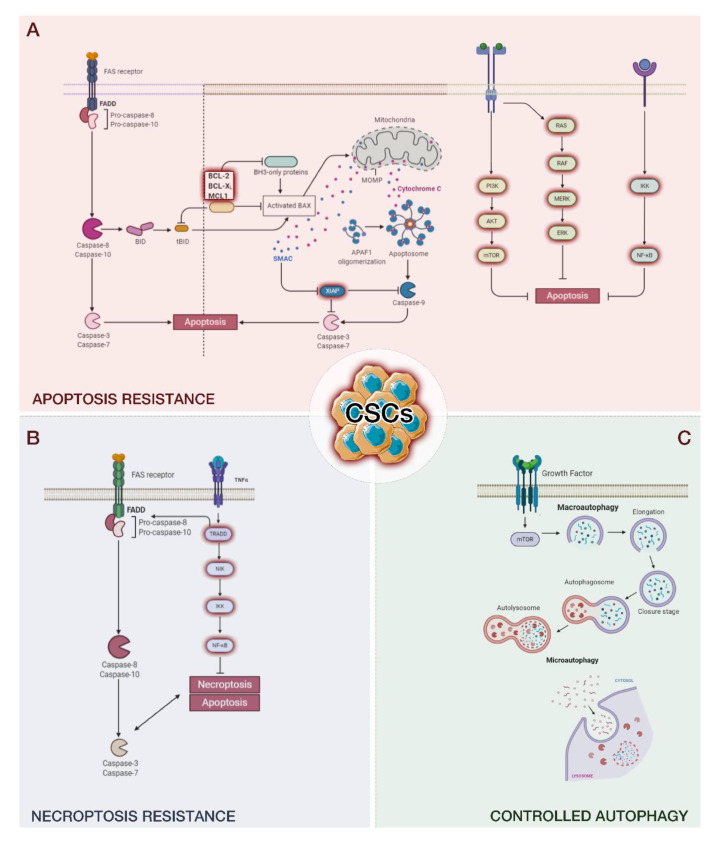
Cancer is one of the primary causes of death worldwide. Tumour malignancy is related to tumor heterogeneity, which has been suggested to be due to a small subpopulation of tumor cells named cancer stem cells (CSCs). CSCs exert a key role in metastasis development, tumor recurrence, and also epithelial-mesenchymal transition, apoptotic resistance, self-renewal, tumorigenesis, differentiation, and drug resistance. Several current therapies fail to eradicate tumors due to the ability of CSCs to escape different programmed cell deaths. Thus, developing CSC-selective and programmed death-inducing therapeutic approaches appears to be of primary importance. In this review, we discuss the main programmed cell death occurring in cancer and the promising CSC-targeting agents developed in recent years. Even if the reported studies are encouraging, further investigations are necessary to establish a combination of agents able to eradicate CSCs or inhibit their growth and proliferation.
Keywords: cancer stem cells; metastasis; programmed death; recurrence; therapeutic approaches.
Conflict of interest statement
The authors declare no conflict of interest.
Figures
References
-
- Fidoamore A., Cristiano L., Antonosante A., d’Angelo M., Di Giacomo E., Astarita C., Giordano A., Ippoliti R., Benedetti E., Cimini A. Glioblastoma Stem Cells Microenvironment: The Paracrine Roles of the Niche in Drug and Radioresistance. Stem Cells Int. 2016;2016:6809105. doi: 10.1155/2016/6809105. - DOI - PMC - PubMed
Publication types
LinkOut - more resources
Full Text Sources
Other Literature Sources
